Library › Prevention › Diabetes and obesity
Diabetes and obesity in cardiovascular disease
Diabetes, prediabetes, obesity, metabolic syndrome, and cardiovascular-kidney-metabolic syndrome in adults, from epidemiology and mechanisms through risk staging, glucose-lowering and weight-reducing therapy, and their cardiovascular complications.
Diabetes roughly doubles the risk of coronary heart disease and ischemic stroke. Obesity, diabetes, chronic kidney disease, and cardiovascular disease form one connected disorder, cardiovascular-kidney-metabolic (CKM) syndrome, staged from 0 to 4 in the 2026 AHA/ACC/ADA/ASN guideline. In type 2 diabetes with atherosclerotic disease, heart failure, chronic kidney disease, or high predicted risk, drugs with proven cardiovascular benefit (SGLT2 inhibitors, GLP-1 receptor agonists, tirzepatide, and finerenone) are chosen by phenotype and are started irrespective of HbA1c or metformin use.
Cardiovascular-kidney-metabolic syndrome and the 2026 AHA/ACC/ADA/ASN guideline
Cardiovascular-kidney-metabolic syndrome is a systemic disorder in which excess or dysfunctional adiposity, metabolic risk factors (hypertension, dyslipidemia, and dysglycemia), chronic kidney disease (CKD), and cardiovascular disease drive one another. The construct was introduced in the 2023 American Heart Association (AHA) presidential advisory (Ndumele 2023). The advisory proposed a staging system across the life course, prediction equations that include kidney and metabolic measures, and care models that integrate cardiology, nephrology, endocrinology, and primary care. The advisory noted the disproportionate burden of poor CKM health among people with adverse social determinants of health.
The first clinical practice guideline on the syndrome, the 2026 AHA/ACC/ADA/ASN guideline for the prevention, detection, evaluation, and management of CKM syndrome, was developed with and endorsed by the American Diabetes Association (ADA) and the American Society of Nephrology (ASN). It retires, replaces, and expands the 2013 AHA/ACC/The Obesity Society guideline for the management of overweight and obesity in adults (Ndumele 2026). Nearly 90% of US adults have at least one CKM risk factor: excess weight, high blood pressure, abnormal lipids, high blood glucose, or reduced kidney function. The guideline's principal positions are these:
- CKM staging is recommended to prevent progression and to match treatment intensity to absolute risk.
- The PREVENT equations estimate 10-year and 30-year risk of total cardiovascular disease, atherosclerotic cardiovascular disease (ASCVD), and heart failure; they include estimated glomerular filtration rate (eGFR) in all models and the urine albumin-to-creatinine ratio (UACR) and HbA1c as optional inputs (PREVENT equations).
- Both eGFR and UACR characterize CKD and guide kidney-protective therapy.
- Routine assessment of metabolic risk factors and kidney function is recommended for all adults, together with screening for social drivers of health such as food insecurity, housing instability, and financial strain.
- Care is coordinated across specialties, with a designated CKM coordination point person.
- Lifestyle therapy is combined, by phenotype, with drugs for blood pressure, lipids, glucose, and weight, kidney-protective drugs, and metabolic and bariatric surgery. For the first time, GLP-1–based therapies are recommended for selected adults with obesity or type 2 diabetes and other cardiovascular risk factors to reduce cardiovascular events.
A companion scientific statement from the AHA and the American College of Cardiology (ACC) sets out outcome-specific PREVENT thresholds (PREVENT-CVD, PREVENT-ASCVD, and PREVENT-HF) for staging, for targeted detection of subclinical disease, and for estimating the absolute benefit of CKM therapies (Khan 2026). In the 2026 ACC/AHA dyslipidemia guideline, CKM syndrome replaces metabolic syndrome as a risk-enhancing factor. The kidney side of the syndrome, the KDIGO heat map, and the derivation of PREVENT in CKD are covered in the CKD hub.
CKM stages 0 to 4: criteria and treatment intensity
The 2026 guideline grades the syndrome in five stages that reflect escalating cardiovascular and kidney risk. Stage 4 is divided by the presence of kidney failure.
| Stage | Definition | Criteria |
|---|---|---|
| 0 | No CKM risk factors | Normal body mass index (BMI) and waist circumference; normal lipid and glucose levels; normal blood pressure; no CKD or cardiovascular disease |
| 1 | Excess or dysfunctional adiposity | BMI 25.0 kg/m² or more; waist circumference 88 cm or more in women or 102 cm or more in men; or prediabetes (HbA1c 5.7–6.4% or fasting glucose 100–125 mg/dL), without other metabolic risk factors or CKD |
| 2 | Metabolic risk factors, CKD, or both | Hypertension (130/80 mm Hg or higher, or antihypertensive treatment); triglycerides 150 mg/dL or higher; metabolic syndrome by AHA/NHLBI criteria; type 2 diabetes; moderate- or high-risk CKD on the KDIGO grid |
| 3 | Subclinical cardiovascular disease or a risk equivalent | Subclinical atherosclerosis (coronary artery calcium score of 100 or more, plaque on coronary CT angiography or catheterization, or a low ankle-brachial index without claudication); pre-heart failure by elevated NT-proBNP or high-sensitivity troponin, or by echocardiographic abnormality; very high-risk CKD on the KDIGO grid; or a predicted 10-year PREVENT-CVD risk of 20% or more |
| 4a | Clinical cardiovascular disease without kidney failure | Coronary heart disease, heart failure, stroke, peripheral artery disease, or atrial fibrillation in a person with excess or dysfunctional adiposity, other CKM risk factors, or CKD |
| 4b | Clinical cardiovascular disease with kidney failure | As stage 4a, with eGFR below 15 mL/min/1.73 m² or chronic kidney replacement therapy |
CKM stages in the 2026 AHA/ACC/ADA/ASN guideline (Ndumele 2026), as tabulated by the American College of Cardiology. AHA/NHLBI, American Heart Association/National Heart, Lung, and Blood Institute; KDIGO, Kidney Disease: Improving Global Outcomes; NT-proBNP, N-terminal pro–B-type natriuretic peptide.
Stage 1 captures adiposity that has not yet produced overt metabolic disease. Its markers are the anthropometric thresholds above and prediabetes, the earliest biochemical sign of adipose dysfunction. Treatment is nutrition, physical activity, and weight reduction, with periodic screening for progression. BMI misclassifies adiposity in people of Asian, Middle Eastern, and African ancestry; ancestry-specific BMI and waist thresholds are set out in the anthropometry section.
Stage 2 contains most US adults with a CKM risk factor. Type 2 diabetes, hypertension, hypertriglyceridemia, and metabolic syndrome place a patient here, as does CKD in the moderate- or high-risk cells of the KDIGO grid. Treatment adds drugs for the individual risk factors. In patients with type 2 diabetes in stage 2 or 3, the guideline recommends a sodium-glucose cotransporter 2 (SGLT2) inhibitor or a glucagon-like peptide-1 (GLP-1) receptor agonist when the 10-year PREVENT-CVD risk is 7.5% or more (Class 1), and combination therapy may be considered (Class 2b). In adults without diabetes who have CKD with a UACR of 30 to 199 mg/g, an SGLT2 inhibitor is reasonable (Class 2a).
Stage 3 identifies patients with subclinical disease or a risk equivalent. Subclinical atherosclerosis is defined by a coronary calcium score of 100 or more or by plaque on imaging, and subclinical heart failure by natriuretic peptides, high-sensitivity troponin, or echocardiographic abnormality (the equivalent of ACC/AHA stage B heart failure). Very high-risk CKD and a predicted 10-year PREVENT-CVD risk of 20% or more are risk equivalents. For targeted detection of subclinical disease, the companion statement places coronary calcium testing at a 10-year PREVENT-ASCVD risk of 3% to below 10% when the decision is uncertain, and natriuretic peptide or troponin testing for pre-heart failure at a 10-year PREVENT-HF risk of 5% or more (Khan 2026).
Stage 4 is clinical cardiovascular disease in a patient with CKM risk factors. The guideline lists coronary heart disease, heart failure, stroke, peripheral artery disease, and atrial fibrillation. Patients with heart failure and CKD are at the highest risk, and the writing committee identified the treatment of heart failure with advanced CKD as an evidence gap.
Differences from European guidance. The 2023 European Society of Cardiology (ESC) guideline on cardiovascular disease in diabetes addresses only patients with established diabetes, does not discuss prediabetes, and uses SCORE2-Diabetes to separate low-to-moderate risk (below 10% at 10 years) from high risk (10% or more) (Marx 2023). It recommends a single cardioprotective drug in type 2 diabetes without ASCVD when SCORE2-Diabetes is 10% or more, without a combination recommendation.
CKM stage finder
The tool applies the stage criteria of the 2026 guideline to the values entered, counts metabolic syndrome criteria by the AHA/NHLBI definition, and places kidney measures on the KDIGO grid. Subclinical disease, a 10-year PREVENT-CVD risk of 20% or more, and clinical cardiovascular disease are entered as findings; the PREVENT calculator provides the risk estimate.
Stage criteria from the 2026 AHA/ACC/ADA/ASN CKM guideline. Metabolic syndrome by AHA/NHLBI criteria (3 or more of: waist 102 cm or more in men or 88 cm or more in women, triglycerides 150 mg/dL or more, HDL cholesterol below 40 mg/dL in men or below 50 mg/dL in women, blood pressure 130/85 mm Hg or more or treatment, fasting glucose 100 mg/dL or more or diabetes). CKD risk from the KDIGO 2024 heat map, assuming values persisting for 3 months. The stage uses general-population BMI and waist thresholds; ancestry-specific thresholds are applied in the adiposity calculator. The default entry (BMI 31 kg/m², waist 106 cm, prediabetes, blood pressure 134/82 mm Hg, triglycerides 180 mg/dL, HDL cholesterol 38 mg/dL) meets 5 of 5 metabolic syndrome criteria and is classified as stage 2.
Epidemiology: diabetes as a cardiovascular risk factor
National estimates put diabetes at 38.4 million people in the United States (11.6% of the population), including 8.7 million undiagnosed adults (22.8% of adults with diabetes); 97.6 million adults, more than 1 in 3, have prediabetes (National Institute of Diabetes and Digestive and Kidney Diseases [NIDDK]). Type 2 diabetes accounts for the large majority of adult cases.
Relative risk. The Emerging Risk Factors Collaboration analyzed 698,782 people in 102 prospective studies. Diabetes was associated with adjusted hazard ratios of 2.00 for coronary heart disease, 2.27 for ischemic stroke, 1.56 for hemorrhagic stroke, and 1.73 for other vascular deaths; further adjustment for lipid, inflammatory, or renal markers changed these estimates little (ERFC 2010). Hazard ratios for coronary disease were higher in women than in men, higher at 40 to 59 years than at 70 years or older, and higher for fatal than for nonfatal events. At a population prevalence of 10%, diabetes accounted for about 11% of vascular deaths. The excess relative risk in women (relative risk of incident coronary heart disease 2.82 in women and 2.16 in men across 64 cohorts) removes much of the female advantage in coronary risk before menopause.
Causes of death. Among US adults with diabetes, death rates from vascular causes fell by 32% per decade between 1988–94 and 2010–15, from 11.0 to 5.2 per 1,000 person-years, and the gap in vascular mortality between adults with and without diabetes narrowed by about half (Gregg 2018). Vascular causes accounted for 47.8% of deaths among adults with diabetes in 1988–94 and 34.1% in 2010–15; the proportion from noncardiovascular, noncancer causes rose to 46.5%. Cardiovascular disease remains the largest single cause of death in diabetes, while the absolute burden has shifted as cardiovascular care has improved.
Risk factors within target. In the Swedish National Diabetes Register, 271,174 patients with type 2 diabetes were compared with 1,355,870 matched controls. Patients with all five risk factors within target (HbA1c, LDL cholesterol, albuminuria, smoking, and blood pressure) had a hazard ratio for death of 1.06, for acute myocardial infarction 0.84, and for stroke 0.95 compared with controls (Rawshani, N Engl J Med 2018). HbA1c outside target was the strongest predictor of myocardial infarction and stroke, and smoking the strongest predictor of death. Heart failure hospitalization stayed higher in diabetes regardless of risk-factor control (hazard ratio 1.45), which separates heart failure from the atherosclerotic complications of diabetes.
Type 1 diabetes. Cardiovascular risk in type 1 diabetes depends on age at onset, duration, glycemic exposure, and nephropathy. In a Swedish cohort of 27,195 patients and 135,178 matched controls followed for a median of 10 years, onset at 0 to 10 years carried hazard ratios of 30.50 for coronary heart disease and 7.38 for cardiovascular death; onset at 26 to 30 years carried hazard ratios of 6.08 and 3.64 (Rawshani, Lancet 2018). In the Diabetes Control and Complications Trial and its follow-up study (DCCT/EDIC), 6.5 years of intensive insulin therapy reduced any cardiovascular event by 42% and nonfatal myocardial infarction, stroke, or cardiovascular death by 57% over a mean of 17 years (DCCT/EDIC 2005). In the same cohort, microalbuminuria and albuminuria were associated with higher cardiovascular risk. The ADA statin recommendations apply to adults with diabetes of either type (lipid management in diabetes).
Coronary heart disease risk equivalence in diabetes
A Finnish population study reported 7-year myocardial infarction rates of 20.2% in people with diabetes without prior infarction and 18.8% in people without diabetes with prior infarction, with a hazard ratio for coronary death of 1.2 (95% CI 0.6 to 2.4) after adjustment (Haffner 1998). The finding supported treating diabetes as a coronary heart disease risk equivalent. Later evidence weakened the equivalence. A meta-analysis of 13 studies with 45,108 patients found that patients with diabetes and no prior myocardial infarction had a 43% lower risk of coronary events than patients without diabetes with prior infarction (odds ratio 0.56) (Bulugahapitiya 2009).
Risk within diabetes is heterogeneous. It rises with age, duration, albuminuria, reduced eGFR, retinopathy, neuropathy, and peripheral artery disease, and it approaches population levels when risk factors are controlled (Rawshani, N Engl J Med 2018). Current guidelines therefore treat diabetes as a stratified high-risk state: the 2026 ACC/AHA dyslipidemia guideline uses diabetes-specific risk modifiers to select statin intensity, the ESC uses SCORE2-Diabetes and target-organ damage, and the CKM guideline uses PREVENT estimates and CKM stage. The 2026 dyslipidemia guideline lists diabetes after age 40 among the conditions in which a coronary calcium score of zero does not justify deferral of statin therapy.
Pathophysiology: hyperglycemia, insulin resistance, and diabetic dyslipidemia
Hyperglycemia. Chronic hyperglycemia injures the endothelium through several pathways. Nonenzymatic glycation of proteins forms advanced glycation end-products (AGEs), which cross-link collagen and elastin and stiffen arteries and myocardium. AGEs also bind the receptor for AGEs on endothelial cells and macrophages, which activates nuclear factor-κB and inflammatory gene expression. Flux through the polyol and hexosamine pathways and activation of protein kinase C by diacylglycerol increase oxidative stress, reduce endothelial nitric oxide synthase activity, and raise endothelin-1 and plasminogen activator inhibitor-1. Mitochondrial overproduction of superoxide links these pathways. The result is endothelial dysfunction with impaired vasodilation, increased permeability, leukocyte adhesion, and a prothrombotic surface. Platelets in diabetes are hyperreactive, with increased thromboxane synthesis and P2Y12 signaling, and fibrinolysis is impaired.
Insulin resistance and hyperinsulinemia. Insulin resistance precedes type 2 diabetes by years and is the shared mechanism of the metabolic syndrome. Resistance is selective: the phosphatidylinositol 3-kinase pathway that mediates glucose uptake and nitric oxide production is impaired, whereas the mitogen-activated protein kinase pathway that promotes vascular smooth muscle growth, endothelin release, and sodium retention is preserved and stimulated by compensatory hyperinsulinemia. Visceral and ectopic fat (liver, muscle, pancreas, epicardium) release free fatty acids and inflammatory adipokines, and adiponectin falls. Insulin resistance increases hepatic production of very low-density lipoprotein (VLDL), renal sodium reabsorption, and sympathetic activity, which link it to dyslipidemia and hypertension. In IRIS, pioglitazone reduced vascular events in patients with insulin resistance after stroke, which supports a causal contribution of insulin resistance to atherosclerotic events (Kernan 2016).
Diabetic dyslipidemia. The characteristic pattern is hypertriglyceridemia, low HDL cholesterol, and small, dense, cholesterol-depleted LDL particles with a normal or modestly elevated LDL cholesterol. Insulin resistance increases free fatty acid delivery to the liver and secretion of large triglyceride-rich VLDL particles. Cholesteryl ester transfer protein then exchanges triglyceride for cholesteryl ester in LDL and HDL, and hepatic lipase converts the triglyceride-enriched particles to small dense LDL and small HDL, which are cleared rapidly. Small dense LDL enters the arterial wall more readily and is more susceptible to oxidation. Because LDL cholesterol understates particle number, non-HDL cholesterol and apolipoprotein B measure residual atherogenic risk (lipid management in diabetes).
Other contributors. Hypertension is present in most adults with type 2 diabetes; in ESC data, a history of hypertension was present in 80% of men and 87% of women with known diabetes and coronary heart disease (Marx 2023). Albuminuria marks generalized endothelial injury. Chronic low-grade inflammation, hypercoagulability, autonomic neuropathy, and microvascular disease of the vasa vasorum and myocardium complete the substrate for accelerated, diffuse, and often silent atherosclerosis.
Prediabetes, diagnostic thresholds, and screening for diabetes in cardiovascular patients
The ADA defines diabetes and prediabetes by HbA1c or plasma glucose, and a diagnosis in the absence of unequivocal hyperglycemia requires confirmation, either by a second abnormal result on the same test or by two different tests from the same or separate samples (ADA 2026, section 2). The HbA1c assay must be certified by the National Glycohemoglobin Standardization Program, and plasma glucose criteria are used when the relation between HbA1c and glycemia is altered (some hemoglobin variants, pregnancy, glucose-6-phosphate dehydrogenase deficiency, HIV, and conditions that alter red cell turnover).
| Test | Normal | Prediabetes | Diabetes |
|---|---|---|---|
| HbA1c | Below 5.7% | 5.7–6.4% | 6.5% or higher |
| Fasting plasma glucose (8-hour fast) | 99 mg/dL or below | 100–125 mg/dL (impaired fasting glucose) | 126 mg/dL or higher |
| 2-hour plasma glucose, 75-g oral glucose tolerance test | 139 mg/dL or below | 140–199 mg/dL (impaired glucose tolerance) | 200 mg/dL or higher |
| Random plasma glucose | — | — | 200 mg/dL or higher with classic symptoms or hyperglycemic crisis |
Diagnostic thresholds for prediabetes and diabetes used by the ADA and the NIDDK. In repeat testing about 2 weeks apart, the within-person coefficient of variation of fasting glucose was 5.7%. A single value of 126 mg/dL is therefore consistent with a usual value of about 112 to 140 mg/dL. Of people with a first value of 126 mg/dL or higher, 70.4% had a second value of 126 mg/dL or higher (Selvin 2007).
Cardiovascular risk of prediabetes. In the Emerging Risk Factors Collaboration, fasting glucose was related nonlinearly to vascular risk, with no association between 70 and 100 mg/dL (3.90 to 5.59 mmol/L); compared with that range, hazard ratios for coronary heart disease were 1.11 at 101 to 109 mg/dL and 1.17 at 110 to 125 mg/dL (ERFC 2010). The ADA states that prediabetes carries heightened cardiovascular risk and recommends screening for and treatment of its modifiable risk factors (ADA 2026, section 3).
In the Diabetes Prevention Program, intensive lifestyle intervention reduced the incidence of diabetes by 58% and metformin by 31% (diet in diabetes and prediabetes). The ADA recommends referral to a diabetes prevention program targeting 5% to 7% weight loss and 150 minutes a week of moderate activity. It recommends metformin for adults at high risk of progression, especially those aged 25 to 59 years with a BMI of 35 kg/m² or more, fasting glucose of 110 mg/dL or more, HbA1c of 6.0% or more, or prior gestational diabetes. In people with prior stroke, insulin resistance, and prediabetes, pioglitazone is an option to lower the risk of stroke or myocardial infarction, balanced against weight gain, edema, and fracture (ADA 2026, section 3).
Screening. Testing for prediabetes and type 2 diabetes is considered at any age in adults with overweight or obesity and one or more additional risk factors, begins at age 35 years in all other adults, and is repeated at intervals of no more than 3 years when normal (ADA 2026, section 2). Fasting glucose, the 2-hour glucose during a 75-g oral glucose tolerance test, and HbA1c are all appropriate; the oral glucose tolerance test identifies more cases and requires at least 150 g of carbohydrate a day for 3 days beforehand. Screening is also considered in patients taking statins or thiazide diuretics, which raise the risk of diabetes.
In patients with established cardiovascular disease, unrecognized dysglycemia is common, and the 2023 ESC guideline recommends screening all patients with cardiovascular disease for diabetes with fasting glucose or HbA1c (Marx 2023). An HbA1c is measured at hospital admission in patients with diabetes or a random glucose above 140 mg/dL when no result is available from the preceding 3 months (ADA 2026, section 16); this includes patients admitted with acute coronary syndrome or heart failure. Statin-associated new-onset diabetes occurs mainly in people already near the diagnostic threshold, and the ADA advises that statins are neither avoided nor stopped for this effect.
Cardiovascular risk estimation in diabetes: PREVENT, SCORE2-Diabetes, and target-organ damage
PREVENT. The AHA PREVENT equations, developed in 3.3 million and validated in a further 3.3 million US adults aged 30 to 79 years without known cardiovascular disease, contain diabetes as a binary term in the base model and accept HbA1c, UACR, and a zip-code social deprivation index as optional inputs. They replace the Pooled Cohort Equations in the 2025 hypertension, 2026 dyslipidemia, and 2026 CKM guidelines. Their derivation, calibration, and a combined PREVENT and Pooled Cohort Equations calculator are on the risk assessment hub. In type 2 diabetes, the CKM guideline uses a 10-year PREVENT-CVD estimate of 7.5% or more as the threshold for an SGLT2 inhibitor or GLP-1 receptor agonist in stages 2 and 3.
SCORE2-Diabetes. The ESC model extends SCORE2 with diabetes-specific variables: age at diagnosis, HbA1c, and eGFR, in addition to age, smoking, systolic pressure, and total and HDL cholesterol. It was derived in 229,460 people with type 2 diabetes without cardiovascular disease, validated in 217,036 more, and recalibrated to four European risk regions (SCORE2-Diabetes 2023). In the moderate-risk region, a 60-year-old nonsmoking man with average conventional risk factors, HbA1c 50 mmol/mol (6.7%), eGFR 90 mL/min/1.73 m², and diagnosis at 60 years had a 10-year risk of 11%; with HbA1c 70 mmol/mol (8.6%), eGFR 60, and diagnosis at 50 years, the risk was 17%. The corresponding risks for a woman were 8% and 13%.
| ESC 2023 risk group in type 2 diabetes | Definition | Glucose-lowering strategy |
|---|---|---|
| Very high risk with ASCVD | Established atherosclerotic cardiovascular disease | SGLT2 inhibitor and/or GLP-1 receptor agonist with proven benefit, independent of HbA1c and metformin |
| Severe target-organ damage | eGFR below 45 mL/min/1.73 m² irrespective of albuminuria; eGFR 45–59 with UACR 30–300 mg/g; UACR above 300 mg/g; or microvascular disease in at least three sites (for example, albuminuria, retinopathy, and neuropathy) | Treated as very high risk |
| High to very high risk without ASCVD or severe target-organ damage | SCORE2-Diabetes 10% or higher | Metformin and/or SGLT2 inhibitor and/or GLP-1 receptor agonist |
| Low to moderate risk | SCORE2-Diabetes below 10% | Metformin |
Cardiovascular risk categories and glucose-lowering strategy in the 2023 ESC guideline on cardiovascular disease in patients with diabetes (Marx 2023), as summarized by the American College of Cardiology. ASCVD, atherosclerotic cardiovascular disease; UACR, urine albumin-to-creatinine ratio.
Diabetes-specific risk modifiers. The 2026 ACC/AHA dyslipidemia guideline uses type 2 diabetes for 10 years or more, type 1 diabetes for 20 years or more, albuminuria of 30 mg/g or more, eGFR below 60 mL/min/1.73 m², retinopathy, neuropathy, and an ankle-brachial index below 0.9 to select high-intensity statin therapy in diabetes (lipid management in diabetes). These modifiers overlap with the ESC definition of target-organ damage and with CKM stages 2 and 3.
Coronary artery calcium and imaging. The ESC found insufficient evidence that coronary artery calcium or carotid intima-media thickness reclassifies risk in type 2 diabetes (Marx 2023). In US practice, calcium scoring informs the intensity of lipid-lowering therapy in diabetes, but a zero score does not defer statin therapy in adults with diabetes over 40 years (coronary calcium and statin decisions). In the CKM guideline, a calcium score of 100 or more is subclinical atherosclerosis and places a patient in stage 3.
Screening asymptomatic patients for coronary disease and silent ischemia
Coronary disease in diabetes is often diffuse, multivessel, and clinically silent. Autonomic neuropathy blunts angina, and myocardial ischemia and infarction present with dyspnea, fatigue, nausea, or heart failure, or are found incidentally as Q waves or wall-motion abnormalities. The ESC describes coronary disease in diabetes as accelerated, severe, diffuse, and silent (Marx 2023). Despite this, two randomized trials showed no benefit from routine screening of asymptomatic patients.
| Trial | Population | Screening strategy | Result |
|---|---|---|---|
| DIAD (2009) | 1,123 patients with type 2 diabetes and no symptoms of coronary disease | Adenosine myocardial perfusion imaging versus no screening | Cardiac death or nonfatal myocardial infarction 2.7% versus 3.0% over 4.8 years (hazard ratio 0.88; 95% CI 0.44–1.88); overall event rate 0.6% per year; positive predictive value of moderate or large defects 12% |
| FACTOR-64 (2014) | 900 patients with type 1 or type 2 diabetes of at least 3 to 5 years' duration, without symptoms | Coronary CT angiography with guided therapy versus standard care | Death, nonfatal myocardial infarction, or unstable angina 6.2% versus 7.6% over 4.0 years (hazard ratio 0.80; 95% CI 0.49–1.32) |
Randomized trials of screening for coronary artery disease in asymptomatic diabetes (Young 2009; Muhlestein 2014). CI, confidence interval.
In DIAD, the 33 screened patients with moderate or large perfusion defects had an event rate of 2.4% per year compared with 0.4% per year in those with normal studies or small defects, but screening did not change outcomes because event rates were low and risk-factor treatment intensified in both groups (Young 2009). The ADA Standards advise against routine screening for coronary disease in asymptomatic individuals because it does not improve outcomes when ASCVD risk factors are treated. Investigation is considered with typical or atypical cardiac symptoms, signs or symptoms of associated vascular disease (carotid bruit, transient ischemic attack, stroke, claudication, or peripheral artery disease), or electrocardiographic abnormalities such as pathologic Q waves (ADA 2026, section 10). The ESC position is the same.
When stress testing is indicated, perfusion imaging can underestimate balanced multivessel and microvascular disease, and fluorodeoxyglucose viability studies require attention to glucose and insulin preparation because insulin resistance alters myocardial glucose uptake. Functional and anatomic test selection follows the approach set out in the chronic coronary disease hub.
Glycemic control and macrovascular outcomes
Lowering glucose reduces microvascular complications in a graded manner. Its effect on macrovascular disease is smaller, slower, and dependent on the population, the drugs used, and the duration of follow-up.
| Trial | Population | HbA1c achieved, intensive vs standard | Macrovascular and mortality results |
|---|---|---|---|
| UKPDS 33 (1998) | 3,867 with newly diagnosed type 2 diabetes; sulfonylurea or insulin vs diet | 7.0% vs 7.9% (median over 10 years) | Any diabetes-related end point −12% (microvascular −25%); all-cause mortality −6% (nonsignificant); myocardial infarction nonsignificantly lower |
| UKPDS 34 (1998) | 753 overweight patients; metformin (342) vs conventional, mainly diet (411) | 7.4% vs 8.0% | Any diabetes-related end point −32%; diabetes-related death −42%; all-cause mortality −36% |
| ACCORD (2008) | 10,251 with HbA1c 8.1% and cardiovascular disease or risk factors; target below 6.0% | 6.4% vs 7.5% | Nonfatal MI, nonfatal stroke, or cardiovascular death HR 0.90 (0.78–1.04); all-cause mortality HR 1.22 (1.01–1.46); stopped after 3.5 years |
| ADVANCE (2008) | 11,140; gliclazide-based target of 6.5% or below | 6.5% vs 7.3% | Combined macrovascular and microvascular events HR 0.90 (0.82–0.98), driven by nephropathy; macrovascular events HR 0.94 (0.84–1.06) |
| VADT (2009) | 1,791 veterans with long-standing, poorly controlled diabetes; 40% with prior cardiovascular events | 6.9% vs 8.4% | Major cardiovascular events HR 0.88 (0.74–1.05) over 5.6 years |
Randomized trials of intensive glycemic control and cardiovascular outcomes in type 2 diabetes (UKPDS 33 and 34, 1998; ACCORD 2008; ADVANCE 2008; Duckworth 2009). HR, hazard ratio (95% confidence interval); MI, myocardial infarction; UKPDS, UK Prospective Diabetes Study.
ACCORD targeted near-normal HbA1c with rapid intensification in patients with established disease or risk factors. The excess mortality occurred despite fewer nonfatal myocardial infarctions, and hypoglycemia requiring assistance and weight gain of more than 10 kg were more frequent with intensive therapy (ACCORD 2008). ADVANCE used a slower, gliclazide-based approach and found no mortality signal. Together, the trials indicate that intensive control initiated late in the course of type 2 diabetes in patients with established vascular disease produces little short-term macrovascular benefit and can cause harm when it is pursued aggressively with hypoglycemia-prone drugs.
Legacy effect of early glycemic control
The macrovascular benefit of early glycemic control emerged only after long follow-up. In the 10-year post-trial monitoring of UKPDS, HbA1c differences disappeared within 1 year, yet the sulfonylurea-insulin group showed emerging reductions in myocardial infarction (15%) and death from any cause (13%), and the metformin group retained reductions in myocardial infarction (33%) and death (27%) (Holman 2008). Extended follow-up to 24 years after the trial, with individual follow-up of up to 42 years, showed no waning. Early intensive control with sulfonylurea or insulin reduced death from any cause by 10%, myocardial infarction by 17%, and microvascular disease by 26%, and metformin reduced death by 20% and myocardial infarction by 31% (Adler 2024). Stroke and peripheral vascular disease were not significantly reduced.
The term legacy effect (or metabolic memory) describes this persistence of benefit after glycemic separation has ended. In type 1 diabetes, the DCCT/EDIC cardiovascular benefit appeared many years after the trial and was explained largely by the HbA1c difference during the trial (DCCT/EDIC 2005). In VADT, which enrolled patients with a mean diabetes duration of 11.5 years, major cardiovascular events were reduced during the period of HbA1c separation (hazard ratio 0.83; 95% CI 0.70 to 0.99). The benefit did not persist once HbA1c equalized, and over 15 years neither events (hazard ratio 0.91) nor death (hazard ratio 1.02) differed (Reaven 2019). Early, sustained glycemic control in newly diagnosed diabetes therefore produces durable vascular benefit, whereas intensification late in the disease does not.
HbA1c targets and their individualization
The ADA Standards advise an HbA1c goal below 7% (53 mmol/mol) for many nonpregnant adults without severe hypoglycemia. A lower goal, such as below 6.5%, may be appropriate in people with good health and function and low treatment risk. Less stringent goals apply with significant cognitive or functional limitation, frailty, severe comorbidity, or when the harms of treatment, including hypoglycemia, exceed the benefits (ADA 2026, section 6). For patients using continuous glucose monitoring, the goals are time in range (70–180 mg/dL) above 70%, time below 70 mg/dL below 4% (below 1% in older adults), and time below 54 mg/dL below 1%. Insulin, sulfonylureas, and meglitinides are deintensified, or replaced by classes with low hypoglycemia risk, in people at high risk of hypoglycemia.
| Setting | Glycemic goal | Source |
|---|---|---|
| Most nonpregnant adults | HbA1c below 7% | ADA 2026 |
| Good health, low hypoglycemia risk | HbA1c below 6.5% may be appropriate | ADA 2026 |
| Frailty, cognitive impairment, limited life expectancy, high hypoglycemia risk | Less stringent goal; in older adults with complex health, below 8.0% | ADA 2026; older adults |
| Diabetes with CKD | Personalized 6.5–8.0%, below 7.0% where possible | ESC 2023 |
| Short life expectancy | Below 8.5% | ESC 2023 |
| Critically ill (intensive care unit) | Insulin started at persistent glucose 180 mg/dL or higher; goal 140–180 mg/dL | ADA 2026 |
| Hospitalized outside intensive care | 100–180 mg/dL if achievable without significant hypoglycemia | ADA 2026 |
| Before elective surgery | HbA1c below 8% within 3 months; perioperative glucose 100–180 mg/dL | ADA 2026 |
Glycemic goals in the ADA Standards of Care 2026 (sections 6, 13, and 16) and the 2023 ESC guideline. Goals for inpatients use point-of-care or laboratory glucose.
The cardiovascular case for an HbA1c goal rests on microvascular protection, the legacy effect of early control, and avoidance of hypoglycemia. Cardiovascular protection in established disease now comes mainly from the choice of drug: the benefits of SGLT2 inhibitors and GLP-1 receptor agonists are not contingent on HbA1c lowering. The ADA recommends starting them in people with type 2 diabetes and cardiovascular disease, kidney disease, heart failure, or obesity, independent of the current HbA1c, the HbA1c goal, or metformin therapy, and switching to them in patients already on other combinations (ADA 2026, section 6). The ESC notes a U-shaped relation between HbA1c and outcome in observational data and gives priority to drugs with proven cardiovascular benefit and low hypoglycemia risk (Marx 2023).
Hypoglycemia and cardiovascular risk
Hypoglycemia is classified into three levels. Level 1 is a glucose below 70 mg/dL (3.9 mmol/L) and at or above 54 mg/dL. Level 2 is a glucose below 54 mg/dL (3.0 mmol/L), the threshold that the ADA and the European Association for the Study of Diabetes recommend reporting in clinical trials (International Hypoglycaemia Study Group 2017). Level 3 is a severe event with altered mental or physical status that requires assistance. One or more level 2 or 3 episodes prompt reevaluation of the treatment plan, including deintensification or a switch of drug class, and a history of hypoglycemia is reviewed at all encounters in patients at risk (ADA 2026, section 6). Insulin, sulfonylureas, and meglitinides cause nearly all clinically important hypoglycemia; metformin, SGLT2 inhibitors, GLP-1 receptor agonists, tirzepatide, DPP-4 inhibitors, and pioglitazone cause little when used without them. When an SGLT2 inhibitor or incretin is added to insulin or a sulfonylurea in a patient near target, the insulin or sulfonylurea dose is reduced.
Association with cardiovascular events. In ADVANCE, 231 patients (2.1%) had at least one severe hypoglycemic episode over 5 years. Severe hypoglycemia was associated with adjusted hazard ratios of 2.88 for major macrovascular events, 2.68 for cardiovascular death, and 2.69 for death from any cause (Zoungas 2010). Similar associations were found for respiratory, digestive, and skin conditions, and repeated episodes did not carry additional risk, which suggests that severe hypoglycemia is in part a marker of frailty and comorbidity. In ACCORD, hypoglycemia requiring assistance was more frequent in the intensive arm, which had excess mortality (ACCORD 2008).
Arrhythmic mechanisms. Hypoglycemia activates the sympathoadrenal system. Epinephrine drives potassium into cells, and the combination of hypokalemia and catecholamines prolongs ventricular repolarization, lengthens the QT interval, flattens the T wave, and increases dispersion of repolarization. Heart rate, contractility, and myocardial oxygen demand rise, platelets are activated, and inflammatory and prothrombotic markers increase. Simultaneous continuous glucose and Holter monitoring of 25 insulin-treated patients with type 2 diabetes and cardiovascular risk showed more bradycardia and atrial and ventricular ectopy during nocturnal hypoglycemia than during euglycemia. Some participants had a corrected QT interval above 500 ms and abnormal T-wave morphology (Chow 2014). The bradycardia was attributed to excessive vagal activation after the counterregulatory phase, and many episodes were asymptomatic and prolonged.
The ESC links insulin-induced hypoglycemia to nocturnal sudden death in type 1 diabetes (the dead-in-bed syndrome) and to arrhythmic deaths in trials of type 2 diabetes, and both hypoglycemia and hyperglycemia to ventricular arrhythmia (Marx 2023). Patients with long-standing diabetes, autonomic neuropathy, impaired awareness of hypoglycemia, CKD, or baseline QT prolongation, and those taking QT-prolonging drugs, are at greatest risk.
Prevention. Continuous glucose monitoring is recommended for people at high risk of hypoglycemia, glucagon is prescribed for all individuals taking insulin or at high risk, and impaired awareness is screened for at least annually (ADA 2026, section 6). Beta-blockers mask adrenergic warning symptoms (tremor, palpitations) while sweating persists, and nonselective agents delay recovery; diabetes is not a contraindication to beta-blockade with a standard indication. In DEVOTE, degludec reduced severe hypoglycemia compared with glargine (4.9% versus 6.6%; rate ratio 0.60) with noninferior cardiovascular outcomes (Marso 2017), and in CAROLINA, hypoglycemia occurred in 10.6% with linagliptin and 37.7% with glimepiride (Rosenstock 2019).
The 2008 FDA guidance and the cardiovascular outcome trial era
A meta-analysis of 42 trials reported an odds ratio of 1.43 (95% CI 1.03 to 1.98) for myocardial infarction with rosiglitazone (Nissen 2007). In December 2008, the US Food and Drug Administration (FDA) issued guidance stating that developers of new antidiabetic drugs should demonstrate that the drugs would not produce an unacceptable increase in cardiovascular risk (FDA 2020). The prospective RECORD trial later found rosiglitazone noninferior to metformin plus sulfonylurea for cardiovascular hospitalization or death (hazard ratio 0.99) but confirmed a doubling of heart failure (hazard ratio 2.10; 95% CI 1.35 to 3.27) and an excess of fractures, mainly in women (Home 2009).
The guidance produced a generation of large, event-driven cardiovascular outcome trials, designed for noninferiority with major adverse cardiovascular events (MACE: cardiovascular death, myocardial infarction, or stroke) as the primary outcome. None identified an increase in ischemic events. Several GLP-1 receptor agonists, SGLT2 inhibitors, and later tirzepatide showed superiority or noninferiority with additional benefits, and the trials uncovered heart failure hospitalization as an outcome that differs by drug class (increased with saxagliptin, reduced with SGLT2 inhibitors). After an advisory committee reviewed the completed trials in October 2018, the FDA issued a draft guidance in March 2020 that withdraws and replaces the 2008 document and no longer asks all sponsors to rule out a specific degree of ischemic risk. It asks instead for at least 4,000 patient-years of phase 3 exposure, including at least 500 patients with stage 3 or 4 CKD and at least 600 with established cardiovascular disease (FDA 2020). The trial-by-trial results are in the GLP-1 receptor agonist and SGLT2 inhibitor hubs.
Metformin: cardiovascular evidence and safety
Metformin lowers hepatic glucose production, does not cause hypoglycemia as monotherapy, and is weight-neutral. Its cardiovascular evidence comes from smaller and older trials. In UKPDS 34, 342 overweight patients assigned metformin had a 32% reduction in diabetes-related end points, a 42% reduction in diabetes-related death, and a 36% reduction in all-cause mortality compared with 411 patients treated mainly with diet (UKPDS 34, 1998). The reductions in myocardial infarction (31%) and death (20%) persisted 24 years after the trial (Adler 2024). In SPREAD-DIMCAD, a Chinese trial in type 2 diabetes with coronary artery disease, 3 years of metformin reduced a composite of cardiovascular events compared with glipizide over a median 5 years (adjusted hazard ratio 0.54; 95% CI 0.30 to 0.90) (Hong 2013). No placebo-controlled outcome trial of the size of the modern cardiovascular outcome trials exists, and most patients in the SGLT2 inhibitor and GLP-1 receptor agonist trials were already taking metformin.
Position in current guidelines. Metformin is no longer a prerequisite for cardioprotective therapy. The ADA recommends SGLT2 inhibitors and GLP-1 receptor agonists with proven benefit independent of metformin use (ADA 2026, sections 9 and 10). The 2026 CKM guideline recommends metformin as an adjunctive glucose-lowering drug when HbA1c is 0.5% to 1% above target (Class 2a). The 2023 ESC guideline recommends metformin for glucose lowering and, in type 2 diabetes without ASCVD or severe target-organ damage, for cardiovascular risk reduction (Marx 2023).
Safety. Metformin is contraindicated at an eGFR below 30 mL/min/1.73 m². The concern is accumulation and lactic acidosis in acute kidney injury, hypoperfusion, or hypoxemia; metformin-associated lactic acidosis is rare in patients without a contraindication. In stable heart failure, metformin may be continued if eGFR remains above 30 mL/min/1.73 m², but it is avoided in unstable or hospitalized patients with heart failure (ADA 2026, section 10); heart failure was removed as a labeled contraindication in 2006. Long-term use lowers vitamin B12, and periodic measurement is considered, especially with anemia or neuropathy (ADA 2026, section 3).
Iodinated contrast. Under American College of Radiology guidance, metformin is continued without interruption or a postprocedure creatinine check in patients without acute kidney injury and with an eGFR of 30 or more who receive intravenous contrast. It is withheld for 48 hours in acute kidney injury, eGFR below 30, or arterial studies with a risk of renal emboli. The US label is more restrictive for intra-arterial contrast, which includes coronary angiography (metformin and iodinated contrast).
Sulfonylureas, thiazolidinediones, DPP-4 inhibitors, and insulin
| Drug class | Principal outcome trial | Cardiovascular result | Heart failure | Other cardiovascular considerations |
|---|---|---|---|---|
| Sulfonylureas | CAROLINA (glimepiride vs linagliptin); TOSCA.IT (vs pioglitazone); UKPDS 33 | MACE 12.0% vs 11.8% with linagliptin (HR 0.98, noninferior); vs pioglitazone HR 0.96 | Neutral in trials | Hypoglycemia (37.7% vs 10.6% in CAROLINA) and weight gain |
| Pioglitazone | PROactive; IRIS | PROactive primary end point HR 0.90 (0.80–1.02); death, MI, or stroke HR 0.84 (0.72–0.98); IRIS stroke or MI HR 0.76 (0.62–0.93) | Increased (hospital admission 6% vs 4% in PROactive); avoided in symptomatic heart failure | Edema, weight gain, fracture; benefit in steatohepatitis |
| Rosiglitazone | RECORD | Noninferior (HR 0.99); myocardial infarction signal in 2007 meta-analysis | Doubled (HR 2.10) | Fracture, mainly in women |
| DPP-4 inhibitors | SAVOR-TIMI 53, EXAMINE, TECOS, CARMELINA | Neutral (sitagliptin HR 0.98; linagliptin HR 1.02) | Increased with saxagliptin (HR 1.27); neutral with sitagliptin and linagliptin | Saxagliptin and alogliptin avoided in heart failure |
| Basal insulin | ORIGIN (glargine); DEVOTE (degludec vs glargine) | Neutral (HR 1.02); degludec noninferior to glargine (HR 0.91) | Neutral | Hypoglycemia and weight gain; less severe hypoglycemia with degludec |
Cardiovascular outcome evidence for older glucose-lowering drug classes (Rosenstock 2019; Dormandy 2005; Kernan 2016; Home 2009; Green 2015; CARMELINA 2019; ORIGIN 2012; Marso 2017). MACE, major adverse cardiovascular events; HR, hazard ratio (95% confidence interval).
Sulfonylureas. In CAROLINA, 6,033 patients with relatively early type 2 diabetes and elevated cardiovascular risk were randomized to linagliptin or glimepiride; over a median 6.3 years, MACE occurred in 11.8% and 12.0% (hazard ratio 0.98; 95.47% CI 0.84 to 1.14), meeting noninferiority (Rosenstock 2019). TOSCA.IT, a pragmatic Italian trial of 3,028 patients inadequately controlled on metformin, was stopped for futility with identical event rates for pioglitazone and sulfonylureas (1.5 per 100 person-years in both groups; hazard ratio 0.96), and hypoglycemia was more frequent with sulfonylureas (34% versus 10%) (Vaccaro 2017). In these trials, cardiovascular event rates with sulfonylureas were similar to those with linagliptin and pioglitazone. The hypoglycemia and weight gain caused by sulfonylureas make them a poor choice in patients with cardiovascular disease when cardioprotective drugs are available.
Thiazolidinediones. In PROactive, 5,238 patients with type 2 diabetes and macrovascular disease were randomized to pioglitazone or placebo; the primary composite, which included revascularization and amputation, was not significantly reduced (hazard ratio 0.90). The main secondary composite of death, myocardial infarction, or stroke was reduced (hazard ratio 0.84), and heart failure admission was more frequent with pioglitazone (Dormandy 2005). IRIS randomized 3,876 patients without diabetes who had insulin resistance and a recent ischemic stroke or transient ischemic attack: pioglitazone reduced stroke or myocardial infarction from 11.8% to 9.0% (hazard ratio 0.76) and incident diabetes from 7.7% to 3.8%, with more weight gain above 4.5 kg (52.2% versus 33.7%), edema, and fractures (Kernan 2016). Thiazolidinediones cause sodium and fluid retention through peroxisome proliferator-activated receptor-γ in the collecting duct. The ESC recommends against pioglitazone in patients with or at risk of heart failure, and the 2022 AHA/ACC/HFSA guideline lists thiazolidinediones among drugs that worsen heart failure (thiazolidinediones and heart failure).
DPP-4 inhibitors. Saxagliptin increased heart failure hospitalization in SAVOR-TIMI 53, and sitagliptin (TECOS) and linagliptin (CARMELINA) were neutral (Green 2015; CARMELINA 2019); the trial details and the heart failure guideline position are in DPP-4 inhibitors and heart failure. The ESC considers sitagliptin and linagliptin acceptable for glucose lowering in patients with or at risk of heart failure (Marx 2023).
Insulin. In ORIGIN, insulin glargine targeting normal fasting glucose in 12,537 patients with dysglycemia and cardiovascular risk had a neutral effect on cardiovascular outcomes over a median 6.2 years (hazard ratio 1.02; 95% CI 0.94 to 1.11), with more severe hypoglycemia (1.00 versus 0.31 per 100 person-years) and a median weight gain of 1.6 kg (ORIGIN 2012). In DEVOTE, degludec was noninferior to glargine for MACE (8.5% versus 9.3%; hazard ratio 0.91) in 7,637 patients, 85% of whom had cardiovascular disease, CKD, or both, and reduced severe hypoglycemia (Marso 2017). Insulin is cardiovascularly neutral; its cardiovascular hazard is hypoglycemia.
SGLT2 inhibitors, GLP-1 receptor agonists, and tirzepatide
SGLT2 inhibitors. Empagliflozin (EMPA-REG OUTCOME), canagliflozin (CANVAS Program), dapagliflozin (DECLARE-TIMI 58), and ertugliflozin (VERTIS CV) were noninferior for MACE; empagliflozin reduced MACE (hazard ratio 0.86) through a 38% relative reduction in cardiovascular death. Across the trials, the reduction in MACE was confined to patients with established atherosclerotic disease, whereas heart failure hospitalization fell by about 30% and kidney outcomes improved with or without atherosclerotic disease or prior heart failure (SGLT2 inhibitor outcome trials in type 2 diabetes). The dedicated heart failure and kidney trials extended the benefit to patients without diabetes. Euglycemic ketoacidosis is the class's principal metabolic hazard (euglycemic diabetic ketoacidosis).
GLP-1 receptor agonists. In a meta-analysis of eight placebo-controlled trials with 60,080 patients, GLP-1 receptor agonists reduced MACE (hazard ratio 0.86), all-cause mortality (0.88), heart failure hospitalization (0.89), and a kidney composite (0.79), with stroke among the most consistent effects (pooled GLP-1 receptor agonist trials). Oral semaglutide reduced MACE in SOUL (hazard ratio 0.86), and in SELECT semaglutide 2.4 mg reduced MACE by 20% in 17,604 patients with established cardiovascular disease and overweight or obesity without diabetes (SELECT).
Tirzepatide. The dual glucose-dependent insulinotropic polypeptide (GIP) and GLP-1 receptor agonist was noninferior to dulaglutide for MACE in 13,299 patients with type 2 diabetes and ASCVD in SURPASS-CVOT (12.2% versus 13.1%; hazard ratio 0.92; 95.3% CI 0.83 to 1.01) (SURPASS-CVOT). In SUMMIT, tirzepatide reduced cardiovascular death or worsening heart failure in obesity-related heart failure with preserved ejection fraction (HFpEF) (incretins in obesity-related HFpEF).
Choosing glucose-lowering therapy by cardiovascular, kidney, and metabolic phenotype
The selection of glucose-lowering drugs in a patient with cardiovascular disease follows the outcome evidence for the patient's dominant phenotype, independent of HbA1c and of background metformin. The 2020 ACC expert consensus decision pathway on novel therapies for cardiovascular risk reduction in type 2 diabetes established this approach for cardiologists, including prescribing by the cardiovascular team and coordination with primary care and endocrinology (Das 2020). The ADA Standards of Care 2026 advise it, and the 2026 CKM guideline carries it as a Class 1 recommendation.
| Phenotype in type 2 diabetes | Therapy in the ADA Standards |
|---|---|
| Established ASCVD or multiple ASCVD risk factors | GLP-1 receptor agonist or SGLT2 inhibitor with proven cardiovascular benefit; combination is an option for additive benefit |
| Heart failure, reduced or preserved ejection fraction | SGLT2 inhibitor (including the SGLT1/2 inhibitor sotagliflozin) to reduce worsening heart failure and cardiovascular death |
| Obesity with symptomatic HFpEF | Tirzepatide or a GLP-1 receptor agonist with benefit on heart failure events; both for symptoms |
| Stage B heart failure or high cardiovascular risk | SGLT2 inhibitor or GLP-1 receptor agonist to prevent heart failure hospitalization; ACE inhibitor or ARB and beta-blocker in stage B |
| CKD with eGFR 20–60 mL/min/1.73 m² and/or albuminuria | SGLT2 inhibitor or GLP-1 receptor agonist with kidney benefit; glycemic effect of SGLT2 inhibitors reduced below eGFR 45 |
| CKD with albuminuria on maximal ACE inhibitor or ARB | Finerenone to reduce cardiovascular events, heart failure hospitalization, and CKD progression |
| Advanced CKD (eGFR below 30) or dialysis | GLP-1 receptor agonist preferred for glucose lowering |
| Overweight or obesity | Semaglutide or tirzepatide preferred |
| Biopsy-proven MASH or high fibrosis risk | GLP-1 receptor agonist preferred; pioglitazone or tirzepatide is an option |
| Age 55 years or older with ASCVD or multiple risk factors | ACE inhibitor or ARB to reduce cardiovascular events |
Phenotype-directed therapy in type 2 diabetes from the ADA Standards of Care 2026 (sections 4, 8, 9, and 10). ACE, angiotensin-converting enzyme; ARB, angiotensin receptor blocker; MASH, metabolic dysfunction–associated steatohepatitis.
When both an SGLT2 inhibitor and a GLP-1–based drug are indicated, combination is an option because their mechanisms differ; the CKM guideline allows combination in type 2 diabetes in stages 2 and 3 (Class 2b). Within the incretin class, agent choice by phenotype (atherosclerotic disease, kidney disease, obesity, HFpEF, peripheral artery disease, or oral administration) is set out on the GLP-1 receptor agonist hub.
Finerenone, a nonsteroidal mineralocorticoid receptor antagonist, reduced the cardiovascular composite (hazard ratio 0.86) and a kidney composite (hazard ratio 0.77) in the pooled FIDELITY analysis of 13,026 patients with type 2 diabetes and albuminuric CKD (finerenone in CKD with diabetes). In the CKM guideline, finerenone (eGFR 25 or more) or a GLP-1 receptor agonist (UACR 100 mg/g or more) is added in stages 2 and 3 after a maximally tolerated renin-angiotensin inhibitor and an SGLT2 inhibitor (Class 1). The ESC recommends finerenone with an ACE inhibitor or ARB at eGFR above 60 with UACR of 300 mg/g or more, or at eGFR 25 to 60 with UACR of 30 mg/g or more (Marx 2023).
Uptake of these drugs is limited by cost, insurance coverage, prior authorization, supply, and fragmented care in which no clinician takes ownership of cardiovascular risk reduction; access and prescribing pathways are covered on the GLP-1 receptor agonist hub and the SGLT2 inhibitor hub.
Blood pressure targets and renin-angiotensin blockade in diabetes
The ADA defines hypertension in diabetes as a blood pressure of 130/80 mm Hg or higher on two or more occasions and recommends home monitoring. Its on-treatment goal is below 130/80 mm Hg when it can be reached safely, with a systolic goal below 120 mm Hg encouraged for people at high cardiovascular or kidney risk (ADA 2026, section 10). Drug therapy starts at a confirmed office pressure of 130/80 mm Hg or higher, and two drugs or a single-pill combination are started promptly at 150/90 mm Hg or higher. ACE inhibitors or ARBs are first-line with albuminuria or coronary artery disease and are titrated to the maximally tolerated dose when UACR is 30 to 299 mg/g, when UACR is 300 mg/g or more, or when eGFR is below 60. Combinations of ACE inhibitor, ARB, angiotensin receptor–neprilysin inhibitor, and direct renin inhibitor are avoided, and a mineralocorticoid receptor antagonist is added in resistant hypertension.
The 2025 AHA/ACC hypertension guideline uses the same threshold and target and recommends an ACE inhibitor or ARB with eGFR below 60 or albuminuria of 30 mg/g or more (Class 1) (hypertension in CKD and diabetes). The evidence for lower systolic targets comes from ACCORD-BP, in which a systolic target below 120 mm Hg reduced stroke by 41% without a significant effect on the primary composite, and BPROAD, in which the same target reduced major cardiovascular events by 21% in 12,821 adults with type 2 diabetes. The ESC targets a systolic pressure of 130 mm Hg, and below 130 if tolerated, but not below 120 mm Hg; 130 to 139 mm Hg in people older than 65; and a diastolic pressure below 80 mm Hg (Marx 2023). The ESC also recommends orthostatic measurements at the first visit, because autonomic neuropathy causes orthostatic hypotension, and it considers ambulatory monitoring to detect nocturnal hypertension and nondipping.
Lipids, triglycerides, and statin intensity in diabetes
| Population | ADA 2026 | 2026 ACC/AHA dyslipidemia guideline |
|---|---|---|
| Diabetes, age 40–75, no ASCVD | Moderate-intensity statin; at higher risk, high-intensity statin for a 50% reduction and LDL-C below 70 mg/dL; ezetimibe or a PCSK9 inhibitor added with LDL-C of 70 mg/dL or higher | LDL-lowering therapy irrespective of LDL-C; LDL-C below 100 mg/dL, or high intensity with LDL-C below 70 mg/dL with PREVENT-ASCVD risk of 10% or more or diabetes-specific risk modifiers |
| Diabetes, age 20–39 | Statin when additional risk factors are present | Moderate-intensity statin may be reasonable with risk modifiers (2b) |
| Diabetes, older than 75 | Continue statin; a moderate-intensity statin is an option when starting therapy | Moderate intensity may be reasonable with life expectancy of at least 2.5 years |
| Diabetes with ASCVD | High-intensity statin, 50% reduction and LDL-C below 55 mg/dL; ezetimibe or a PCSK9 inhibitor added if not reached | LDL-C below 55 mg/dL in very high-risk ASCVD and below 70 mg/dL in other ASCVD |
| Statin intolerance | Bempedoic acid; PCSK9 antibody or inclisiran in ASCVD | Nonstatin therapy by goal |
| Triglycerides 150–499 mg/dL on a statin with controlled LDL-C | Icosapent ethyl is an option in ASCVD or other risk factors | Icosapent ethyl may be considered (2b) |
| Fasting triglycerides 500 mg/dL or more | Evaluation of secondary causes; medical therapy to reduce pancreatitis risk | Covered in the triglyceride section |
Lipid management in adults with diabetes (ADA 2026, section 10; 2026 ACC/AHA dyslipidemia guideline as summarized on the dyslipidemia hub). LDL-C, low-density lipoprotein cholesterol; PCSK9, proprotein convertase subtilisin/kexin type 9.
Fibrates, niacin, and omega-3 supplements added to statins do not reduce cardiovascular events and are not recommended for that purpose (ADA 2026, section 10). In PROMINENT, pemafibrate lowered triglycerides by 26% in 10,497 patients with type 2 diabetes, mild to moderate hypertriglyceridemia, and low HDL cholesterol (median baseline triglycerides 271 mg/dL and HDL cholesterol 33 mg/dL). It did not reduce cardiovascular events (hazard ratio 1.03; 95% CI 0.91 to 1.15) and raised apolipoprotein B slightly (Das Pradhan 2022). In REDUCE-IT, icosapent ethyl 2 g twice daily reduced the primary composite from 22.0% to 17.2% (hazard ratio 0.75) in 8,179 statin-treated patients with elevated triglycerides, 58% of whom had diabetes (Bhatt 2019). The benefit was consistent in patients with and without diabetes, and hospitalization for atrial fibrillation was more frequent (3.1% versus 2.1%). The lipid profile is obtained at diagnosis and annually in people with diabetes or prediabetes not on therapy, and 4 to 12 weeks after starting or changing a lipid-lowering drug.
Antiplatelet and antithrombotic therapy in diabetes
Secondary prevention. The ADA Standards advise aspirin 75 to 162 mg daily for people with diabetes and ASCVD, with clopidogrel 75 mg for aspirin allergy. The duration of dual antiplatelet therapy after an acute coronary syndrome, stroke, or transient ischemic attack is set by a team that includes the cardiovascular or neurologic specialist (ADA 2026, section 10). Patients with diabetes have more stent thrombosis and recurrent infarction and derive greater absolute benefit from potent P2Y12 inhibition (dual antiplatelet therapy in diabetes). The ESC recommends ticagrelor or prasugrel with aspirin for 12 months after acute coronary syndrome treated with percutaneous coronary intervention (PCI) and considers prolonging dual antiplatelet therapy for up to 3 years in patients with diabetes who have tolerated it without major bleeding (Marx 2023).
Primary prevention. ASCEND randomized 15,480 adults with diabetes and no cardiovascular disease to aspirin 100 mg or placebo for a mean 7.4 years. Serious vascular events fell from 9.6% to 8.5% (rate ratio 0.88; 95% CI 0.79 to 0.97), and major bleeding rose from 3.2% to 4.1% (rate ratio 1.29; 95% CI 1.09 to 1.52), mostly gastrointestinal; the absolute benefit was largely offset by bleeding (ASCEND 2018). The ADA Standards present aspirin as an option for primary prevention in people with diabetes at increased cardiovascular risk after a comprehensive discussion of the comparable increase in bleeding (ADA 2026, section 10). The general approach to primary-prevention aspirin is on the antiplatelet therapy hub.
Intensified antithrombotic therapy in stable disease. THEMIS randomized 19,220 patients with stable coronary disease and type 2 diabetes without prior myocardial infarction or stroke to ticagrelor or placebo with aspirin. Ischemic events fell from 8.5% to 7.7% (hazard ratio 0.90; 95% CI 0.81 to 0.99), TIMI major bleeding rose from 1.0% to 2.2% (hazard ratio 2.32), intracranial hemorrhage rose from 0.5% to 0.7%, and the composite of irreversible harm did not differ (Steg 2019).
In COMPASS, rivaroxaban 2.5 mg twice daily with aspirin reduced the primary outcome to a similar relative extent in 6,922 patients with diabetes (hazard ratio 0.74) and 11,356 without (hazard ratio 0.77), with a larger absolute reduction in diabetes (2.3% versus 1.4% at 3 years) and a more favorable net clinical benefit (Bhatt 2020). The ADA Standards advise aspirin 81 mg plus rivaroxaban 2.5 mg twice daily for stable coronary or peripheral artery disease with low bleeding risk. The ESC gives the same combination a "should be considered" recommendation in diabetes with chronic coronary syndrome or symptomatic peripheral artery disease without high bleeding risk.
Coronary revascularization, acute coronary syndromes, and perioperative glucose
Multivessel coronary disease. FREEDOM randomized 1,900 patients with diabetes and multivessel coronary disease (83% three-vessel) to PCI with drug-eluting stents or coronary artery bypass grafting (CABG). The 5-year rate of death, myocardial infarction, or stroke was 26.6% with PCI and 18.7% with CABG (P=0.005), driven by death and myocardial infarction, while stroke was more frequent after CABG (5.2% versus 2.4%) (Farkouh 2012). BARI 2D randomized 2,368 patients with type 2 diabetes and stable coronary disease to prompt revascularization or medical therapy and, separately, to insulin-sensitizing or insulin-providing glucose control. Five-year survival did not differ (88.3% versus 87.8%), but in the CABG stratum, selected for more extensive disease, major cardiovascular events were lower with revascularization (22.4% versus 30.5%). Insulin provision caused more severe hypoglycemia (9.2% versus 5.9%) without a cardiovascular difference (BARI 2D 2009).
The 2023 AHA/ACC chronic coronary disease guideline recommends CABG with a left internal mammary artery graft to the left anterior descending (LAD) artery in preference to PCI for patients with diabetes and multivessel disease involving the LAD who are suitable surgical candidates (Class 1). PCI is an alternative in diabetes with left main stenosis and low or intermediate anatomic complexity (Class 2b) (PCI versus CABG). In stable disease without high-risk anatomy, revascularization is performed for persistent angina despite medical therapy. The ESC recommends an intensive medical or an initial invasive strategy in people with diabetes, CKD, and stable moderate or severe coronary disease because outcomes are similar (Marx 2023). Secondary prevention after revascularization is summarized on the chronic coronary disease hub.
Acute coronary syndrome. Reperfusion and revascularization strategies do not differ in diabetes, and the same techniques (drug-eluting stents, radial access, and internal mammary grafts) apply (Marx 2023). Hyperglycemia on admission predicts mortality in patients with and without known diabetes. Tight control in critical illness increased mortality in NICE-SUGAR (glycemic control in cardiac critical illness). The ADA recommends insulin for persistent glucose of 180 mg/dL or higher, a target of 140 to 180 mg/dL in intensive care, and intravenous insulin infusion in critically ill patients. It recommends basal-bolus insulin over correction insulin alone in noncritically ill patients and initiation or continuation of an SGLT2 inhibitor during hospitalization when it is indicated for heart failure (ADA 2026, section 16). An SGLT2 inhibitor or GLP-1 receptor agonist with proven benefit is started or continued at discharge after myocardial infarction in type 2 diabetes, consistent with the Class 1 recommendation in chronic coronary disease.
Perioperative and periprocedural management. For elective surgery, the ADA recommends a preoperative HbA1c below 8% when feasible and perioperative glucose of 100 to 180 mg/dL. SGLT2 inhibitors are withheld for 3 days before scheduled surgery (4 days for ertugliflozin) to reduce the risk of euglycemic ketoacidosis (perioperative SGLT2 inhibitor management). GLP-1 receptor agonists and tirzepatide delay gastric emptying, and multisociety guidance individualizes holding and preprocedure liquid diets by dose phase, symptoms, and procedure (perioperative GLP-1 receptor agonist management). Metformin management around iodinated contrast is set out in the metformin section.
Heart failure in diabetes: epidemiology, stages A and B, and screening
Heart failure is one of the most common first manifestations of cardiovascular disease in type 2 diabetes and occurs across the ejection fraction spectrum (Marx 2023). In the Framingham Heart Study, diabetes was an independent risk factor for heart failure in both sexes, with a larger relative effect in women (Kannel 1974). Contributors include coronary disease, hypertension, obesity, CKD, and direct effects of hyperglycemia and insulin resistance on the myocardium. Unlike the excess risk of myocardial infarction and stroke, the excess risk of heart failure hospitalization persists when HbA1c, LDL cholesterol, blood pressure, albuminuria, and smoking are all within target (hazard ratio 1.45) (Rawshani, N Engl J Med 2018).
By the ACC/AHA staging, all patients with diabetes are at least in stage A (at risk). The ADA states that adults with diabetes are at increased risk of asymptomatic structural or functional abnormalities (stage B) and of symptomatic (stage C) heart failure. The Standards advise screening with a B-type natriuretic peptide (BNP) or NT-proBNP test to help prevent stage C, and echocardiography in asymptomatic patients with abnormal natriuretic peptide levels to identify stage B (ADA 2026, section 10). The 2022 ADA consensus report, written with ACC representation, set out this screening pathway and the role of high-sensitivity troponin (Pop-Busui 2022).
The ESC uses NT-proBNP of 125 pg/mL or more or BNP of 35 pg/mL or more to prompt echocardiography in patients with symptoms, signs, or an abnormal electrocardiogram. It notes that natriuretic peptides are disproportionately low in obesity and in women and high in advanced CKD, older age, and atrial fibrillation (Marx 2023). Risk scores for heart failure in type 2 diabetes include WATCH-DM (weight, age, hypertension, creatinine, HDL cholesterol, fasting glucose, QRS duration, prior myocardial infarction, and prior CABG). A biomarker score combines high-sensitivity troponin T of 6 ng/L or more, NT-proBNP of 125 pg/mL or more, high-sensitivity C-reactive protein of 3 mg/L or more, and left ventricular hypertrophy on the electrocardiogram.
| Heart failure stage in diabetes | Detection | Treatment to prevent progression |
|---|---|---|
| Stage A (at risk) | All patients with diabetes; risk estimated with PREVENT-HF or WATCH-DM | SGLT2 inhibitor or GLP-1 receptor agonist with heart failure prevention benefit in patients at high cardiovascular risk; blood pressure control; finerenone in albuminuric CKD |
| Stage B (pre-heart failure) | Elevated natriuretic peptide or high-sensitivity troponin, then echocardiography: hypertrophy, reduced LVEF, abnormal strain, diastolic dysfunction, or left atrial enlargement | ACE inhibitor or ARB and beta-blocker; SGLT2 inhibitor or GLP-1 receptor agonist; interprofessional care that includes a cardiovascular specialist |
| Stage C (symptomatic) | Clinical diagnosis with natriuretic peptides and imaging | Guideline-directed therapy: renin-angiotensin inhibition including ARNI, beta-blocker, MRA, and SGLT2 inhibitor; finerenone with LVEF of 40% or more (FDA label); tirzepatide or GLP-1 receptor agonist in obesity-related HFpEF |
Heart failure stages and treatment in diabetes (ADA 2026, section 10; Marx 2023). LVEF, left ventricular ejection fraction; ARNI, angiotensin receptor–neprilysin inhibitor; MRA, mineralocorticoid receptor antagonist.
Glucose-lowering drugs in established heart failure. The ADA Standards advise SGLT2 inhibitors in type 2 diabetes with heart failure of any ejection fraction to reduce worsening heart failure and cardiovascular death and to improve quality of life. Metformin may be continued in stable heart failure with eGFR above 30 mL/min/1.73 m² and is avoided in unstable or hospitalized patients. Saxagliptin and alogliptin, pioglitazone, and rosiglitazone are avoided. The ESC regards GLP-1 receptor agonists as neutral for heart failure hospitalization in type 2 diabetes, although a meta-analysis of the outcome trials found an 11% reduction (hazard ratio 0.89). In heart failure with reduced ejection fraction (HFrEF), they are used for other indications only in stable, euvolemic patients (GLP-1 receptor agonists in HFrEF). The ADA recommends education on ketoacidosis, access to β-hydroxybutyrate measurement, and avoidance of ketogenic diets in patients at risk who take SGLT2 inhibitors (ADA 2026, section 10). Full guideline-directed therapy is described in the HFrEF hub.
Diabetic cardiomyopathy
Definition. Diabetic cardiomyopathy is ventricular dysfunction in a person with diabetes that is not explained by coronary artery disease, hypertension, valvular disease, or another cardiomyopathy. It was first described in patients with diabetic glomerulosclerosis and heart failure in whom autopsy showed no significant coronary disease (Rubler 1972). Because hypertension, coronary disease, obesity, and CKD coexist in most patients, the diagnosis is one of exclusion, and in practice the diabetic contribution is one component of a multifactorial cardiomyopathy.
Mechanisms. The myocardium in diabetes loses metabolic flexibility. Insulin resistance reduces glucose uptake through GLUT4, and the heart relies on fatty acid oxidation, which increases oxygen consumption per unit of work and lowers cardiac efficiency. When fatty acid delivery exceeds oxidative capacity, triglyceride, diacylglycerol, and ceramide accumulate in cardiomyocytes (lipotoxicity), causing mitochondrial dysfunction, reactive oxygen species, endoplasmic reticulum stress, and apoptosis. AGEs cross-link collagen and titin and increase passive stiffness; the renin-angiotensin-aldosterone and sympathetic systems are activated; sarcoplasmic reticulum calcium reuptake through SERCA2a is impaired, slowing relaxation; coronary microvascular dysfunction reduces flow reserve; and cardiac autonomic neuropathy adds resting tachycardia and loss of heart rate variability. The end result is interstitial and perivascular fibrosis, cardiomyocyte hypertrophy, and capillary rarefaction.
Stages and phenotypes. The usual sequence begins with a subclinical stage of impaired relaxation and reduced longitudinal strain with normal ejection fraction, progresses to concentric remodeling or hypertrophy with elevated filling pressure and HFpEF, and in a minority ends in eccentric dilation with reduced ejection fraction. The hypertensive and cardiometabolic HFpEF phenotype is described in the HFpEF hub, and a shorter summary of diabetic cardiomyopathy appears in the endocrine hub.
Imaging. Echocardiography shows increased relative wall thickness or left ventricular mass, reduced mitral annular e′ velocity, an elevated E/e′ ratio, left atrial enlargement, and reduced global longitudinal strain, which is often abnormal before the ejection fraction falls (strain in heart failure). Cardiac magnetic resonance quantifies volumes and mass, shows diffuse interstitial fibrosis as elevated native T1 and extracellular volume fraction, and uses late gadolinium enhancement to identify silent infarction or other cardiomyopathies that change the diagnosis (T1 mapping and extracellular volume). Positron emission tomography of myocardial blood flow identifies microvascular dysfunction, and proton spectroscopy measures myocardial triglyceride in research settings. Ischemia is excluded by functional or anatomic testing according to symptoms and pretest probability.
Management. No therapy targets diabetic cardiomyopathy specifically. Treatment follows the heart failure stage: control of blood pressure, glucose, and weight; SGLT2 inhibitors, which prevent heart failure hospitalization in diabetes; incretin-based therapy in obesity-related HFpEF; and guideline-directed therapy for HFrEF. Thiazolidinediones and saxagliptin are avoided.
Cardiac autonomic neuropathy
Cardiac autonomic neuropathy (CAN) results from damage to the autonomic fibers that innervate the heart and blood vessels. Vagal fibers, the longest, are affected first, producing resting sinus tachycardia and reduced heart rate variability; sympathetic denervation follows, producing orthostatic hypotension, exercise intolerance with a blunted heart rate and blood pressure response, and loss of nocturnal blood pressure dipping. Clinical consequences include silent myocardial ischemia and infarction, QT prolongation, intraoperative hemodynamic instability, impaired hypoglycemia awareness, and sudden death. In ACCORD, participants with CAN at baseline had 1.55 to 2.14 times the mortality of those without it, depending on the definition, and the effect of intensive glycemic therapy on mortality did not differ by CAN status (Pop-Busui 2010).
The diagnosis uses cardiovascular reflex tests: heart rate variation with deep breathing, the Valsalva ratio, the heart rate response to standing (30:15 ratio), and the blood pressure response to standing, together with time- and frequency-domain heart rate variability from electrocardiographic recordings. Orthostatic hypotension is a systolic fall of 20 mm Hg or diastolic fall of 10 mm Hg within 3 minutes of standing; its evaluation and treatment are described in the orthostatic hypotension hub. The ESC recommends measuring blood pressure 1 and 3 minutes after standing at the first visit in all patients with diabetes (Marx 2023). Management addresses symptoms (orthostatic measures and avoidance of volume depletion and vasodilators). CAN warrants a low threshold for investigating atypical symptoms such as unexplained dyspnea or fatigue.
Atrial fibrillation and sudden cardiac death in diabetes
In a meta-analysis of seven cohort and four case-control studies with 1,686,097 participants, diabetes was associated with a relative risk of atrial fibrillation of 1.39 (95% CI 1.10 to 1.75), and of 1.24 in studies adjusted for multiple risk factors (Huxley 2011). Obesity, hypertension, sleep apnea, autonomic dysfunction, atrial fibrosis, and epicardial fat contribute. The ESC recommends opportunistic screening for atrial fibrillation by pulse palpation or electrocardiogram in patients with diabetes younger than 65 years, particularly with other risk factors. Diabetes is a CHA₂DS₂-VASc risk factor, and oral anticoagulation, with a direct oral anticoagulant preferred to warfarin, is recommended for stroke prevention in atrial fibrillation with diabetes, including patients younger than 65 years (Marx 2023). The 2023 ACC/AHA/ACCP/HRS atrial fibrillation guideline recommends weight loss of at least 10% in patients with atrial fibrillation and a BMI above 27 kg/m² (Class 1), and glycemic control is part of comprehensive risk-factor management (risk-factor modification in atrial fibrillation). SGLT2 inhibitors appear to reduce incident atrial fibrillation in secondary analyses of outcome trials.
Patients with diabetes have about twice the risk of sudden cardiac death of people without diabetes and nearly three times the risk of nonsudden cardiac death (Marx 2023). Silent ischemia and infarction, left ventricular hypertrophy and fibrosis, CAN with QT prolongation, hypoglycemia, hyperkalemia from CKD and renin-angiotensin blockade, and electrolyte shifts during dialysis contribute. Frequent ventricular ectopy or nonsustained ventricular tachycardia leads to evaluation for structural heart disease and implantable cardioverter-defibrillator eligibility by the same criteria as in patients without diabetes.
Peripheral artery disease, stroke, and chronic kidney disease in diabetes
Peripheral artery disease and amputation. Diabetes produces infrapopliteal, diffuse, and calcified peripheral artery disease, often with neuropathy that masks claudication and with medial calcification that falsely elevates the ankle-brachial index. The ADA Standards advise ankle-brachial index screening in asymptomatic patients aged 65 years or older, with microvascular disease in any location, or with foot complications or other end-organ damage, when a diagnosis would change management (ADA 2026, section 10). The ESC defines peripheral artery disease by an index of 0.90 or less and recommends a toe-brachial index or duplex ultrasound when the index is above 1.40 (Marx 2023).
Chronic limb-threatening ischemia, foot ulceration, and infection drive amputation. Risk is graded by the WIfI classification (wound, ischemia, and foot infection), and multidisciplinary foot care and revascularization when feasible preserve limbs (peripheral artery disease). Canagliflozin doubled amputation in the CANVAS Program, a finding not reproduced with other SGLT2 inhibitors (amputation with SGLT2 inhibitors). Semaglutide improved walking distance in patients with type 2 diabetes and claudication (GLP-1 receptor agonists in peripheral artery disease).
Stroke. Diabetes is associated with a hazard ratio of 2.27 for ischemic stroke and 1.56 for hemorrhagic stroke (ERFC 2010). Stroke prevention depends on blood pressure control, statin therapy, antiplatelet therapy in established disease, anticoagulation in atrial fibrillation, and drugs with stroke benefit; nonfatal stroke was the component most reduced by GLP-1 receptor agonists. Pioglitazone reduced recurrent stroke or myocardial infarction in insulin-resistant patients after stroke (Kernan 2016).
Chronic kidney disease. The ADA recommends UACR and eGFR at least annually in all people with type 2 diabetes and in type 1 diabetes of 5 years or more (ADA 2026, section 11), and the ESC recommends routine screening with eGFR by the CKD Epidemiology Collaboration (CKD-EPI) equation and UACR (Marx 2023). Albuminuria and reduced eGFR are independent and multiplicative cardiovascular risk markers. Kidney protection combines a renin-angiotensin inhibitor at the maximally tolerated dose, an SGLT2 inhibitor at eGFR 20 mL/min/1.73 m² or more, finerenone in persistent albuminuria, and a GLP-1 receptor agonist with kidney benefit, with blood pressure and lipid control. The KDIGO grid, eGFR equations, and the cardiorenal syndromes are covered in the CKD hub.
Lifestyle intervention, weight loss, and smoking cessation in diabetes
Look AHEAD. The Action for Health in Diabetes trial randomized 5,145 adults with type 2 diabetes and overweight or obesity to an intensive lifestyle intervention or diabetes support and education. Weight loss was 8.6% versus 0.7% at 1 year and 6.0% versus 3.5% at study end, and the intervention improved HbA1c, fitness, and all risk factors except LDL cholesterol. The trial was stopped for futility at a median 9.6 years, with no difference in cardiovascular death, myocardial infarction, stroke, or hospitalization for angina (1.83 versus 1.92 events per 100 person-years; hazard ratio 0.95; 95% CI 0.83 to 1.09) (Look AHEAD 2013). In a post hoc analysis, participants who lost at least 10% of body weight in the first year had a 21% lower risk of the primary outcome (adjusted hazard ratio 0.79; 95% CI 0.64 to 0.98) than those with stable weight or weight gain (Look AHEAD 2016). The trial's dietary and physical activity components are discussed in the nutrition hub, and low-carbohydrate, ketogenic, and time-restricted diets in the section on dietary patterns.
ADA recommendations. Weight management is a primary goal of treatment in type 2 diabetes with overweight or obesity. Weight loss of 5% to 7% improves glycemia and intermediate cardiovascular risk factors, and sustained loss of more than 10% usually confers greater benefit, including possible remission of type 2 diabetes and possible improvement in long-term cardiovascular outcomes and mortality (ADA 2026, section 8). Intensive programs deliver 16 or more sessions in 6 months to achieve an energy deficit of 500 to 750 kcal a day, irrespective of macronutrient composition, and weight maintenance programs include 200 to 300 minutes a week of physical activity. The ESC recommends a Mediterranean diet and structured exercise training in type 2 diabetes with cardiovascular disease, including heart failure and atrial fibrillation (Marx 2023).
Smoking cessation. Tobacco and vape use are assessed routinely in people with diabetes, complete avoidance is advised, and combined counseling and pharmacotherapy are provided or arranged (ADA 2026, section 5). In the Swedish register analysis, smoking was the strongest predictor of death among patients with type 2 diabetes (Rawshani, N Engl J Med 2018).
Obesity as a cardiovascular risk factor
Obesity raises cardiovascular risk directly, through hemodynamic load, and indirectly, through hypertension, dyslipidemia, insulin resistance, diabetes, CKD, sleep apnea, and inflammation. The Global BMI Mortality Collaboration was an individual-participant meta-analysis of 239 prospective studies restricted to never-smokers without chronic disease. All-cause mortality was lowest at a BMI of 20.0 to 25.0 kg/m² and rose throughout the overweight range (hazard ratio 1.07 at 25.0 to 27.4 and 1.20 at 27.5 to 29.9). Mortality rose steeply with obesity (1.45 for class 1, 1.94 for class 2, and 2.76 for class 3) (Global BMI Mortality Collaboration 2016). Above 25 kg/m², mortality rose log-linearly, with a hazard ratio per 5 kg/m² of 1.29 in North America and 1.39 in Europe and East Asia, and the gradient was steeper in younger people and in men.
Excess adiposity increases blood volume, cardiac output, and left ventricular wall stress; produces eccentric or concentric hypertrophy, left atrial enlargement, and diastolic dysfunction; and raises pulmonary pressures. Adipose tissue, particularly visceral and ectopic fat, secretes leptin, resistin, interleukin-6, and tumor necrosis factor-α, while adiponectin falls; the result is endothelial dysfunction, a prothrombotic state, sympathetic activation, and activation of the renin-angiotensin-aldosterone system. Obesity is a major cause of HFpEF and atrial fibrillation and contributes to coronary disease mainly through its metabolic consequences. The CKM framework classifies excess or dysfunctional adiposity as stage 1, the starting point of the syndrome.
BMI classes, waist circumference, and ethnicity-specific cutoffs
BMI (weight in kilograms divided by the square of height in meters) is the screening measure for overweight and obesity. It does not distinguish fat from lean mass, does not measure fat distribution, and underestimates adiposity in older adults and in people of South Asian, East Asian, and other ancestries who carry more body fat and visceral fat at a given BMI. It overestimates adiposity in muscular individuals. The ADA recommends annual BMI screening and confirmation of excess adiposity with anthropometric measures, such as waist-to-hip ratio, or with direct measurement by dual-energy x-ray absorptiometry or bioelectrical impedance where available (ADA 2026, section 8).
Waist circumference, measured at the midpoint between the lowest rib and the iliac crest, estimates visceral fat. The AHA/NHLBI definition of abdominal obesity in US clinical practice is a waist circumference of 102 cm (40 in) or more in men and 88 cm (35 in) or more in women. The International Diabetes Federation (IDF) uses population-specific thresholds. The waist-to-height ratio, recommended by the UK National Institute for Health and Care Excellence (NICE) together with BMI in adults with a BMI below 35 kg/m², classifies central adiposity as healthy at 0.4 to 0.49, increased at 0.5 to 0.59, and high at 0.6 or more. The ratio avoids the need for ancestry-specific waist thresholds (NICE 2025).
| Measure | General adult population | Ancestry-specific threshold | Source |
|---|---|---|---|
| BMI, overweight | 25.0–29.9 kg/m² | 23.0–27.4 kg/m² (South Asian, Chinese, other Asian, Middle Eastern, Black African, or African-Caribbean background) | WHO; NICE 2025 |
| BMI, obesity | 30.0 kg/m² or more (class 1, 30.0–34.9; class 2, 35.0–39.9; class 3, 40 or more) | 27.5 kg/m² or more; WHO action points at 32.5 and 37.5 kg/m² for higher classes | WHO; NICE 2025 |
| BMI, Asian public health action points | — | 23.0, 27.5, 32.5, and 37.5 kg/m² | WHO 2004 |
| Metabolic surgery threshold in type 2 diabetes | BMI 30.0 kg/m² or more | 27.5 kg/m² or more in Asian American individuals | ADA 2026 |
| Waist circumference, US clinical | Men 102 cm or more; women 88 cm or more | — | AHA/NHLBI |
| Waist circumference, IDF | Europid men 94 cm or more; women 80 cm or more | South Asian, Chinese, and Japanese men 90 cm or more, women 80 cm or more | IDF 2006 |
| Waist-to-height ratio | 0.5–0.59 increased; 0.6 or more high central adiposity | Same thresholds for all ancestries | NICE 2025 |
Anthropometric thresholds for overweight, obesity, and central adiposity in adults. NICE uses lower BMI thresholds for people of Asian, Middle Eastern, Black African, or African-Caribbean background. In a cohort of 1,472,819 adults in England, the type 2 diabetes incidence seen at a BMI of 30.0 kg/m² in White adults occurred at 23.9 kg/m² in South Asian, 26.6 kg/m² in Arab, 26.9 kg/m² in Chinese, and 28.1 kg/m² in Black adults (Caleyachetty 2021). The IDF worldwide definition sets 90 cm in men and 80 cm in women for Japanese people and notes that different values were originally proposed (IDF 2006; Alberti 2006). WHO, World Health Organization.
The WHO expert consultation found that the BMI at which risk rises varies from 22 to 25 kg/m² across Asian populations and declined to set a single Asian cutoff. It identified public health action points at 23, 27.5, 32.5, and 37.5 kg/m² and retained the international classification (WHO Expert Consultation 2004). The 2022 statement of the American Society for Metabolic and Bariatric Surgery and the International Federation for the Surgery of Obesity and Metabolic Disorders (ASMBS/IFSO) adjusts thresholds for Asian populations so that a BMI above 25 kg/m² suggests clinical obesity and surgery is offered above 27.5 kg/m² (Eisenberg 2022).
BMI, waist, and waist-to-height ratio calculator
The calculator classifies BMI by the general or ancestry-specific thresholds, compares the waist with the threshold that applies to the selected population, calculates the waist-to-height ratio, and states whether excess adiposity is confirmed by the criteria of the 2025 Lancet Diabetes and Endocrinology Commission.
BMI = weight (kg) ÷ height (m)². Waist-to-height ratio = waist ÷ height, both in centimeters. BMI classes: WHO for the general population; NICE 2025 for people of South Asian, Chinese, other Asian, Middle Eastern, Black African, or African-Caribbean background. Waist thresholds: AHA/NHLBI (US clinical) and IDF 2006. With the default entry (172 cm, 84 kg, waist 98 cm, US thresholds), BMI is 28.4 kg/m² (overweight) and the waist-to-height ratio is 0.57 (increased); selecting South or Southeast Asian reclassifies the same measurements as obesity class 1 with a waist above the 90-cm threshold.
Clinical obesity, preclinical obesity, and adiposity-based chronic disease
The 2025 Lancet Diabetes and Endocrinology Commission defined obesity as excess adiposity, with or without abnormal distribution or function of adipose tissue, and separated two states (Rubino 2025). Clinical obesity is a chronic systemic illness in which excess adiposity alters the function of tissues and organs or substantially limits daily activities. Preclinical obesity is excess adiposity with preserved organ function and an increased risk of clinical obesity and other noncommunicable diseases. The Commission recommends BMI as a surrogate of risk at the population level and for screening. In an individual, excess adiposity is confirmed by direct measurement of body fat or by at least one anthropometric criterion (waist circumference, waist-to-hip ratio, or waist-to-height ratio) in addition to BMI, with cutoffs appropriate to age, sex, and ethnicity. At a BMI above 40 kg/m², excess adiposity is assumed. Clinical obesity is diagnosed by evidence of obesity-related organ dysfunction or by age-adjusted limitation of daily activities. People with clinical obesity receive timely treatment aimed at improvement or remission, and those with preclinical obesity receive counseling, monitoring, and risk-reducing intervention.
An earlier proposal by the American Association of Clinical Endocrinologists and American College of Endocrinology introduced the term adiposity-based chronic disease (ABCD) to describe obesity by its complications, with a complications-centric staging and management strategy (Mechanick 2017). Both frameworks move the diagnosis from body size to the health effects of adiposity, which aligns with CKM staging.
Visceral and epicardial adipose tissue
Visceral fat. Fat distribution predicts cardiometabolic risk independently of BMI. Visceral adipose tissue drains into the portal circulation, releases free fatty acids and inflammatory cytokines directly to the liver, and is associated with insulin resistance, hepatic steatosis, dyslipidemia, and hypertension; gluteofemoral subcutaneous fat is metabolically less harmful. Computed tomography and magnetic resonance imaging quantify visceral fat area at the lumbar level; waist circumference and waist-to-height ratio are its clinical surrogates. Ectopic fat in the liver, pancreas, skeletal muscle, and heart marks failure of subcutaneous adipose storage.
Epicardial adipose tissue. Epicardial fat lies between the myocardium and the visceral pericardium, shares the coronary microcirculation without an intervening fascia, and surrounds the coronary arteries and atria; pericardial (paracardial) fat lies outside the parietal pericardium. Epicardial fat is metabolically active and, in obesity and diabetes, becomes a paracrine source of inflammatory mediators to the adjacent coronary arteries and atrial myocardium. It is associated with coronary atherosclerosis, atrial fibrosis and atrial fibrillation, and the obesity phenotype of HFpEF, in which it contributes to pericardial restraint.
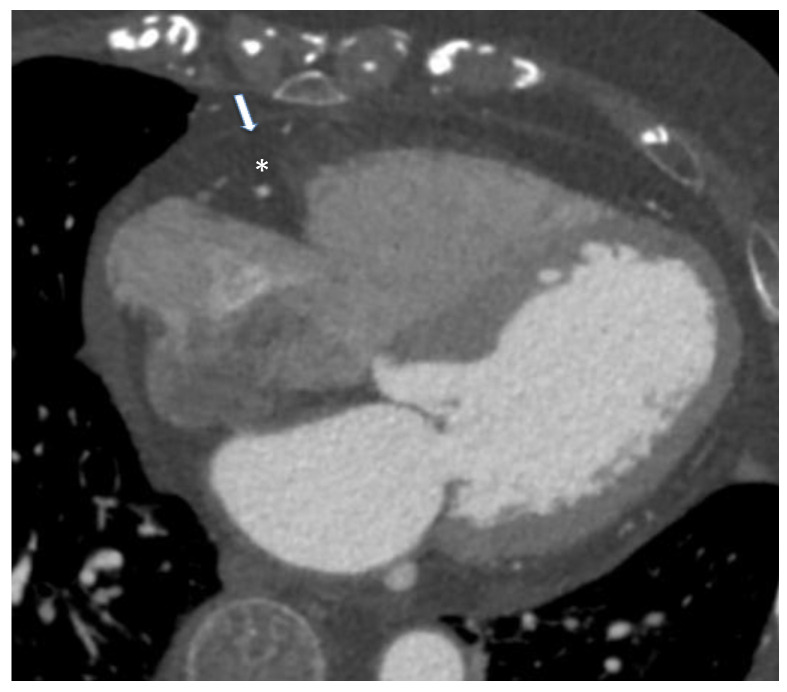
Cardiac CT angiography of an 85-year-old man evaluated for coronary artery disease. The pericardium (arrow) is a thin line, and epicardial adipose tissue (asterisk) lies inside it, between the pericardium and the myocardium. Credit: Tarsitano MG, Pandozzi C, Muscogiuri G, et al., Nutrients 2022;14:2926 (Figure 4), via PubMed Central, CC BY 4.0.
Echocardiography measures its thickness anterior to the right ventricular free wall in the parasternal views, where it appears as a finely granular, mobile layer distinct from an anterior pericardial effusion. It is excluded from wall-thickness measurements. Cardiac CT measures epicardial fat volume and attenuation, and perivascular fat attenuation around the coronary arteries is a research marker of coronary inflammation. Cardiac magnetic resonance measures epicardial fat volume without radiation. In heart failure, a greater epicardial fat burden has been associated with a higher risk of hospitalization and death in pooled observational studies (Wu 2025). Weight loss by diet, incretin-based therapy, or bariatric surgery reduces epicardial fat. No measurement threshold has guideline status.
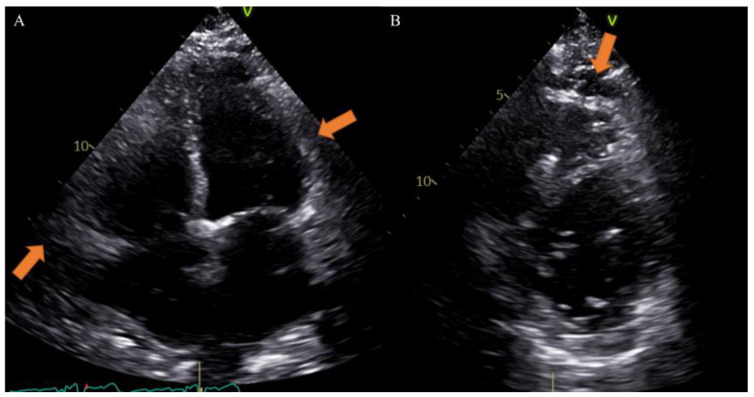
Transthoracic echocardiogram of a 65-year-old man with epicardial fat (arrows) on the surface of the heart in the apical four-chamber (A) and short-axis (B) views. Credit: Tarsitano MG, Pandozzi C, Muscogiuri G, et al., Nutrients 2022;14:2926 (Figure 2), via PubMed Central, CC BY 4.0.
Obesity cardiomyopathy, heart failure, and the obesity paradox
In the Framingham Heart Study, the risk of heart failure rose by 5% in men and 7% in women per 1 kg/m² increment in BMI, and obesity doubled the risk (hazard ratio 2.12 in women and 1.90 in men) (Kenchaiah 2002). Severe, long-standing obesity can cause a cardiomyopathy with left ventricular dilation and hypertrophy, increased blood volume and cardiac output, elevated filling pressures, and right ventricular dysfunction, often compounded by sleep apnea and obesity hypoventilation. More commonly, obesity produces HFpEF, with plasma volume expansion, concentric remodeling, right ventricular enlargement, epicardial fat, pericardial restraint, and natriuretic peptide levels that are lower than expected for the filling pressures (obesity-related HFpEF). Semaglutide in STEP-HFpEF and tirzepatide in SUMMIT improved symptoms, and tirzepatide also reduced worsening heart failure events.
Obesity paradox
In several established cardiovascular diseases, overweight and mild obesity are associated with lower mortality than normal weight. In a meta-analysis of nine observational studies with 28,209 patients with heart failure, overweight (relative risk 0.84) and obesity (relative risk 0.67) were associated with lower all-cause mortality, and the association persisted after risk adjustment (Oreopoulos 2008). In the general population, a meta-analysis using standard BMI categories reported lower all-cause mortality with overweight (hazard ratio 0.94) and no excess with class 1 obesity (Flegal 2013). The Global BMI Mortality Collaboration, restricted to never-smokers without chronic disease at baseline and excluding the first 5 years of follow-up, found the opposite: mortality rose throughout the overweight and obese range (Global BMI Mortality Collaboration 2016).
The paradox is largely explained by methodological factors: reverse causation (weight loss from cachexia, cancer, or advanced heart failure), confounding by smoking, collider and selection bias in populations already defined by disease, the inability of BMI to separate fat from lean mass, and the protective effect of greater lean mass and cardiorespiratory fitness. In heart failure, fitness and lean mass predict outcome better than BMI. Randomized trials of weight-reducing drugs show cardiovascular benefit: in SELECT, semaglutide reduced cardiovascular events in patients with established cardiovascular disease and overweight or obesity, and in SUMMIT, tirzepatide reduced heart failure events in obesity-related HFpEF.
Obesity and atrial fibrillation
In a meta-analysis of 51 studies with 626,603 individuals, a 5 kg/m² increase in BMI was associated with a 29% greater risk of incident atrial fibrillation in cohort studies (odds ratio 1.29), a 10% greater risk of postoperative atrial fibrillation, and a 13% greater risk of recurrence after ablation (Wong 2015). Mechanisms include left atrial enlargement and elevated pressure, atrial fibrosis, epicardial fat infiltration of the atrial myocardium, sleep apnea, hypertension, and inflammation. Sustained weight loss of 10% or more reduces atrial fibrillation burden and recurrence (Pathak 2015), and the guideline weight target is set out in atrial fibrillation risk factors. Bariatric surgery was not significantly associated with less atrial fibrillation in a pooled analysis of observational studies (van Veldhuisen 2022).
Anti-obesity medications and cardiovascular outcomes
In SELECT, semaglutide 2.4 mg once weekly reduced MACE by 20% (6.5% versus 8.0%; hazard ratio 0.80) in 17,604 patients aged 45 years or older with established cardiovascular disease and a BMI of 27 kg/m² or more without diabetes. SELECT provided the first evidence that a weight-management drug reduces cardiovascular events; evidence for event reduction in primary prevention without established cardiovascular disease is lacking (SELECT). Semaglutide and tirzepatide produce mean weight loss of about 15% and 20%, respectively, in obesity without diabetes. Weight returns after discontinuation, and lean mass accounts for a quarter to two-fifths of the weight lost (weight loss with incretin-based therapy).
The ADA recommends obesity pharmacotherapy with lifestyle changes for people with diabetes and overweight or obesity and prefers semaglutide or tirzepatide because of their greater weight loss and weight-independent benefits. It recommends continuing therapy beyond the weight goal because discontinuation is followed by weight regain and recurrence of cardiometabolic risk factors (ADA 2026, section 8). The labeled population for chronic weight management is adults with a BMI of 30 kg/m² or more, or 27 kg/m² or more with a weight-related condition; the 2025 ACC concise clinical guidance identifies semaglutide and tirzepatide as preferred agents and does not require a failed trial of lifestyle therapy first. The CKM guideline recommends GLP-1–based therapy for selected adults with obesity and additional cardiovascular risk factors. Older agents (orlistat, phentermine-topiramate, naltrexone-bupropion) produce smaller weight loss and lack cardiovascular outcome evidence; sympathomimetic agents raise heart rate and are used with caution in cardiovascular disease.
Bariatric and metabolic surgery and cardiovascular outcomes
Bariatric surgery produces the largest and most durable weight loss of any obesity treatment. Randomized cardiovascular outcome trials are lacking, and the evidence is observational.
| Study | Design and population | Cardiovascular result |
|---|---|---|
| Swedish Obese Subjects (2012) | Prospective matched cohort, 2,010 surgery vs 2,037 usual care | Cardiovascular death HR 0.47 (0.29–0.76); first myocardial infarction or stroke HR 0.67 (0.54–0.83) |
| Metabolic surgery in type 2 diabetes (2019) | Matched cohort, 13,722 patients with type 2 diabetes and obesity; median 3.9 years | MACE at 8 years 30.8% vs 47.7% (adjusted HR 0.61; 0.55–0.69); all-cause mortality HR 0.59 (0.48–0.72) |
| Meta-analysis (2022) | 39 cohort studies of surgery vs nonsurgical controls | All-cause mortality HR 0.55; cardiovascular mortality 0.59; heart failure 0.50; myocardial infarction 0.58; stroke 0.64; atrial fibrillation 0.82 (nonsignificant) |
Cardiovascular outcomes after bariatric and metabolic surgery (Sjöström 2012; Aminian 2019; van Veldhuisen 2022). HR, hazard ratio (95% confidence interval); MACE, major adverse cardiovascular events.
Indications. The 2022 ASMBS/IFSO statement recommends metabolic and bariatric surgery for a BMI above 35 kg/m² regardless of comorbidity and recommends that it be considered for a BMI of 30 to 34.9 kg/m² with metabolic disease, with lower thresholds in Asian populations (Eisenberg 2022). The ADA Standards present metabolic surgery as an option in type 2 diabetes with a BMI of 30 kg/m² or more (27.5 kg/m² or more in Asian American individuals) in good surgical candidates, performed in high-volume interprofessional centers (ADA 2026, section 8). The ESC recommends considering bariatric surgery in high-risk and very high-risk patients with a BMI of 35 kg/m² or more when lifestyle change and weight-reducing drugs do not maintain weight loss (Marx 2023).
Cardiovascular care around surgery. Sleeve gastrectomy and Roux-en-Y gastric bypass are the dominant procedures. Preoperative evaluation follows the perioperative guideline. Sleep apnea is common in surgical candidates (upper airway and bariatric surgery for sleep apnea). Drug absorption changes after bypass: direct oral anticoagulants are less predictable, parenteral anticoagulation is used early after surgery, and warfarin is reasonable in atrial fibrillation after bariatric surgery (anticoagulation after bariatric surgery). Antihypertensive, glucose-lowering, and diuretic doses fall as weight declines, and insulin and sulfonylureas are reduced early to prevent hypoglycemia; postbariatric hypoglycemia is a distinct late complication (ADA 2026, section 8). Surgery and incretin therapy are complementary, and incretin drugs treat insufficient weight loss or weight recurrence after surgery.
Magnitude of weight loss and risk-factor improvement
The benefits of weight loss are graded: a loss of 5% to 7% improves glycemia, blood pressure, and triglycerides, and a sustained loss of more than 10% can remit type 2 diabetes and is associated with fewer cardiovascular events in post hoc analyses (ADA 2026, section 8; Look AHEAD 2016). Effects on blood pressure, atrial fibrillation, sleep apnea, and heart failure incidence after surgery (van Veldhuisen 2022) follow the same gradient, and LDL cholesterol changes little with weight loss.
Metabolic syndrome: definitions, criteria, and cardiovascular risk
The metabolic syndrome describes the clustering of central obesity, atherogenic dyslipidemia, elevated blood pressure, and dysglycemia that arises from insulin resistance and visceral adiposity. Successive definitions differ mainly in whether central obesity is obligatory and in the waist threshold.
| Component | AHA/NHLBI (revised NCEP ATP III, 2005) | IDF (2005) | Harmonized joint interim statement (2009) |
|---|---|---|---|
| Required criteria | Any 3 of 5 | Central obesity plus 2 of the other 4 | Any 3 of 5; no obligatory component |
| Waist circumference | Men 102 cm or more; women 88 cm or more | Europid men 94 cm or more, women 80 cm or more; South and Southeast Asian men 90 cm or more, women 80 cm or more | National or regional thresholds |
| Triglycerides | 150 mg/dL or more, or treatment | 150 mg/dL (1.7 mmol/L) or more, or treatment | 150 mg/dL or more, or treatment |
| HDL cholesterol | Below 40 mg/dL in men, below 50 mg/dL in women, or treatment | Below 40 mg/dL (1.03 mmol/L) in men, below 50 mg/dL (1.29 mmol/L) in women, or treatment | Below 40 mg/dL in men, below 50 mg/dL in women, or treatment |
| Blood pressure | 130/85 mm Hg or more, or treatment | 130/85 mm Hg or more, or treatment | 130/85 mm Hg or more, or treatment |
| Fasting glucose | 100 mg/dL or more, or treatment | 100 mg/dL (5.6 mmol/L) or more, or type 2 diabetes | 100 mg/dL or more, or treatment |
Definitions of the metabolic syndrome (Grundy 2005; Zimmet 2005; Alberti 2009; NHLBI). The World Health Organization (1999) and the European Group for the Study of Insulin Resistance required evidence of insulin resistance or dysglycemia as the obligatory component. NCEP ATP III, National Cholesterol Education Program Adult Treatment Panel III.
The 2009 joint interim statement of the IDF, NHLBI, AHA, World Heart Federation, International Atherosclerosis Society, and International Association for the Study of Obesity unified the criteria: three abnormal findings of five qualify, waist circumference is a screening tool without obligatory status, and national or regional waist thresholds are used until further data are available (Alberti 2009). About 1 in 3 US adults has the metabolic syndrome (NHLBI). Earlier definitions from the World Health Organization in 1999 and the European Group for the Study of Insulin Resistance required documented insulin resistance or dysglycemia.
Cardiovascular risk. In a meta-analysis of 87 studies with 951,083 patients, the metabolic syndrome was associated with relative risks of 2.35 for cardiovascular disease, 2.40 for cardiovascular mortality, 1.99 for myocardial infarction, 2.27 for stroke, and 1.58 for all-cause mortality; risk remained high in patients without diabetes (Mottillo 2010). Whether the syndrome predicts risk beyond the sum of its components is debated. Its components are continuous variables dichotomized at arbitrary thresholds, the syndrome does not include LDL cholesterol, smoking, age, or kidney function, and quantitative risk equations that include the individual factors predict events at least as well. For these reasons, the 2026 dyslipidemia guideline replaced the metabolic syndrome with CKM syndrome as a risk-enhancing factor, and the CKM guideline retains it as one criterion of stage 2. Its clinical value is as a marker of insulin resistance that identifies patients for lifestyle intervention, screening for diabetes and steatotic liver disease, and assessment of global risk.
Treatment. Weight reduction, physical activity, and a Mediterranean or Dietary Approaches to Stop Hypertension (DASH) dietary pattern address all components. Pharmacotherapy treats the individual components (blood pressure, lipids, and glucose) by their own guidelines, and incretin-based therapy treats the adiposity that drives the syndrome.
Metabolic dysfunction-associated steatotic liver disease and cardiovascular disease
Nomenclature. A multisociety Delphi process replaced nonalcoholic fatty liver disease (NAFLD) with metabolic dysfunction–associated steatotic liver disease (MASLD) and nonalcoholic steatohepatitis with metabolic dysfunction–associated steatohepatitis (MASH). MASLD requires hepatic steatosis and at least one of five cardiometabolic risk factors, which correspond to the components of the metabolic syndrome (adiposity, dysglycemia, elevated blood pressure, elevated triglycerides, and low HDL cholesterol). Steatosis with no metabolic risk factor and no other cause is cryptogenic, and MASLD with alcohol intake of 140 to 350 g a week in women or 210 to 420 g a week in men is classified as MetALD (Rinella 2023).
Cardiovascular risk. Cardiovascular disease is a leading cause of death in MASLD. In a meta-analysis of 36 longitudinal studies with 5,802,226 individuals, NAFLD was associated with a hazard ratio of 1.45 for fatal or nonfatal cardiovascular events, rising to 2.50 with advanced fibrosis, independent of age, sex, adiposity, diabetes, and other risk factors (Mantovani 2021). Mechanisms include atherogenic dyslipidemia, hepatic insulin resistance, systemic inflammation, and procoagulant factors.
Screening and management. The ADA recommends screening adults with type 2 diabetes or prediabetes, particularly with obesity, cardiometabolic risk factors, or established cardiovascular disease, for MASH-related fibrosis with the fibrosis-4 index (FIB-4, derived from age, aminotransferases, and platelets), even with normal liver enzymes. A FIB-4 of 1.3 or more leads to liver stiffness measurement by transient elastography or the enhanced liver fibrosis test, and higher-risk patients are referred to hepatology (ADA 2026, section 4).
Weight loss through lifestyle change is the foundation. In type 2 diabetes with MASLD and overweight or obesity, a GLP-1 receptor agonist with MASH benefit or tirzepatide is used for weight loss. In biopsy-proven MASH or high fibrosis risk, a GLP-1 receptor agonist is preferred for glucose lowering, and pioglitazone or tirzepatide is an option. Patients with moderate or advanced fibrosis are referred for consideration of a thyroid hormone receptor-β agonist. Semaglutide has accelerated approval for noncirrhotic MASH with moderate to advanced fibrosis (steatohepatitis and incretins). Comprehensive cardiovascular risk management is recommended, and statins are safe in compensated cirrhosis from MASLD and are used with caution in decompensated cirrhosis (statins in liver disease). Metabolic surgery is an option to treat MASH and improve cardiovascular outcomes in type 2 diabetes but is not recommended in decompensated cirrhosis.
Hyperuricemia, gout, and the heart
Serum urate rises with obesity, insulin resistance (hyperinsulinemia reduces renal urate excretion), CKD, hypertension, alcohol, fructose, and diuretics, and hyperuricemia clusters with the metabolic syndrome. Observational studies associate hyperuricemia and gout with hypertension, coronary disease, heart failure, atrial fibrillation, and CKD, but randomized trials have not shown that lowering urate reduces cardiovascular events. Uric acid is therefore a marker of cardiometabolic risk.
| Trial | Population | Comparison | Result |
|---|---|---|---|
| CARES (2018) | 6,190 patients with gout and cardiovascular disease | Febuxostat vs allopurinol | Primary MACE noninferior (10.8% vs 10.4%; HR 1.03); cardiovascular death HR 1.34 (1.03–1.73) and all-cause death HR 1.22 (1.01–1.47) higher with febuxostat; 56.6% stopped treatment |
| FAST (2020) | 6,128 patients with gout aged 60 or older and a cardiovascular risk factor; 33.4% with prior cardiovascular disease | Febuxostat vs allopurinol, open label | On-treatment primary end point 1.72 vs 2.05 per 100 patient-years (HR 0.85; 0.70–1.03), noninferior; no excess cardiovascular or all-cause death with febuxostat |
| ALL-HEART (2022) | 5,721 patients aged 60 or older with ischemic heart disease and no gout | Allopurinol vs usual care | Nonfatal myocardial infarction, nonfatal stroke, or cardiovascular death 11.0% vs 11.3% (HR 1.04; 0.89–1.21) |
Randomized trials of urate-lowering therapy and cardiovascular outcomes (White 2018; Mackenzie 2020; Mackenzie 2022). HR, hazard ratio (95% confidence interval).
The 2020 American College of Rheumatology guideline recommends allopurinol as first-line urate-lowering therapy, including in moderate to severe CKD, a treat-to-target strategy with a serum urate below 6 mg/dL, and anti-inflammatory prophylaxis for at least 3 to 6 months when therapy starts (FitzGerald 2020). Gout flares in patients with heart failure or CKD are treated with colchicine or a short course of corticosteroids in preference to nonsteroidal anti-inflammatory drugs, which cause fluid retention and kidney injury. Colchicine dosing when a patient already takes low-dose colchicine for coronary prevention is described in the colchicine hub. Thiazide and loop diuretics raise serum urate.
Sleep apnea, polycystic ovary syndrome, and sex differences in cardiometabolic risk
Obstructive sleep apnea. Obstructive sleep apnea is common in obesity and type 2 diabetes. Intermittent hypoxia and sleep fragmentation impair insulin sensitivity and beta-cell function through sympathetic activation, cortisol release, and adipose inflammation, and an apnea-hypopnea index above 30 events per hour has been associated with a 30% higher hazard of incident diabetes (metabolic effects of sleep apnea). Positive airway pressure has small effects on glycemia, whereas weight loss treats both conditions; tirzepatide is labeled for moderate to severe obstructive sleep apnea with obesity.
Polycystic ovary syndrome. Polycystic ovary syndrome affects 10% to 13% of women of reproductive age and is associated with insulin resistance in lean and obese women, with a threefold relative risk of type 2 diabetes, and with hypertension and low HDL cholesterol. The 2023 international guideline recommends assessment of cardiovascular risk factors and glycemic status at diagnosis, and the 2026 dyslipidemia guideline lists it as a risk-enhancing factor (polycystic ovary syndrome and cardiovascular risk).
Sex differences. Diabetes confers a greater relative risk of coronary heart disease in women than in men, and women with diabetes reach glycemic, blood pressure, and LDL cholesterol targets less often (diabetes in women). Gestational diabetes and hypertensive disorders of pregnancy are reproductive risk markers for later diabetes and cardiovascular disease, and the ADA recommends lifelong screening for diabetes at 1- to 3-year intervals after gestational diabetes (ADA 2026, section 2).
Multidisciplinary care, access, and social drivers of health
CKM syndrome crosses specialty boundaries, and treatment gaps arise when cardiologists regard glucose-lowering drugs as the endocrinologist's responsibility and primary care clinicians regard cardioprotective drugs as the cardiologist's. The 2026 CKM guideline recommends coordinated interdisciplinary care with a CKM coordination point person responsible for patient-centered care and guideline adherence, and its authors identify education, automated decision support, billing and reimbursement, communication, and shared clinical space as structural barriers. The ADA Standards advise an interprofessional approach that includes a cardiovascular specialist for patients with stage B heart failure (ADA 2026, section 10).
Social drivers of health. Food insecurity, housing instability, financial strain, transportation, and neighborhood deprivation increase the incidence of obesity, diabetes, and CKD, reduce access to care and medications, and worsen outcomes. The 2023 advisory and the 2026 guideline recommend routine screening for social needs and their incorporation into care plans, and the full PREVENT model includes a zip-code social deprivation index (Ndumele 2023; Ndumele 2026). The ADA recommends considering systemic, structural, cultural, and socioeconomic factors, including food insecurity, in nutrition plans and states that diabetes prevention programs should be covered by third-party payers (ADA 2026, sections 3 and 8).
Cost and access. GLP-1 receptor agonists, tirzepatide, SGLT2 inhibitors, and finerenone carry high list prices in the United States, coverage for obesity indications is inconsistent, and prior authorization delays treatment. Where an agent with proven benefit cannot be obtained, the order of priority follows the phenotype: an SGLT2 inhibitor for heart failure or CKD, a GLP-1–based drug for atherosclerotic disease or obesity, and generic metformin, statins, and renin-angiotensin inhibitors for all eligible patients.
Sources of error in cardiometabolic risk assessment and treatment
- Waiting for HbA1c to exceed target before starting a cardioprotective drug. SGLT2 inhibitors and GLP-1 receptor agonists are indicated by cardiovascular, kidney, and heart failure phenotype irrespective of HbA1c and of metformin use.
- Treating diabetes as a uniform coronary risk equivalent. Risk varies with age, duration, albuminuria, eGFR, and target-organ damage, and is estimated with PREVENT, SCORE2-Diabetes, or CKM stage.
- Accepting a normal natriuretic peptide in obesity. Natriuretic peptides are disproportionately low in obesity, and a normal value does not exclude HFpEF.
- Relying on BMI alone. BMI misclassifies adiposity in people of Asian, Middle Eastern, and African ancestry and in muscular or older individuals; waist circumference or waist-to-height ratio confirms central adiposity.
- Applying US waist thresholds to all ancestries. The AHA/NHLBI thresholds of 102 cm and 88 cm are higher than IDF thresholds for Europid and Asian populations.
- Intensifying glucose control with insulin or sulfonylureas in established cardiovascular disease. ACCORD showed excess mortality with a near-normal target; hypoglycemia is associated with arrhythmia and death.
- Screening asymptomatic patients with diabetes for coronary disease. DIAD and FACTOR-64 showed no reduction in events; testing is reserved for symptoms, vascular disease, or electrocardiographic abnormalities.
- Interpreting an ankle-brachial index above 1.40 as normal. Medial calcification in diabetes falsely elevates the index; a toe-brachial index or duplex ultrasound is required.
- Starting an SGLT2 inhibitor or incretin without reducing insulin or sulfonylurea in a patient near target. The combination causes hypoglycemia.
- Continuing an SGLT2 inhibitor through prolonged fasting or major surgery. Euglycemic ketoacidosis occurs with near-normal glucose; the drug is held 3 to 4 days before scheduled surgery.
- Using pioglitazone or saxagliptin in heart failure. Both increase heart failure hospitalization.
- Prescribing aspirin for primary prevention in all patients with diabetes. In ASCEND, bleeding largely offset the reduction in vascular events.
- Interpreting the obesity paradox as a reason to avoid weight loss. The paradox reflects reverse causation, confounding, and the limits of BMI; intentional weight loss with semaglutide reduced events in SELECT.
- Lowering serum urate to prevent cardiovascular events. Allopurinol in ischemic heart disease without gout did not reduce events in ALL-HEART.
- Assigning a CKM stage from a single eGFR or UACR. CKD requires abnormalities persisting for at least 3 months.
References
- Ndumele CE, Rodriguez F, Dixon DL, et al. 2026 AHA/ACC/ADA/ASN guideline for the prevention, detection, evaluation, and management of cardiovascular-kidney-metabolic syndrome: a report of the American College of Cardiology/American Heart Association Joint Committee on Clinical Practice Guidelines. J Am Coll Cardiol. 2026;87(22S):e1889–e2007. doi:10.1016/j.jacc.2026.03.056
- Ndumele CE, Rangaswami J, Chow SL, et al. Cardiovascular-kidney-metabolic health: a presidential advisory from the American Heart Association. Circulation. 2023;148:1606–1635 (correction: Circulation 2024;149:e1023). doi:10.1161/CIR.0000000000001184
- Khan SS, Ndumele CE, Bhave N, et al. Use of predicted risk and expected benefit to guide decision-making in cardiovascular-kidney-metabolic syndrome for the primary prevention of cardiovascular disease: a scientific statement from the American Heart Association and American College of Cardiology. J Am Coll Cardiol. 2026;88:589–612. doi:10.1016/j.jacc.2026.05.007
- American Diabetes Association Professional Practice Committee. 10. Cardiovascular disease and risk management: Standards of Care in Diabetes—2026. Diabetes Care. 2026;49(Suppl 1):S216–S245. doi:10.2337/dc26-S010
- American Diabetes Association Professional Practice Committee. 2. Diagnosis and classification of diabetes: Standards of Care in Diabetes—2026. Diabetes Care. 2026;49(Suppl 1):S27–S49. doi:10.2337/dc26-S002
- American Diabetes Association Professional Practice Committee. 3. Prevention or delay of diabetes and associated comorbidities: Standards of Care in Diabetes—2026. Diabetes Care. 2026;49(Suppl 1):S50–S60. doi:10.2337/dc26-S003
- American Diabetes Association Professional Practice Committee. 4. Comprehensive medical evaluation and assessment of comorbidities: Standards of Care in Diabetes—2026. Diabetes Care. 2026;49(Suppl 1):S61–S88. doi:10.2337/dc26-S004
- American Diabetes Association Professional Practice Committee. 5. Facilitating positive health behaviors and well-being to improve health outcomes: Standards of Care in Diabetes—2026. Diabetes Care. 2026;49(Suppl 1):S89–S131. doi:10.2337/dc26-S005
- American Diabetes Association Professional Practice Committee. 6. Glycemic goals, hypoglycemia, and hyperglycemic crises: Standards of Care in Diabetes—2026. Diabetes Care. 2026;49(Suppl 1):S132–S149. doi:10.2337/dc26-S006
- American Diabetes Association Professional Practice Committee. 8. Obesity and weight management for the prevention and treatment of diabetes: Standards of Care in Diabetes—2026. Diabetes Care. 2026;49(Suppl 1):S166–S182. doi:10.2337/dc26-S008
- American Diabetes Association Professional Practice Committee. 9. Pharmacologic approaches to glycemic treatment: Standards of Care in Diabetes—2026. Diabetes Care. 2026;49(Suppl 1):S183–S215. doi:10.2337/dc26-S009
- American Diabetes Association Professional Practice Committee. 11. Chronic kidney disease and risk management: Standards of Care in Diabetes—2026. Diabetes Care. 2026;49(Suppl 1):S246–S260. doi:10.2337/dc26-S011
- American Diabetes Association Professional Practice Committee. 13. Older adults: Standards of Care in Diabetes—2026. Diabetes Care. 2026;49(Suppl 1):S277–S296. doi:10.2337/dc26-S013
- American Diabetes Association Professional Practice Committee. 16. Diabetes care in the hospital: Standards of Care in Diabetes—2026. Diabetes Care. 2026;49(Suppl 1):S339–S355. doi:10.2337/dc26-S016
- Marx N, Federici M, Schütt K, et al. 2023 ESC guidelines for the management of cardiovascular disease in patients with diabetes. Eur Heart J. 2023;44:4043–4140. doi:10.1093/eurheartj/ehad192
- SCORE2-Diabetes Working Group and the ESC Cardiovascular Risk Collaboration. SCORE2-Diabetes: 10-year cardiovascular risk estimation in type 2 diabetes in Europe. Eur Heart J. 2023;44:2544–2556. doi:10.1093/eurheartj/ehad260
- Das SR, Everett BM, Birtcher KK, et al. 2020 expert consensus decision pathway on novel therapies for cardiovascular risk reduction in patients with type 2 diabetes: a report of the American College of Cardiology Solution Set Oversight Committee. J Am Coll Cardiol. 2020;76:1117–1145. doi:10.1016/j.jacc.2020.05.037
- Emerging Risk Factors Collaboration; Sarwar N, Gao P, Seshasai SR, et al. Diabetes mellitus, fasting blood glucose concentration, and risk of vascular disease: a collaborative meta-analysis of 102 prospective studies. Lancet. 2010;375:2215–2222. doi:10.1016/S0140-6736(10)60484-9
- Gregg EW, Cheng YJ, Srinivasan M, et al. Trends in cause-specific mortality among adults with and without diagnosed diabetes in the USA: an epidemiological analysis of linked national survey and vital statistics data. Lancet. 2018;391:2430–2440. doi:10.1016/S0140-6736(18)30314-3
- Rawshani A, Rawshani A, Franzén S, et al. Risk factors, mortality, and cardiovascular outcomes in patients with type 2 diabetes. N Engl J Med. 2018;379:633–644. doi:10.1056/NEJMoa1800256
- Rawshani A, Sattar N, Franzén S, et al. Excess mortality and cardiovascular disease in young adults with type 1 diabetes in relation to age at onset: a nationwide, register-based cohort study. Lancet. 2018;392:477–486. doi:10.1016/S0140-6736(18)31506-X
- Nathan DM, Cleary PA, Backlund JY, et al.; DCCT/EDIC Study Research Group. Intensive diabetes treatment and cardiovascular disease in patients with type 1 diabetes. N Engl J Med. 2005;353:2643–2653. doi:10.1056/NEJMoa052187
- Haffner SM, Lehto S, Rönnemaa T, Pyörälä K, Laakso M. Mortality from coronary heart disease in subjects with type 2 diabetes and in nondiabetic subjects with and without prior myocardial infarction. N Engl J Med. 1998;339:229–234. doi:10.1056/NEJM199807233390404
- Bulugahapitiya U, Siyambalapitiya S, Sithole J, Idris I. Is diabetes a coronary risk equivalent? Systematic review and meta-analysis. Diabet Med. 2009;26:142–148. doi:10.1111/j.1464-5491.2008.02640.x
- Young LH, Wackers FJ, Chyun DA, et al. Cardiac outcomes after screening for asymptomatic coronary artery disease in patients with type 2 diabetes: the DIAD study: a randomized controlled trial. JAMA. 2009;301:1547–1555. doi:10.1001/jama.2009.476
- Muhlestein JB, Lappé DL, Lima JA, et al. Effect of screening for coronary artery disease using CT angiography on mortality and cardiac events in high-risk patients with diabetes: the FACTOR-64 randomized clinical trial. JAMA. 2014;312:2234–2243. doi:10.1001/jama.2014.15825
- UK Prospective Diabetes Study (UKPDS) Group. Intensive blood-glucose control with sulphonylureas or insulin compared with conventional treatment and risk of complications in patients with type 2 diabetes (UKPDS 33). Lancet. 1998;352:837–853. doi:10.1016/S0140-6736(98)07019-6
- UK Prospective Diabetes Study (UKPDS) Group. Effect of intensive blood-glucose control with metformin on complications in overweight patients with type 2 diabetes (UKPDS 34). Lancet. 1998;352:854–865. doi:10.1016/S0140-6736(98)07037-8
- Holman RR, Paul SK, Bethel MA, Matthews DR, Neil HA. 10-year follow-up of intensive glucose control in type 2 diabetes. N Engl J Med. 2008;359:1577–1589. doi:10.1056/NEJMoa0806470
- Adler AI, Coleman RL, Leal J, Whiteley WN, Clarke P, Holman RR. Post-trial monitoring of a randomised controlled trial of intensive glycaemic control in type 2 diabetes extended from 10 years to 24 years (UKPDS 91). Lancet. 2024;404:145–155. doi:10.1016/S0140-6736(24)00537-3
- Action to Control Cardiovascular Risk in Diabetes Study Group; Gerstein HC, Miller ME, Byington RP, et al. Effects of intensive glucose lowering in type 2 diabetes (ACCORD). N Engl J Med. 2008;358:2545–2559. doi:10.1056/NEJMoa0802743
- ADVANCE Collaborative Group; Patel A, MacMahon S, Chalmers J, et al. Intensive blood glucose control and vascular outcomes in patients with type 2 diabetes. N Engl J Med. 2008;358:2560–2572. doi:10.1056/NEJMoa0802987
- Duckworth W, Abraira C, Moritz T, et al. Glucose control and vascular complications in veterans with type 2 diabetes (VADT). N Engl J Med. 2009;360:129–139. doi:10.1056/NEJMoa0808431
- Reaven PD, Emanuele NV, Wiitala WL, et al. Intensive glucose control in patients with type 2 diabetes: 15-year follow-up. N Engl J Med. 2019;380:2215–2224. doi:10.1056/NEJMoa1806802
- International Hypoglycaemia Study Group. Glucose concentrations of less than 3.0 mmol/L (54 mg/dL) should be reported in clinical trials: a joint position statement of the American Diabetes Association and the European Association for the Study of Diabetes. Diabetes Care. 2017;40:155–157. doi:10.2337/dc16-2215
- Zoungas S, Patel A, Chalmers J, et al. Severe hypoglycemia and risks of vascular events and death. N Engl J Med. 2010;363:1410–1418. doi:10.1056/NEJMoa1003795
- Chow E, Bernjak A, Williams S, et al. Risk of cardiac arrhythmias during hypoglycemia in patients with type 2 diabetes and cardiovascular risk. Diabetes. 2014;63:1738–1747. doi:10.2337/db13-0468
- Marso SP, McGuire DK, Zinman B, et al. Efficacy and safety of degludec versus glargine in type 2 diabetes (DEVOTE). N Engl J Med. 2017;377:723–732. doi:10.1056/NEJMoa1615692
- Rosenstock J, Kahn SE, Johansen OE, et al. Effect of linagliptin vs glimepiride on major adverse cardiovascular outcomes in patients with type 2 diabetes: the CAROLINA randomized clinical trial. JAMA. 2019;322:1155–1166. doi:10.1001/jama.2019.13772
- Rosenstock J, Perkovic V, Johansen OE, et al. Effect of linagliptin vs placebo on major cardiovascular events in adults with type 2 diabetes and high cardiovascular and renal risk: the CARMELINA randomized clinical trial. JAMA. 2019;321:69–79. doi:10.1001/jama.2018.18269
- Nissen SE, Wolski K. Effect of rosiglitazone on the risk of myocardial infarction and death from cardiovascular causes. N Engl J Med. 2007;356:2457–2471. doi:10.1056/NEJMoa072761
- US Food and Drug Administration. Type 2 diabetes mellitus: evaluating the safety of new drugs for improving glycemic control. Draft guidance for industry. Silver Spring, MD: FDA; March 2020. fda.gov/media/135936
- Home PD, Pocock SJ, Beck-Nielsen H, et al. Rosiglitazone evaluated for cardiovascular outcomes in oral agent combination therapy for type 2 diabetes (RECORD): a multicentre, randomised, open-label trial. Lancet. 2009;373:2125–2135. doi:10.1016/S0140-6736(09)60953-3
- Hong J, Zhang Y, Lai S, et al. Effects of metformin versus glipizide on cardiovascular outcomes in patients with type 2 diabetes and coronary artery disease (SPREAD-DIMCAD). Diabetes Care. 2013;36:1304–1311. doi:10.2337/dc12-0719
- Dormandy JA, Charbonnel B, Eckland DJ, et al. Secondary prevention of macrovascular events in patients with type 2 diabetes in the PROactive Study (PROspective pioglitAzone Clinical Trial In macroVascular Events): a randomised controlled trial. Lancet. 2005;366:1279–1289. doi:10.1016/S0140-6736(05)67528-9
- Kernan WN, Viscoli CM, Furie KL, et al. Pioglitazone after ischemic stroke or transient ischemic attack (IRIS). N Engl J Med. 2016;374:1321–1331. doi:10.1056/NEJMoa1506930
- Vaccaro O, Masulli M, Nicolucci A, et al. Effects on the incidence of cardiovascular events of the addition of pioglitazone versus sulfonylureas in patients with type 2 diabetes inadequately controlled with metformin (TOSCA.IT): a randomised, multicentre trial. Lancet Diabetes Endocrinol. 2017;5:887–897. doi:10.1016/S2213-8587(17)30317-0
- Green JB, Bethel MA, Armstrong PW, et al. Effect of sitagliptin on cardiovascular outcomes in type 2 diabetes (TECOS). N Engl J Med. 2015;373:232–242. doi:10.1056/NEJMoa1501352
- ORIGIN Trial Investigators; Gerstein HC, Bosch J, Dagenais GR, et al. Basal insulin and cardiovascular and other outcomes in dysglycemia. N Engl J Med. 2012;367:319–328. doi:10.1056/NEJMoa1203858
- Das Pradhan A, Glynn RJ, Fruchart JC, et al. Triglyceride lowering with pemafibrate to reduce cardiovascular risk (PROMINENT). N Engl J Med. 2022;387:1923–1934. doi:10.1056/NEJMoa2210645
- Bhatt DL, Steg PG, Miller M, et al. Cardiovascular risk reduction with icosapent ethyl for hypertriglyceridemia (REDUCE-IT). N Engl J Med. 2019;380:11–22. doi:10.1056/NEJMoa1812792
- ASCEND Study Collaborative Group; Bowman L, Mafham M, Wallendszus K, et al. Effects of aspirin for primary prevention in persons with diabetes mellitus. N Engl J Med. 2018;379:1529–1539. doi:10.1056/NEJMoa1804988
- Steg PG, Bhatt DL, Simon T, et al. Ticagrelor in patients with stable coronary disease and diabetes (THEMIS). N Engl J Med. 2019;381:1309–1320. doi:10.1056/NEJMoa1908077
- Bhatt DL, Eikelboom JW, Connolly SJ, et al. Role of combination antiplatelet and anticoagulation therapy in diabetes mellitus and cardiovascular disease: insights from the COMPASS trial. Circulation. 2020;141:1841–1854. doi:10.1161/CIRCULATIONAHA.120.046448
- Farkouh ME, Domanski M, Sleeper LA, et al. Strategies for multivessel revascularization in patients with diabetes (FREEDOM). N Engl J Med. 2012;367:2375–2384. doi:10.1056/NEJMoa1211585
- BARI 2D Study Group; Frye RL, August P, Brooks MM, et al. A randomized trial of therapies for type 2 diabetes and coronary artery disease. N Engl J Med. 2009;360:2503–2515. doi:10.1056/NEJMoa0805796
- Kannel WB, Hjortland M, Castelli WP. Role of diabetes in congestive heart failure: the Framingham study. Am J Cardiol. 1974;34:29–34. doi:10.1016/0002-9149(74)90089-7
- Pop-Busui R, Januzzi JL, Bruemmer D, et al. Heart failure: an underappreciated complication of diabetes. A consensus report of the American Diabetes Association. Diabetes Care. 2022;45:1670–1690. doi:10.2337/dci22-0014
- Rubler S, Dlugash J, Yuceoglu YZ, Kumral T, Branwood AW, Grishman A. New type of cardiomyopathy associated with diabetic glomerulosclerosis. Am J Cardiol. 1972;30:595–602. doi:10.1016/0002-9149(72)90595-4
- Pop-Busui R, Evans GW, Gerstein HC, et al. Effects of cardiac autonomic dysfunction on mortality risk in the Action to Control Cardiovascular Risk in Diabetes (ACCORD) trial. Diabetes Care. 2010;33:1578–1584. doi:10.2337/dc10-0125
- Huxley RR, Filion KB, Konety S, et al. Meta-analysis of cohort and case-control studies of type 2 diabetes mellitus and risk of atrial fibrillation. Am J Cardiol. 2011;108:56–62. doi:10.1016/j.amjcard.2011.03.004
- Look AHEAD Research Group; Wing RR, Bolin P, Brancati FL, et al. Cardiovascular effects of intensive lifestyle intervention in type 2 diabetes. N Engl J Med. 2013;369:145–154. doi:10.1056/NEJMoa1212914
- Look AHEAD Research Group; Gregg EW, Jakicic JM, Blackburn G, et al. Association of the magnitude of weight loss and changes in physical fitness with long-term cardiovascular disease outcomes in overweight or obese people with type 2 diabetes: a post-hoc analysis of the Look AHEAD randomised clinical trial. Lancet Diabetes Endocrinol. 2016;4:913–921. doi:10.1016/S2213-8587(16)30162-0
- Global BMI Mortality Collaboration; Di Angelantonio E, Bhupathiraju SN, Wormser D, et al. Body-mass index and all-cause mortality: individual-participant-data meta-analysis of 239 prospective studies in four continents. Lancet. 2016;388:776–786. doi:10.1016/S0140-6736(16)30175-1
- Kenchaiah S, Evans JC, Levy D, et al. Obesity and the risk of heart failure. N Engl J Med. 2002;347:305–313. doi:10.1056/NEJMoa020245
- Oreopoulos A, Padwal R, Kalantar-Zadeh K, Fonarow GC, Norris CM, McAlister FA. Body mass index and mortality in heart failure: a meta-analysis. Am Heart J. 2008;156:13–22. doi:10.1016/j.ahj.2008.02.014
- Flegal KM, Kit BK, Orpana H, Graubard BI. Association of all-cause mortality with overweight and obesity using standard body mass index categories: a systematic review and meta-analysis. JAMA. 2013;309:71–82. doi:10.1001/jama.2012.113905
- Wong CX, Sullivan T, Sun MT, et al. Obesity and the risk of incident, post-operative, and post-ablation atrial fibrillation: a meta-analysis of 626,603 individuals in 51 studies. JACC Clin Electrophysiol. 2015;1:139–152. doi:10.1016/j.jacep.2015.04.004
- Pathak RK, Middeldorp ME, Meredith M, et al. Long-term effect of goal-directed weight management in an atrial fibrillation cohort: a long-term follow-up study (LEGACY). J Am Coll Cardiol. 2015;65:2159–2169. doi:10.1016/j.jacc.2015.03.002
- WHO Expert Consultation. Appropriate body-mass index for Asian populations and its implications for policy and intervention strategies. Lancet. 2004;363:157–163. doi:10.1016/S0140-6736(03)15268-3
- National Institute for Health and Care Excellence. Overweight and obesity management (NG246): identifying and assessing overweight, obesity and central adiposity. NICE guideline. 2025 (updated 2026).
- Zimmet PZ, Shaw JE, Alberti KG. Mainstreaming the metabolic syndrome: a definitive definition (2005 International Diabetes Federation definition). Med J Aust. 2005;183:175–176. doi:10.5694/j.1326-5377.2005.tb06987.x
- Grundy SM, Cleeman JI, Daniels SR, et al. Diagnosis and management of the metabolic syndrome: an American Heart Association/National Heart, Lung, and Blood Institute scientific statement. Circulation. 2005;112:2735–2752. doi:10.1161/CIRCULATIONAHA.105.169404
- Alberti KG, Eckel RH, Grundy SM, et al. Harmonizing the metabolic syndrome: a joint interim statement of the International Diabetes Federation Task Force on Epidemiology and Prevention; National Heart, Lung, and Blood Institute; American Heart Association; World Heart Federation; International Atherosclerosis Society; and International Association for the Study of Obesity. Circulation. 2009;120:1640–1645. doi:10.1161/CIRCULATIONAHA.109.192644
- Mottillo S, Filion KB, Genest J, et al. The metabolic syndrome and cardiovascular risk: a systematic review and meta-analysis. J Am Coll Cardiol. 2010;56:1113–1132. doi:10.1016/j.jacc.2010.05.034
- Rubino F, Cummings DE, Eckel RH, et al. Definition and diagnostic criteria of clinical obesity. Lancet Diabetes Endocrinol. 2025;13:221–262. doi:10.1016/S2213-8587(24)00316-4
- Mechanick JI, Hurley DL, Garvey WT. Adiposity-based chronic disease as a new diagnostic term: the American Association of Clinical Endocrinologists and American College of Endocrinology position statement. Endocr Pract. 2017;23:372–378. doi:10.4158/EP161688.PS
- Wu Q, Guo J, Liu F, et al. Prognostic value of epicardial adipose tissue in heart failure: a systematic review and meta-analysis. Front Cardiovasc Med. 2025;12:1618614. doi:10.3389/fcvm.2025.1618614
- Sjöström L, Peltonen M, Jacobson P, et al. Bariatric surgery and long-term cardiovascular events. JAMA. 2012;307:56–65. doi:10.1001/jama.2011.1914
- Aminian A, Zajichek A, Arterburn DE, et al. Association of metabolic surgery with major adverse cardiovascular outcomes in patients with type 2 diabetes and obesity. JAMA. 2019;322:1271–1282. doi:10.1001/jama.2019.14231
- van Veldhuisen SL, Gorter TM, van Woerden G, et al. Bariatric surgery and cardiovascular disease: a systematic review and meta-analysis. Eur Heart J. 2022;43:1955–1969. doi:10.1093/eurheartj/ehac071
- Eisenberg D, Shikora SA, Aarts E, et al. 2022 American Society for Metabolic and Bariatric Surgery (ASMBS) and International Federation for the Surgery of Obesity and Metabolic Disorders (IFSO): indications for metabolic and bariatric surgery. Surg Obes Relat Dis. 2022;18:1345–1356. doi:10.1016/j.soard.2022.08.013
- Rinella ME, Lazarus JV, Ratziu V, et al. A multisociety Delphi consensus statement on new fatty liver disease nomenclature. Hepatology. 2023;78:1966–1986. doi:10.1097/HEP.0000000000000520
- Mantovani A, Csermely A, Petracca G, et al. Non-alcoholic fatty liver disease and risk of fatal and non-fatal cardiovascular events: an updated systematic review and meta-analysis. Lancet Gastroenterol Hepatol. 2021;6:903–913. doi:10.1016/S2468-1253(21)00308-3
- White WB, Saag KG, Becker MA, et al. Cardiovascular safety of febuxostat or allopurinol in patients with gout (CARES). N Engl J Med. 2018;378:1200–1210. doi:10.1056/NEJMoa1710895
- Mackenzie IS, Ford I, Nuki G, et al. Long-term cardiovascular safety of febuxostat compared with allopurinol in patients with gout (FAST): a multicentre, prospective, randomised, open-label, non-inferiority trial. Lancet. 2020;396:1745–1757. doi:10.1016/S0140-6736(20)32234-0
- Mackenzie IS, Hawkey CJ, Ford I, et al. Allopurinol versus usual care in UK patients with ischaemic heart disease (ALL-HEART): a multicentre, prospective, randomised, open-label, blinded-endpoint trial. Lancet. 2022;400:1195–1205. doi:10.1016/S0140-6736(22)01657-9
- FitzGerald JD, Dalbeth N, Mikuls T, et al. 2020 American College of Rheumatology guideline for the management of gout. Arthritis Care Res (Hoboken). 2020;72:744–760. doi:10.1002/acr.24180
- National Institute of Diabetes and Digestive and Kidney Diseases. Diabetes statistics; and Diabetes and prediabetes tests (clinical tools for health professionals). NIDDK, National Institutes of Health. accessed November 2026.
- National Heart, Lung, and Blood Institute. Metabolic syndrome: what is metabolic syndrome; diagnosis. NHLBI, National Institutes of Health. accessed November 2026.
- Alberti KG, Zimmet P, Shaw J. Metabolic syndrome: a new world-wide definition. A consensus statement from the International Diabetes Federation. Diabet Med. 2006;23:469–480. doi:10.1111/j.1464-5491.2006.01858.x
- Selvin E, Crainiceanu CM, Brancati FL, Coresh J. Short-term variability in measures of glycemia and implications for the classification of diabetes. Arch Intern Med. 2007;167:1545–1551. doi:10.1001/archinte.167.14.1545
- Caleyachetty R, Barber TM, Mohammed NI, et al. Ethnicity-specific BMI cutoffs for obesity based on type 2 diabetes risk in England: a population-based cohort study. Lancet Diabetes Endocrinol. 2021;9:419–426. doi:10.1016/S2213-8587(21)00088-7
- International Diabetes Federation. The IDF consensus worldwide definition of the metabolic syndrome. Brussels: International Diabetes Federation; 2006. idf.org