Library › Special populations and systemic disease › Cardiovascular disease in women
Cardiovascular disease in women
Sex-specific epidemiology, risk factors, presentation, diagnosis, treatment, and outcomes of cardiovascular disease in adult women, from reproductive risk markers to coronary syndromes that predominate in women and cardiac rehabilitation.
Cardiovascular disease is the leading cause of death in women in the United States. Women differ from men in the biology of the arterial wall and myocardium, in a group of risk factors that arise only from reproductive life, in the frequency of nonatherosclerotic and nonobstructive coronary syndromes, and in how often they are diagnosed, referred, and treated according to guidelines.
Burden of cardiovascular disease in women
Heart disease caused the deaths of 304,970 women in the United States in 2023, about 1 in 5 female deaths, and more than 60 million US women (44%) live with some form of heart disease (CDC 2026). Coronary heart disease is diagnosed in 6.2% of women and 8.3% of men, whereas self-reported angina is almost equally common (4.0% and 4.2%). The difference reflects the larger share of angina with nonobstructive coronary arteries in women (Virani 2023). From 1984 onward, the annual number of cardiovascular deaths in US women exceeded that in men. The decline in these deaths that followed was attributed partly to greater awareness and wider use of evidence-based therapy (Mehta 2016), but the reduction in cardiovascular burden in women stalled in the following decade (Vogel 2021).
Clinical coronary disease appears in women about a decade later than in men, so at presentation women are older and carry more hypertension, diabetes, heart failure, and chronic kidney disease (Mehta 2016). The later onset does not protect all women. In Atherosclerosis Risk in Communities surveillance of four US communities from 1995 to 2014, the annual incidence of hospitalization for acute myocardial infarction (MI) rose in women aged 35 to 54 years while it fell in men of the same age. The share of all MI admissions contributed by patients aged 35 to 54 years rose from 27% to 32%, with the largest increase in women. Hypertension and diabetes became more prevalent among these young patients, and young women were less likely than young men to receive guideline-based therapy (Arora 2019).
Awareness among women and clinicians. In nationally representative American Heart Association (AHA) surveys, awareness that heart disease is the leading cause of death in women fell from 65% in 2009 to 44% in 2019. The decline was largest in Hispanic women (odds ratio for awareness, 2019 versus 2009, 0.14), non-Hispanic Black women (0.31), and women aged 25 to 34 years (0.19). In 2019 women were more likely than in 2009 to name breast cancer as the leading cause of death. Awareness of heart attack symptoms also declined (Cushman 2021). Clinician awareness lags in parallel: women presenting with MI are less often recognized as having cardiac symptoms by both themselves and their clinicians, and women with an established diagnosis receive fewer evidence-based treatments (Lichtman 2018; Lee 2019).
Racial, ethnic, and socioeconomic disparities among women
Cardiovascular risk and care among women vary widely by race, ethnicity, income, and place. About 58.9 million US women (45.7%) have high blood pressure, fewer than 1 in 4 of them (22.8%) have it controlled, and Black women are nearly 60% more likely than White women to have high blood pressure (CDC 2026). Black women also bear the highest rates of hypertensive disorders of pregnancy and of pregnancy-related cardiovascular death. Among Medicare beneficiaries eligible for cardiac rehabilitation, participation was 25.8% in non-Hispanic White, 13.6% in non-Hispanic Black, and 13.2% in Hispanic patients (Ritchey 2020).
Social determinants of health (income, education, neighborhood deprivation, food and housing insecurity, caregiving load, and access to care) predict cardiovascular events independently of measured risk factors. The 2019 American College of Cardiology (ACC)/AHA primary prevention guideline directs clinicians to assess social determinants that affect the feasibility of treatment (Arnett 2019), and the full PREVENT model includes a zip-code–based social deprivation index (Khan 2024). Women carry a larger share of unpaid caregiving and more often live alone in older age, which affects attendance at cardiac rehabilitation and follow-up.
Sex and gender in cardiovascular biology
Sex refers to biological attributes determined by the sex chromosomes, gonadal hormones, and reproductive anatomy. Gender refers to socially constructed roles, behaviors, and identities that shape exposures, health-seeking behavior, and the way clinicians respond to symptoms (Vogel 2021). Both act on cardiovascular outcomes: sex determines vessel size, myocardial remodeling, and repolarization, whereas gender influences delays in seeking care, referral for testing and procedures, and participation in rehabilitation. Gender-affirming hormone therapy alters the hormonal component of sex.
Estrogen and the vessel wall. Endogenous estradiol acts through estrogen receptors in endothelium, vascular smooth muscle, and myocardium. It increases endothelial nitric oxide synthase activity and nitric oxide–mediated vasodilation, attenuates catecholamine-mediated vasoconstriction, and is associated with lower low-density lipoprotein (LDL) cholesterol and higher high-density lipoprotein (HDL) cholesterol during the reproductive years (El Khoudary 2020). The menopause transition is accompanied by adverse changes in body composition, lipoproteins, and measures of vascular health, and cardiovascular risk accelerates in the years around the final menstrual period (El Khoudary 2020). Exogenous hormones started late after menopause have not reproduced the protection of the reproductive years, and this observation is the basis of the timing hypothesis of menopausal hormone therapy.
Myocardium and natriuretic peptides. Women have smaller left ventricular cavities and lower left ventricular mass, with higher relative wall thickness in older age, and sex-specific reference values apply to chamber size, left ventricular mass, and strain. Natriuretic peptide levels are higher in healthy women than in men. With age and hypertension, the female ventricle remodels concentrically more often than eccentrically, a pattern that underlies the predominance of women in heart failure with preserved ejection fraction and the paradoxical low-flow phenotype of aortic stenosis.
Repolarization. After puberty the rate-corrected QT interval is roughly 10 to 20 ms longer in women than in men, because androgens shorten repolarization in men; the upper limit of normal is commonly taken as 460 ms in women and 450 ms in men.
Immunity and inflammation. Systemic lupus erythematosus, rheumatoid arthritis, systemic sclerosis, and antiphospholipid syndrome are far more common in women, and inflammatory disease accelerates atherosclerosis and microvascular dysfunction.
Coronary anatomy and plaque in women
Epicardial coronary arteries are smaller in women than in men after adjustment for body size, and women more often have diffuse nonobstructive atherosclerosis, coronary microvascular dysfunction, and vasomotor disorders. Among patients undergoing elective angiography in the United States, 50% to 60% have no obstructive disease, and the proportion is higher in women (Virani 2023).
Plaque erosion. Acute coronary thrombosis arises from plaque rupture, plaque erosion, or a calcified nodule. In an autopsy series of 51 women with sudden coronary death, 18 deaths were caused by eroded plaque with acute thrombus and 8 by ruptured plaque. Seven of the 8 ruptures occurred in women older than 50 years, compared with 3 of the 18 erosions. Erosion was strongly associated with cigarette smoking (odds ratio 21), whereas rupture was associated with elevated total cholesterol (Burke 1998). Erosion produces a thrombus over an intact fibrous cap without a large lipid core, so the residual stenosis after thrombus resolution is often mild. This mechanism contributes to the excess of MI with nonobstructive arteries in younger women.
Calcified plaque. In the CAC Consortium (63,215 asymptomatic adults followed for a median of 12.6 years), women with detectable coronary calcium had fewer calcified lesions and vessels involved than men but larger lesions, and detectable calcium carried a 1.3-fold higher hazard of cardiovascular death in women than in men. The relative hazard of cardiovascular death associated with multivessel calcium was 8.2 in women and 5.1 in men, and calcium density predicted mortality in men but not in women (Shaw 2018).
Underrepresentation of women in cardiovascular trials
Women made up 38.2% of the 862,652 participants in 740 completed cardiovascular trials registered from 2010 to 2017. The median female-to-male ratio was 0.51 overall and 0.34 in trials of acute coronary syndrome, and relative to disease prevalence, women were underrepresented in trials of arrhythmia, coronary heart disease, acute coronary syndrome, and heart failure (participation-to-prevalence ratios 0.48 to 0.78) (Jin 2020). Women were 27% of the 174,149 participants in the statin trials pooled by the Cholesterol Treatment Trialists (CTT 2015) and about 20% of participants in the cardiac resynchronization trials (Zusterzeel 2014).
Underrepresentation leaves sex-specific estimates imprecise, and sex-specific harms such as bleeding, QT prolongation, and access-site complications are detected late. Sex-specific conclusions require a formal test of interaction. A treatment that reaches statistical significance in women but not in men, with a nonsignificant interaction test, has not been shown to work differently by sex; the overall result applies to both. Pooled individual-patient analyses (CTT 2015; Zusterzeel 2014) and dedicated trials in women, such as RHEIA in aortic stenosis (Tchetche 2025), provide the most reliable sex-specific evidence.
Traditional risk factors with greater relative effect in women
The conventional risk factors account for most of the population-attributable risk of coronary disease in both sexes, but several carry a larger relative risk in women, and they are less well controlled in women.
| Risk factor | Sex-specific evidence | Implication |
|---|---|---|
| Diabetes | Relative risk of incident coronary heart disease 2.82 in women and 2.16 in men; multiple-adjusted ratio of relative risks (women to men) 1.44 in 64 cohorts with 858,507 individuals (Peters 2014) | Diabetes removes much of the age advantage of women; statin and blood pressure thresholds are the same, but women with diabetes are less often treated to goal |
| Cigarette smoking | Female-to-male ratio of relative risks for coronary heart disease 1.25 in 75 cohorts adjusted for other risk factors (Huxley 2011); smoking associated with plaque erosion in women (Burke 1998) | Cessation is the most effective preventive measure in women who smoke; combined hormonal contraception carries unacceptable risk (US MEC category 4) in women aged 35 years or older who smoke 15 or more cigarettes a day (Nguyen 2024) |
| Hypertension | Blood pressure rises more steeply in women than in men from the third decade onward (Ji 2020); 45.7% of US women have hypertension and 22.8% of them are controlled (CDC 2026) | Thresholds, targets, and drug choice are the same as in men, except for drugs contraindicated in pregnancy (Jones 2025) |
| Dyslipidemia and lipoprotein(a) | LDL-C rises by roughly 10% or more across the menopause transition; lipoprotein(a) can rise at menopause | Lipoprotein(a) is measured at least once in all adults (Blumenthal 2026) |
| Obesity and physical inactivity | Excess adiposity drives hypertension, diabetes, heart failure with preserved ejection fraction, and atrial fibrillation; visceral fat increases across the menopause transition (El Khoudary 2020) | Life's Essential 8 targets; incretin-based therapy for obesity follows general indications |
| Psychosocial stress and depression | Mental stress–induced myocardial ischemia in 52% of women 50 years or younger after MI versus 25% of age-matched men, with no sex difference in ischemia from physical stress (Vaccarino 2014) | Depression and psychosocial stressors are screened for and treated after MI, in INOCA, and after Takotsubo syndrome and SCAD |
Traditional risk factors with sex-specific evidence. LDL-C, low-density lipoprotein cholesterol; SCAD, spontaneous coronary artery dissection; INOCA, ischemia with no obstructive coronary arteries.
Diabetes. The excess risk of diabetes in women is not explained by differences in pharmacotherapy (Peters 2014). Women with diabetes reach glycemic, blood pressure, and LDL targets less often than men, and diabetes after age 40 years is one of the conditions in which a coronary calcium score of zero does not justify deferral of statin therapy. Statin eligibility and LDL goals in diabetes follow lipid management in diabetes and kidney disease.
Smoking. Smoking is a dominant risk factor for MI in women younger than 50 years and is associated with plaque erosion (Burke 1998). The combination of smoking with estrogen-containing contraception increases arterial thrombotic risk. The US Medical Eligibility Criteria for Contraceptive Use classify combined hormonal methods in smokers aged 35 years or older as category 4 (unacceptable risk) at 15 or more cigarettes a day and category 3 at fewer than 15 a day. In smokers younger than 35 years, they are category 2 (Nguyen 2024).
Hypertension. In four US community cohorts with 144,599 blood pressure measurements over 43 years, women had a steeper rise in systolic and diastolic pressure, mean arterial pressure, and pulse pressure than men beginning in the third decade, and the difference persisted after adjustment for other risk factors (Ji 2020). Hypertension is less common in women than in men before about age 45 and more common after age 65. Hypertensive disorders of pregnancy are often the first manifestation of hypertension in women. Thresholds and treatment follow the general hypertension guideline.
Lipids. LDL cholesterol and apolipoprotein B rise across the menopause transition, and oral estrogen raises triglycerides. The 2026 ACC/AHA dyslipidemia guideline recommends measuring lipoprotein(a) at least once in all adults (Blumenthal 2026); a level of 50 mg/dL (125 nmol/L) or more is a risk-enhancing factor, and testing is particularly informative in women with premature coronary disease or a family history.
Psychosocial stress. Depression, anxiety, posttraumatic stress, social isolation, and caregiver strain are more common in women with coronary disease, especially young women. Emotional stress precedes a large share of Takotsubo syndrome and spontaneous coronary artery dissection (SCAD) events, and mental stress–induced ischemia is more frequent in young women after MI than in men (Vaccarino 2014). Screening for depression is part of secondary prevention after MI.
Female-specific risk factors across the reproductive life course
Reproductive events from menarche to menopause carry information about cardiovascular risk that the Pooled Cohort Equations and PREVENT do not capture. An umbrella review of 32 meta-analyses graded the associations with later cardiovascular disease as about twofold for preeclampsia, stillbirth, and preterm birth; 1.5- to 1.9-fold for gestational hypertension, placental abruption, gestational diabetes, and premature ovarian insufficiency; and less than 1.5-fold for early menarche, polycystic ovary syndrome, ever parity, and early menopause. Longer breastfeeding was associated with lower risk, and no association was found for fertility treatment (Okoth 2020).
| Exposure | Association with later cardiovascular disease | Source |
|---|---|---|
| Early menarche | Composite cardiovascular disease, less than 1.5-fold | Okoth 2020 |
| Polycystic ovary syndrome | Hypertension RR 1.75, type 2 diabetes RR 3.00, nonfatal cerebrovascular events RR 1.41; coronary events RR 1.78 (95% CI 0.99 to 3.23) | Wekker 2020 |
| Infertility and fertility treatment | No association with cardiovascular outcomes for fertility treatment in pooled reviews | Okoth 2020 |
| Ever parity | Less than 1.5-fold | Okoth 2020 |
| Preeclampsia | About twofold for cardiovascular disease; about fourfold for heart failure | Okoth 2020 |
| Gestational hypertension, gestational diabetes, placental abruption | 1.5- to 1.9-fold | Okoth 2020 |
| Preterm birth, stillbirth | About twofold | Okoth 2020 |
| Breastfeeding (ever versus never) | HR 0.89 for cardiovascular disease, 0.86 for coronary heart disease, 0.88 for stroke, 0.83 for fatal cardiovascular disease | Tschiderer 2022 |
| Endometriosis (laparoscopically confirmed) | RR 1.62 for combined coronary end points; 3.08 at age 40 years or younger | Mu 2016 |
| Natural menopause before 40 years | HR 1.55 for nonfatal cardiovascular disease; 1.30 for menopause at 40 to 44 years (reference 50 to 51 years) | Zhu 2019 |
| Bilateral oophorectomy before 50 years without estrogen therapy | Higher all-cause and coronary mortality; number needed to harm 33 for coronary death | Parker 2013 |
| Frequent or persistent vasomotor symptoms | HR 1.51 (frequent at baseline) and 1.77 (persistent) for cardiovascular events | Thurston 2021 |
Female reproductive exposures and later cardiovascular disease, in life-course order. Estimates are from observational studies and meta-analyses and indicate association. They do not prove causation. RR, relative risk; HR, hazard ratio; CI, confidence interval.
Adverse pregnancy outcomes. Preeclampsia, gestational hypertension, gestational diabetes, preterm delivery, small-for-gestational-age birth, placental abruption, and stillbirth unmask a predisposition to vascular and metabolic disease and add to it. The AHA recommends that a history of adverse pregnancy outcomes be recorded and used in cardiovascular risk assessment of all women (Parikh 2021). The 2026 ACC/AHA dyslipidemia guideline lists preeclampsia, gestational hypertension, gestational diabetes, and preterm delivery as risk-enhancing factors (Blumenthal 2026). The magnitude of long-term risk differs by outcome and is best defined after a hypertensive disorder of pregnancy. Cardiometabolic screening after delivery follows a set schedule. Transition from obstetric to primary and cardiovascular care is the step most often missed and is the purpose of postpartum transition clinics.
The pregnancy history is taken at all new cardiovascular assessments of a parous woman: hypertensive disorders, gestational diabetes, preterm delivery and its cause, fetal growth restriction, abruption, and stillbirth. A positive history lowers the threshold for blood pressure surveillance, glucose testing, lipoprotein(a) measurement, and statin therapy in borderline- or intermediate-risk women, and it informs the interpretation of coronary calcium.
Parity and lactation. Ever parity has a weak association, less than 1.5-fold, with later cardiovascular disease (Okoth 2020). In a meta-analysis of 8 prospective studies of 1,192,700 parous women, the lower risk associated with breastfeeding increased progressively with lifetime breastfeeding up to about 12 months, and the associations did not differ by parity, age, or region (Tschiderer 2022).
Infertility and assisted reproduction. Infertility shares causes with cardiometabolic disease, most often polycystic ovary syndrome and obesity. Pooled reviews found no association between fertility treatment itself and later cardiovascular disease (Okoth 2020). Ovarian stimulation and pregnancy after assisted reproduction carry short-term risks of ovarian hyperstimulation, thrombosis, multifetal gestation, and preeclampsia, which matter in women with heart disease.
Endometriosis. In 116,430 women in the Nurses' Health Study II, laparoscopically confirmed endometriosis was associated with MI (RR 1.52), angiographically confirmed angina (1.91), and coronary revascularization (1.35). Forty-two percent of the association was explained by more frequent and earlier hysterectomy or oophorectomy after the diagnosis (Mu 2016).
Polycystic ovary syndrome and cardiovascular risk
Polycystic ovary syndrome (PCOS) affects 10% to 13% of women of reproductive age worldwide by the Rotterdam criteria, with high prevalence in all ethnic groups and world regions (Teede 2023). Under the 2023 International Evidence-based Guideline, PCOS is diagnosed in adults by two of three features after exclusion of other causes: clinical or biochemical hyperandrogenism; ovulatory dysfunction; and polycystic ovarian morphology on ultrasound or, as an alternative added in the 2023 guideline, an elevated anti-Müllerian hormone level. When irregular cycles and hyperandrogenism are both present, ultrasound and anti-Müllerian hormone are not required. Thyroid disease, hyperprolactinemia, nonclassic congenital adrenal hyperplasia, and androgen-secreting tumors are excluded. PCOS is regarded as a lifelong condition that persists after menopause (Teede 2023).
Cardiometabolic profile. Insulin resistance is common in PCOS, occurs in lean as well as obese women, and is amplified by obesity. Women with PCOS have an increased risk of impaired fasting glucose, impaired glucose tolerance, and type 2 diabetes regardless of age and body mass index (Teede 2023). In a meta-analysis of 23 cohort studies, PCOS was associated with hypertension (RR 1.75), type 2 diabetes (RR 3.00), higher total cholesterol (mean difference 7.14 mg/dL), and lower HDL cholesterol (mean difference −2.45 mg/dL); LDL cholesterol and triglycerides did not differ significantly (Wekker 2020). The typical lipid pattern is low HDL cholesterol with high triglycerides in women with obesity. Obstructive sleep apnea, metabolic dysfunction–associated steatotic liver disease, and depression are also more common, and hypertensive disorders of pregnancy and gestational diabetes are more frequent when women with PCOS conceive.
Hard cardiovascular events. The evidence for an increase in MI and stroke is weaker than for risk factors. In the same meta-analysis, nonfatal cerebrovascular events were increased (RR 1.41, 95% CI 1.02 to 1.94), the estimate for coronary events (RR 1.78) did not reach significance, and too few deaths were reported for analysis of fatal events (Wekker 2020). The umbrella review placed the association with composite cardiovascular disease at less than 1.5-fold (Okoth 2020). Much of the excess risk is mediated by obesity, diabetes, and hypertension, and the absolute risk in premenopausal women is low. The 2023 guideline states that women with PCOS are at increased risk of cardiovascular disease and potentially of cardiovascular death (Teede 2023).
| Assessment | When | Recommendation in the 2023 International PCOS Guideline |
|---|---|---|
| Cardiovascular risk factors | At diagnosis, then by global risk | All women with PCOS are assessed for cardiovascular risk factors; frequency is adjusted for ethnicity and age |
| Lipid profile | At diagnosis, regardless of age and BMI | Total, LDL, and HDL cholesterol and triglycerides; repeat measurement based on hyperlipidemia, other risk factors, or global risk |
| Blood pressure | Annually | Also when planning pregnancy or seeking fertility treatment, because of the high risk of hypertensive disorders of pregnancy |
| Glycemic status | At diagnosis, then at 1- to 3-year intervals | The 75-g oral glucose tolerance test is the most accurate test; interval depends on additional diabetes risk factors |
| Weight, waist, and lifestyle | At all visits | Lifestyle intervention (exercise alone or diet with exercise and behavioral strategies) recommended for all women with PCOS |
Cardiometabolic assessment in adults with polycystic ovary syndrome, from Teede 2023. BMI, body mass index.
Management of cardiovascular risk. Lifestyle intervention is recommended for all women with PCOS to improve central adiposity and lipid profile. Metformin is considered in adults with a body mass index of 25 kg/m² or more for anthropometric and metabolic outcomes and may be considered at lower body mass index. Glucagon-like peptide-1 receptor agonists (liraglutide, semaglutide) and orlistat may be used for higher weight in addition to lifestyle intervention, as in the general population, with effective contraception when pregnancy is possible because pregnancy safety data are lacking (Teede 2023). Statins and antihypertensive drugs are prescribed by general-population criteria. PCOS is a risk-enhancing factor in the 2026 ACC/AHA dyslipidemia guideline (Blumenthal 2026), and statins are stopped before planned conception in women without established atherosclerotic cardiovascular disease (ASCVD) or severe familial hypercholesterolemia. Combined oral contraceptives, the usual first-line therapy for menstrual irregularity and hyperandrogenism, raise triglycerides and venous thrombotic risk, and their use is matched to blood pressure, smoking, age, and migraine status under the US Medical Eligibility Criteria. Spironolactone used for hirsutism requires effective contraception and potassium monitoring with renin-angiotensin system inhibitors.
Menopause and cardiovascular risk
Menopause is defined retrospectively, 12 months after the final menstrual period; the menopause transition is the preceding period of increasing cycle variability, often with vasomotor symptoms (USPSTF 2022b). Longitudinal cohorts that followed women through the transition, separating chronological from ovarian aging, documented adverse changes during the transition itself: a rise in LDL cholesterol and apolipoprotein B, a shift of fat to visceral depots, and deterioration in measures of arterial stiffness and endothelial function. The 2020 AHA scientific statement therefore treats midlife as a window for early prevention and notes that the 2011 AHA guideline for prevention in women predates most of this evidence (El Khoudary 2020).
Timing of menopause and premature ovarian insufficiency. Premature menopause (before 40 years, including premature ovarian insufficiency) and early menopause (40 to 44 years) are associated with higher cardiovascular risk. In pooled individual data from 15 studies of 301,438 women, natural menopause before 40 years carried a hazard ratio of 1.55 and menopause at 40 to 44 years a hazard ratio of 1.30 for nonfatal cardiovascular disease compared with menopause at 50 to 51 years; the associations persisted in never smokers and were strongest before age 60 years (Zhu 2019). Premature ovarian insufficiency is associated with a 1.5- to 1.9-fold increase in composite cardiovascular disease (Okoth 2020). The 2019 ACC/AHA prevention guideline listed premature menopause before 40 years as a risk enhancer (Arnett 2019), and the 2026 dyslipidemia guideline extends the reproductive markers to menopause before 45 years (Blumenthal 2026). Hormone therapy until about the average age of natural menopause is the usual treatment of premature ovarian insufficiency for vasomotor symptoms and bone protection (NAMS 2022); it is not prescribed for cardiovascular prevention.
Surgical menopause. Bilateral oophorectomy produces an abrupt fall in ovarian estrogen and androgen. Among 30,117 Nurses' Health Study participants having hysterectomy for benign disease, followed for 28 years, bilateral oophorectomy was associated with higher all-cause mortality than ovarian conservation (16.8% versus 13.3%; HR 1.13). In women younger than 50 years who never used estrogen therapy, oophorectomy increased mortality, with a number needed to harm of 8 for all-cause death and 33 for coronary death over an assumed 35-year lifespan; at no age was oophorectomy associated with improved survival (Parker 2013).
Vasomotor symptoms. In the Study of Women's Health Across the Nation (3,083 women aged 42 to 52 years at entry, followed up to 22 years), frequent vasomotor symptoms at baseline (6 or more days in 2 weeks) were associated with a hazard ratio of 1.51 for cardiovascular events, and frequent symptoms that persisted across more than one-third of visits with a hazard ratio of 1.77, after adjustment for risk factors (Thurston 2021). Vasomotor symptoms are not a risk-enhancing factor in US guidelines, but their presence identifies women in whom blood pressure, lipids, and glucose are measured.
Menopausal hormone therapy and the timing hypothesis
Observational cohorts of the 1980s and 1990s associated postmenopausal estrogen use with lower coronary risk, largely because women who used hormones were healthier. The Women's Health Initiative randomized trials tested hormone therapy in 27,347 women aged 50 to 79 years and changed practice.
| Trial | Population and regimen | Cardiovascular results | Other results |
|---|---|---|---|
| WHI estrogen plus progestin | 16,608 women with a uterus; conjugated equine estrogens 0.625 mg plus medroxyprogesterone 2.5 mg daily; median 5.6 years | Coronary heart disease HR 1.18 (95% CI 0.95 to 1.45); increased stroke and pulmonary embolism | Invasive breast cancer HR 1.24; fewer hip fractures and less diabetes; no effect on all-cause mortality |
| WHI estrogen alone | 10,739 women after hysterectomy; conjugated equine estrogens 0.625 mg daily; median 7.2 years | Coronary heart disease HR 0.94 (0.78 to 1.14); increased stroke and venous thromboembolism; more favorable MI and mortality results in women aged 50 to 59 years | Invasive breast cancer HR 0.79; no effect on all-cause mortality |
| ELITE | 643 healthy women less than 6 years or 10 or more years after menopause; oral estradiol 1 mg daily (with vaginal progesterone if uterus present); median 5 years | Slower carotid intima-media thickness progression with estradiol started within 6 years of menopause (0.0044 versus 0.0078 mm/year), no effect when started 10 or more years after; no effect on coronary calcium or plaque on computed tomography (CT) | Surrogate end point trial; not powered for events |
| KEEPS | 727 healthy women within 3 years of menopause with coronary calcium below 50 Agatston units; oral conjugated equine estrogens 0.45 mg daily or transdermal estradiol 50 µg daily, both with cyclic oral progesterone 200 mg for 12 days a month, or placebo; 4 years | No effect of either regimen on carotid intima-media thickness progression and no significant effect on coronary calcium | Fewer vasomotor symptoms and preserved bone density; surrogate end point trial |
Randomized trials of menopausal hormone therapy with cardiovascular end points, from Manson 2013, Hodis 2016, and Harman 2014. WHI, Women's Health Initiative; ELITE, Early versus Late Intervention Trial with Estradiol; KEEPS, Kronos Early Estrogen Prevention Study; HR, hazard ratio.
Timing hypothesis. The WHI results by age and the ELITE trial support the hypothesis that estrogen started near menopause, before advanced atherosclerosis develops, has neutral or favorable vascular effects, whereas estrogen started a decade or more after menopause has no benefit and increases thrombotic events (Manson 2013; Hodis 2016). KEEPS, which started estrogen within 3 years of menopause, found no effect on carotid intima-media thickness progression over 4 years (Harman 2014). The hypothesis rests on surrogate end points and subgroup analyses. No trial powered for clinical events in recently menopausal women has tested it.
Recommendations. The US Preventive Services Task Force recommends against combined estrogen and progestin and against estrogen alone for the primary prevention of chronic conditions in postmenopausal women (grade D) (USPSTF 2022b). The 2022 Menopause Society (formerly North American Menopause Society) position statement finds the benefit-risk ratio favorable for bothersome vasomotor symptoms and prevention of bone loss in women younger than 60 years or within 10 years of menopause onset without contraindications. The ratio is less favorable when therapy starts after 60 years or more than 10 years after menopause because of the absolute risks of coronary heart disease, stroke, venous thromboembolism, and dementia. Risks differ with the type, dose, duration, route, and timing of therapy and with the progestogen used (NAMS 2022). In women with established chronic coronary disease, systemic postmenopausal hormone therapy is not given (Class 3: Harm) (Virani 2023).
A recently menopausal woman with vasomotor symptoms and no ASCVD, prior venous thromboembolism, stroke, or breast cancer can receive hormone therapy for symptoms after assessment of her cardiovascular risk; transdermal estradiol, which avoids the first-pass hepatic effects of oral estrogen on triglycerides and clotting factors, is often chosen when triglycerides or thrombotic risk are elevated. A woman with coronary disease, prior stroke, or venous thromboembolism has nonhormonal options for vasomotor symptoms. Hormone therapy is not used to lower cardiovascular risk in any group. In breast cancer survivors, endocrine therapy also alters estrogen signaling: tamoxifen is a selective estrogen receptor modulator, and aromatase inhibitors block the conversion of androgens to estrogen.
Hormonal contraception, gender-affirming therapy, and other sex-linked exposures
Hormonal contraception. Combined estrogen-progestin methods increase venous thromboembolism and, to a smaller degree in absolute terms, ischemic stroke and MI, and they raise blood pressure modestly. Current combined oral contraceptive use was associated with a 1.5- to 1.9-fold risk of both ischemic heart disease and stroke in the umbrella review, whereas current use of progestin-only contraceptives and nonoral hormonal methods showed no association with cardiovascular outcomes (Okoth 2020). The US Medical Eligibility Criteria classify contraceptive methods by cardiac condition.
Migraine. In 115,541 women aged 25 to 42 years followed for 20 years in the Nurses' Health Study II, migraine was associated with major cardiovascular disease (HR 1.50), MI (1.39), stroke (1.62), and cardiovascular death (1.37) (Kurth 2016). Stroke risk is highest in migraine with aura, which is also associated with a higher prevalence and larger size of patent foramen ovale. Estrogen-containing contraception is contraindicated in migraine with aura under the US Medical Eligibility Criteria.
Autoimmune and inflammatory disease. Systemic lupus erythematosus and rheumatoid arthritis predominantly affect women, and psoriasis affects women and men about equally. These and other inflammatory diseases accelerate atherosclerosis in proportion to disease activity and corticosteroid exposure. In a cohort of 498 women with lupus, women aged 35 to 44 years were more than 50 times as likely to have an MI as women of similar age in the Framingham Offspring Study (rate ratio 52.4) (Manzi 1997). The 2026 dyslipidemia guideline lists chronic inflammatory disease as a risk-enhancing factor (Blumenthal 2026). Antiphospholipid syndrome causes arterial and venous thrombosis and is a cause of MI with nonobstructive arteries. Lupus and rheumatoid arthritis also cause pericarditis, myocarditis, valvular disease, and pulmonary hypertension.
Breast cancer therapy. Breast cancer is the most common cancer in women, and many survivors die of cardiovascular disease. Anthracyclines and human epidermal growth factor receptor 2 (HER2)–targeted therapy cause cardiomyopathy, left-sided chest radiation causes coronary and valvular disease, and endocrine therapy affects lipids, thrombosis, and the QT interval.
Gender-affirming hormone therapy. Transgender and gender-diverse adults have higher rates of several cardiovascular risk factors, attributed in part to minority stress and barriers to care (Streed 2021). Feminizing estradiol increases venous thromboembolism, more with oral estradiol and most with ethinyl estradiol; masculinizing testosterone raises hematocrit and blood pressure. Risk assessment uses the patient's current hormonal status, and estimates from the Pooled Cohort Equations and PREVENT are interpreted with caution.
Estimating cardiovascular risk in women
The Pooled Cohort Equations, recommended by the 2019 ACC/AHA prevention guideline, used sex- and race-specific equations and overestimated risk in many contemporary cohorts. The AHA PREVENT equations, adopted by the 2025 blood pressure and 2026 dyslipidemia guidelines, model women and men separately, remove race, add estimated glomerular filtration rate, and estimate heart failure as well as ASCVD (Khan 2024). Heart failure accounts for a larger share of cardiovascular risk in older women, so the total cardiovascular disease estimate from PREVENT is informative in women. Neither equation includes reproductive history, autoimmune disease, or other female-predominant factors, and both give lower 10-year estimates in younger women, in whom 30-year risk conveys lifetime exposure better.
Risk-enhancing factors. In borderline- and intermediate-risk adults, risk enhancers personalize the decision to start LDL-lowering therapy. The female-specific enhancers in the 2026 ACC/AHA dyslipidemia guideline are preeclampsia, gestational hypertension, gestational diabetes, preterm delivery, menopause before 40 (premature) or 45 years (early), and polycystic ovary syndrome; chronic inflammatory disease, which is more common in women, is listed separately (Blumenthal 2026). The 2019 guideline had listed preeclampsia and premature menopause (Arnett 2019).
Coronary artery calcium in women. Calcium scoring reclassifies risk when the treatment decision is uncertain. Women have a lower prevalence of calcium than men at any age, so a positive score in a woman lies at a higher age- and sex-specific percentile, and the percentile is reported with the Agatston score. In the CAC Consortium, a zero score carried similar long-term cardiovascular mortality in women and men, whereas detectable calcium carried a higher hazard of cardiovascular death in women (Shaw 2018). A score of zero reflects absent calcified plaque and does not exclude noncalcified plaque. Younger women who smoke or have a strong family history can have noncalcified plaque, and smoking, diabetes, and a strong family history of premature ASCVD prevent deferral of therapy on the basis of a zero score.
Preventive therapy in women: lifestyle, statins, and aspirin
Life's Essential 8. The AHA construct scores diet, physical activity, nicotine exposure, sleep, body mass index, non-HDL cholesterol, glucose, and blood pressure from 0 to 100 (Lloyd-Jones 2022). Pregnancy and the postpartum year, the menopause transition, and the years after a diagnosis of polycystic ovary syndrome or an adverse pregnancy outcome are periods of regular contact with clinicians in which these components are measured and addressed.
Statins. In the CTT individual-participant meta-analysis of 22 statin-versus-control and 5 more-versus-less intensive trials, the proportional reduction in major vascular events per 1.0 mmol/L (about 39 mg/dL) reduction in LDL cholesterol was similar in women (rate ratio 0.84) and men (0.78; adjusted heterogeneity P = 0.33), including in participants with a 5-year predicted risk below 10%. All-cause mortality fell in both sexes (rate ratio 0.91 in women and 0.90 in men) (CTT 2015). Women are nevertheless less often prescribed statins and high-intensity statins, less often reach LDL goals, and report muscle symptoms and discontinue therapy more often. Statins are stopped 1 to 2 months before planned conception or when pregnancy is recognized in women without severe familial hypercholesterolemia or established ASCVD (Blumenthal 2026).
Aspirin. The Women's Health Study randomized 39,876 healthy women aged 45 years or older to aspirin 100 mg on alternate days or placebo for 10 years. Major cardiovascular events were not significantly reduced (relative risk 0.91; 95% CI 0.80 to 1.03). Stroke fell by 17% (relative risk 0.83), owing to a 24% reduction in ischemic stroke (0.76) with a nonsignificant increase in hemorrhagic stroke (1.24), and MI was unaffected (1.02). Gastrointestinal bleeding requiring transfusion increased (relative risk 1.40). In women aged 65 years or older, aspirin reduced major cardiovascular events, ischemic stroke, and MI (Ridker 2005). The 2019 ACC/AHA guideline states that low-dose aspirin might be considered in selected adults aged 40 to 70 years at higher ASCVD risk without increased bleeding risk (Class 2b) and should not be given routinely for primary prevention after age 70 years (Class 3: Harm) (Arnett 2019). The 2022 US Preventive Services Task Force recommendation is an individual decision at 40 to 59 years with a 10-year risk of 10% or more (grade C) and no initiation at 60 years or older (grade D) (USPSTF 2022a). Aspirin from 12 weeks of gestation to prevent preeclampsia is a separate indication.
| Intervention | Evidence in women | US recommendation |
|---|---|---|
| Statin therapy | Same proportional benefit per mmol/L LDL-C lowering as in men (CTT 2015) | By PREVENT risk category, LDL-C level, diabetes, and risk enhancers, identical thresholds in both sexes (Blumenthal 2026) |
| Aspirin for primary prevention | Women's Health Study: fewer ischemic strokes, no MI reduction below 65 years; more gastrointestinal bleeding (Ridker 2005) | Class 2b at 40 to 70 years with higher risk and low bleeding risk; Class 3: Harm after 70 years (Arnett 2019) |
| Blood pressure lowering | Steeper lifetime rise in women; no sex difference in benefit of treatment | Same thresholds and targets; ACE inhibitors, ARBs, and MRAs avoided in pregnancy (Jones 2025) |
| Menopausal hormone therapy | No cardiovascular benefit in WHI; vascular effects depend on timing (Manson 2013; Hodis 2016) | Not for prevention (USPSTF grade D); not used in chronic coronary disease (Class 3: Harm) |
| Lipoprotein(a) testing | Levels can rise at menopause | Measured at least once in all adults (Blumenthal 2026) |
Preventive therapies and their evidence in women. LDL-C, low-density lipoprotein cholesterol; ACE, angiotensin-converting enzyme; ARB, angiotensin receptor blocker; MRA, mineralocorticoid receptor antagonist; WHI, Women's Health Initiative.
Symptoms and presentation of acute coronary syndrome in women
Chest pain, pressure, tightness, or discomfort is the predominant symptom of MI in both sexes. In VIRGO, which interviewed 2,009 women and 976 men aged 18 to 55 years hospitalized with MI at 103 US hospitals, chest pain was present in 87.0% of women and 89.5% of men. Women more often reported three or more associated symptoms, such as epigastric discomfort, palpitations, or pain in the jaw, neck, arms, or between the shoulder blades (61.9% versus 54.8%). Before the index admission, 29.5% of women and 22.1% of men had sought care for similar symptoms, and women and their clinicians were less likely to attribute the prodromal symptoms to heart disease (Lichtman 2018). Dyspnea, fatigue, nausea, and back or jaw discomfort are more frequent accompaniments in women, older adults, and people with diabetes.
The 2021 AHA/ACC chest pain guideline makes two sex-specific Class 1 recommendations: potential cardiac causes are always considered in women who present with chest pain, because they are at risk of underdiagnosis; and the history in women emphasizes the accompanying symptoms that are more common in women with acute coronary syndrome. The guideline classifies chest pain as cardiac, possibly cardiac, or noncardiac, and it discourages the term "atypical," which was applied disproportionately to women and did not identify a noncardiac cause (Gulati 2021).
Delays. Women with ST-elevation MI (STEMI) have longer intervals from symptom onset to first medical contact and from arrival to reperfusion. Prehospital delay reflects lower personal recognition of symptoms, more frequent presentation without dominant chest pain, older age, and living alone. In-hospital delay reflects lower clinician suspicion and less frequent ST-segment elevation on the first electrocardiogram (ECG). The ST-elevation threshold in V2 and V3 is lower in women (1.5 mm at any age, compared with 2.0 mm in men 40 years or older and 2.5 mm in younger men), so a woman's ECG read against male thresholds misses occlusion. Apart from these voltage thresholds, the diagnostic criteria, reperfusion indications, and time targets are the same for both sexes.
Myocardial infarction definitions and sex-specific troponin thresholds
The Fifth Universal Definition of Myocardial Infarction (Mills 2026) defines myocardial injury as a cardiac troponin concentration above the sex-specific 99th percentile upper reference limit of the assay, acute injury as a rise or fall in troponin, and MI as acute injury with evidence of acute myocardial ischemia. It classifies MI by mechanism as primary (an acute coronary event: atherothrombosis after plaque rupture or erosion, SCAD, coronary spasm, or coronary embolism), secondary (supply-demand imbalance caused by another acute condition), or procedure-related. In the earlier nomenclature these were type 1, type 2, and types 4 and 5. The definition also replaces "myocardial infarction with nonobstructive coronary arteries" with "myocardial injury with nonobstructive coronary arteries," so that the angiographic finding starts a search for mechanism and does not itself establish infarction.
Healthy women have lower troponin concentrations than men because of lower myocardial mass, so a single threshold derived from a mixed population is relatively high for women and low for men. In the High-STEACS stepped-wedge cluster-randomized trial of 48,282 patients with suspected acute coronary syndrome (47% women), introduction of a high-sensitivity troponin I assay with sex-specific 99th percentiles of 16 ng/L in women and 34 ng/L in men increased the diagnosis of myocardial injury by 42% in women and 6% in men. After implementation, women with myocardial injury remained less likely than men to undergo coronary revascularization (15% versus 34%) or to receive dual antiplatelet therapy (26% versus 43%) or statins (16% versus 26%), and outcomes at 1 year did not improve (Lee 2019). Sex-specific thresholds therefore identify more women with injury but do not by themselves change outcomes; the gain depends on applying mechanism-directed evaluation and treatment to the women identified.
Secondary MI, caused by tachyarrhythmia, anemia, hypotension, or hypoxemia, is relatively more frequent in women than in men among patients with troponin elevation. Its recognition directs treatment to the precipitant and avoids antithrombotic therapy designed for atherothrombosis. The long-term mortality of secondary MI is high.
Evaluating stable chest pain in women
Women referred for evaluation of stable chest pain have a lower prevalence of obstructive coronary disease than men of the same age and a higher prevalence of microvascular dysfunction and vasospasm, which lowers the positive predictive value of any anatomical or ischemia-based test for obstructive disease. Pretest probability, test choice, and the role of coronary CT angiography follow the general test-selection pathway.
Exercise ECG. In 19 studies of women, the exercise ECG had a sensitivity of 61% and specificity of 70% for obstructive disease, and exercise echocardiography 86% and 79% (Mieres 2014). In the WOMEN trial, 824 symptomatic women with an interpretable ECG and an estimated capacity of at least 5 metabolic equivalents on the Duke Activity Status Index were randomized to exercise ECG or exercise perfusion imaging. Event-free survival at 2 years was 98.0% and 97.7%, and the exercise ECG strategy with selective follow-up imaging reduced diagnostic costs by 48% (Shaw 2011). In women, exercise capacity and heart rate response carry as much prognostic weight as ST depression; capacity is compared with the women's nomogram (predicted metabolic equivalents = 14.7 − 0.13 × age).
Stress imaging. On single-photon emission computed tomography (SPECT), breast attenuation causes anterior defects that attenuation correction, prone imaging, and gated wall motion reduce, and small ventricles cause overestimation of ejection fraction in gated perfusion imaging. Positron emission tomography (PET) and stress cardiac magnetic resonance imaging (MRI) quantify myocardial blood flow reserve and detect microvascular dysfunction that relative perfusion imaging misses. In a woman with angina and nonobstructive arteries, a reduced flow reserve carries prognostic weight comparable to obstructive disease.
Coronary CT angiography. CT angiography detects nonobstructive and noncalcified plaque, which are common in women, and a normal study has a high negative predictive value. A CT showing no obstructive disease in a woman with persistent angina does not exclude ischemia from microvascular dysfunction or vasospasm; the 2021 chest pain guideline addresses this group separately (Gulati 2021).
Invasive coronary function testing. In patients with persistent angina, nonobstructive coronary arteries, and evidence of ischemia, invasive coronary function testing measures fractional flow reserve, coronary flow reserve, and the index of microcirculatory resistance during adenosine hyperemia and then tests vasoreactivity with intracoronary acetylcholine (Gulati 2021; Virani 2023). It defines the endotype that determines therapy.
Ischemia and angina with no obstructive coronary arteries
Angina with no obstructive coronary arteries (ANOCA) describes the symptom; ischemia with no obstructive coronary arteries (INOCA) requires objective evidence of ischemia. Both are more common in women. INOCA is a group of mechanisms: coronary microvascular dysfunction (reduced vasodilator reserve, increased microvascular resistance, or microvascular spasm), epicardial vasospasm, or a combination. It is not a benign diagnosis. Patients with INOCA have higher rates of acute coronary syndrome, heart failure hospitalization, stroke, and repeat procedures than reference populations, appear to be at higher risk of heart failure with preserved ejection fraction, and have recurrent emergency visits and impaired quality of life (Bairey Merz 2017).
Diagnostic criteria. Microvascular angina is definite when symptoms of ischemia, absence of obstructive disease (stenosis below 50% or fractional flow reserve above 0.80), objective ischemia, and impaired microvascular function are all present. Impaired function is a coronary flow reserve below 2.0 to 2.5 depending on the method, an index of microcirculatory resistance of 25 or more, or microvascular spasm on acetylcholine (angina and ischemic ST changes with less than 90% epicardial constriction). Epicardial spasm is 90% or more constriction with symptoms and ST deviation. The 2021 chest pain guideline rates stress PET or stress cardiac MRI with flow reserve (Class 2a) and invasive coronary function testing in patients with at least mild ischemia (Class 2a) as reasonable for persistent symptoms (Gulati 2021).
Stratified therapy. In CorMicA, 151 patients with angina and no obstructive disease at angiography (39% of those enrolled) were randomized to an interventional diagnostic procedure with therapy linked to the endotype or to a sham procedure with standard care. Stratified therapy improved the Seattle Angina Questionnaire summary score by 11.7 points at 6 months and improved quality of life (Ford 2018). Microvascular angina is treated with risk-factor control (statin, ACE inhibitor when indicated) and a beta-blocker or calcium channel blocker, with ranolazine or other agents as add-on options supported by limited trial evidence. Vasospastic angina is treated with calcium channel blockers and long-acting nitrates. Ranolazine did not improve angina in a 2-week crossover trial of 128 patients with microvascular dysfunction (96% women), although patients with coronary flow reserve below 2.5 improved (Bairey Merz 2016). Nonpharmacologic measures (exercise training, treatment of depression and anxiety, and cardiac rehabilitation) improve symptoms and function in women with INOCA.
Vasospastic angina in women
Epicardial coronary spasm causes rest angina, often at night or early morning, with transient ST elevation or depression, and it can cause MI, syncope, and ventricular arrhythmia. Triggers include smoking, cocaine and amphetamines, triptans and ergot derivatives, fluoropyrimidine chemotherapy, cold, hyperventilation, and emotional stress. Spasm can coexist with microvascular dysfunction and with SCAD and Takotsubo syndrome. Calcium channel blockers are first-line therapy, long-acting nitrates are added for persistent symptoms, nonselective beta-blockers given alone can worsen spasm, and triggers are removed. Provocation testing with intracoronary acetylcholine in a laboratory experienced with the test confirms the diagnosis.
Myocardial injury with nonobstructive coronary arteries in women
Myocardial injury with nonobstructive coronary arteries (MINOCA) is a working diagnosis in patients with clinical features of possible MI and no coronary stenosis of 50% or more at angiography. It is found in about 5% to 6% of patients with acute MI referred for angiography (Tamis-Holland 2019), and patients are younger and more often women than patients with obstructive disease. Under the Fifth Universal Definition the acronym stands for myocardial injury with nonobstructive coronary arteries, because many patients prove to have a nonischemic cause; when testing confirms an ischemic mechanism, the final diagnosis is primary or secondary MI, and when it shows myocarditis or Takotsubo syndrome, that diagnosis replaces MINOCA (Mills 2026).
The evaluation follows a fixed sequence. The angiogram is reviewed for a missed distal or branch occlusion, subtle SCAD, or embolism. Left ventriculography or echocardiography shows whether the wall-motion abnormality follows one coronary territory or the circumferential pattern of Takotsubo syndrome. Cardiac MRI, ideally within about 2 weeks, distinguishes an ischemic pattern of late gadolinium enhancement from the subepicardial or midwall enhancement of myocarditis and the edema without scar of Takotsubo syndrome. Intravascular imaging at the index procedure identifies plaque rupture, erosion, or intramural hematoma, and provocation testing identifies spasm. In HARP-MINOCA, which studied 301 women with a clinical diagnosis of MI at 16 sites, optical coherence tomography found a definite or possible culprit lesion in 46.2% of women with MINOCA, most often plaque rupture, intraplaque cavity, or layered plaque. Cardiac MRI showed an ischemic pattern in 53.4% and a nonischemic pattern (myocarditis, Takotsubo syndrome, or nonischemic cardiomyopathy) in 20.7%. The two tests together identified a cause in 84.5%: ischemic in 63.8% and nonischemic in 20.7%, with no mechanism found in 15.5% (Reynolds 2021). Thromboembolism from atrial fibrillation, a patent foramen ovale, or a thrombophilia such as antiphospholipid syndrome is a further cause.
Outcomes after MINOCA are better than after MI with obstructive disease but not benign; recurrent MI and death occur at rates that justify secondary prevention matched to the mechanism (Tamis-Holland 2019).
Spontaneous coronary artery dissection
Spontaneous coronary artery dissection (SCAD) is a nonatherosclerotic, nontraumatic, noniatrogenic separation of the coronary artery wall by intramural hematoma, with or without an intimal tear, that compresses the true lumen. It causes acute coronary syndrome, MI, and sudden death, predominantly in women with few conventional risk factors (Hayes 2018). In a prospective cohort of 327 patients, 90.5% were women and the mean age was 52.5 years; 56.9% of the women were postmenopausal, so SCAD is not confined to young or peripartum women. All patients presented with MI (25.7% STEMI and 74.3% non-ST-elevation MI [NSTEMI]), and 8.9% had ventricular tachycardia or fibrillation (Saw 2017). In the international iSCAD registry of 1,252 patients enrolled from 2019 to 2023, 6.4% were men, and mean age was about 50 years in both sexes. Women more often reported preceding emotional stress and men physical exertion, and women had more autoimmune and systemic inflammatory disease and fibromuscular dysplasia. In-hospital major adverse cardiovascular events did not differ by sex, and men were more often discharged on statins and dual antiplatelet therapy (Tam 2026). SCAD is the most common cause of pregnancy-associated MI.
Associated conditions and triggers. Fibromuscular dysplasia was present in 62.7% of the 327-patient cohort, connective tissue disorder in 4.9%, and systemic inflammatory disease in 11.9%. Emotional stressors preceded 48.3% of events and physical stressors 28.1% (Saw 2017). Other associations are pregnancy and the postpartum year, exogenous hormones and infertility treatment, intense isometric exertion, and stimulant use. Vascular Ehlers-Danlos, Marfan, and Loeys-Dietz syndromes are uncommon causes, and genetic testing is reserved for patients with features of these syndromes or a family history.
Angiographic recognition. Type 1 SCAD shows contrast staining of the arterial wall with multiple lumens. Type 2, the most common, is a long, smooth, diffuse narrowing, typically of the mid to distal left anterior descending artery or its branches, with an abrupt change in caliber; it can resemble spasm, and intracoronary nitroglycerin that does not relieve the narrowing supports dissection. Type 3 mimics focal atherosclerosis and is confirmed by intravascular ultrasound or optical coherence tomography. Intracoronary imaging can extend the dissection and is used only when the diagnosis is uncertain and the result will change management. Multivessel and noncontiguous dissections occur.
Acute management. Most dissections heal within weeks to months. Percutaneous coronary intervention (PCI) in SCAD has lower success and higher complication rates than in atherosclerotic disease because wires enter the false lumen and stents propagate the hematoma. In the 327-patient cohort, 83.1% were treated medically, 16.5% with PCI, and 2.2% with coronary artery bypass grafting (CABG) (Saw 2017). Conservative management is therefore favored in stable patients with preserved flow; revascularization is reserved for ongoing ischemia, hemodynamic instability, ventricular arrhythmia, or left main or proximal two-vessel dissection (Hayes 2018). Patients managed conservatively are monitored in hospital for 3 to 5 days because of a 5% to 10% early risk of dissection extension or new dissection (Hayes 2018). Fibrinolytic therapy is avoided. When heparin was started at presentation and SCAD is then diagnosed, it is discontinued in the absence of another indication, because anticoagulation may promote bleeding into the intramural hematoma (Hayes 2018).
Long-term therapy and recurrence. Over a median of 3.1 years in the 327-patient cohort, major adverse cardiac events occurred in 19.9% and recurrent SCAD in 10.4% (Saw 2017). Across series, recurrence reaches up to 30% at 4 to 10 years (Hayes 2018). Hypertension increased the risk of recurrence (HR 2.46), and beta-blocker therapy was associated with a lower risk (HR 0.36) (Saw 2017). The 2023 AHA/ACC chronic coronary disease guideline recommends counseling on triggers and recurrence (Class 1), finds evaluation for arteriopathy in other vascular beds such as fibromuscular dysplasia reasonable (Class 2a), and states that beta-blocker therapy may be reasonable to reduce recurrence (Class 2b) (Virani 2023). Imaging from head to pelvis by CT or magnetic resonance angiography detects fibromuscular dysplasia, aneurysms, and dissections in other arteries. The benefit of antiplatelet therapy and statins without atherosclerosis is uncertain. Most experts recommend aspirin for at least 1 year and frequently indefinitely, and practice varies on whether and for how long a P2Y12 inhibitor is added (Hayes 2018). In the DISCO registry of 199 conservatively managed patients, dual antiplatelet therapy was associated with a higher 12-month rate of major adverse cardiovascular events than single antiplatelet therapy (18.9% versus 6.0%; HR 2.62), driven by early MI and unplanned PCI (Cerrato 2021). Statins are not given routinely after SCAD and are prescribed by conventional indications (Hayes 2018). Blood pressure is controlled. Cardiac rehabilitation after SCAD is recommended (Class 1) (Virani 2023), with exercise limits that avoid heavy isometric exertion and extreme endurance effort. Psychological support addresses the anxiety, depression, and posttraumatic stress that are frequent after SCAD. Estrogen-containing contraception and menopausal hormone therapy are avoided after SCAD, and future pregnancy is discussed with a multidisciplinary team because of the risk of recurrence.
Fibromuscular dysplasia. Fibromuscular dysplasia is a nonatherosclerotic, noninflammatory arteriopathy that affects mainly women. It involves the renal, carotid, vertebral, mesenteric, iliac, and coronary arteries and appears as a string-of-beads (multifocal) or focal stenosis, with aneurysm and dissection as complications. It presents with hypertension, headache, pulsatile tinnitus, cervical artery dissection, transient ischemic attack or stroke, and SCAD (Gornik 2019). Renovascular hypertension from fibromuscular dysplasia is treated with balloon angioplasty without stenting when indicated.
Takotsubo syndrome
Takotsubo syndrome is an acute, usually reversible left ventricular dysfunction, most often apical ballooning with basal hypercontraction, triggered by emotional or physical stress and mediated by catecholamine excess. About 90% of patients are women, with a mean age of 67 to 70 years and 80% older than 50 years. Women older than 55 years have about five times the risk of women younger than 55 years and ten times the risk of men. Takotsubo syndrome accounts for about 1% to 3% of all patients and 5% to 6% of women presenting with suspected STEMI. Declining estrogen after menopause is the proposed basis of the female predominance: estrogen attenuates catecholamine-mediated vasoconstriction and the sympathetic response to mental stress (Ghadri 2018a).
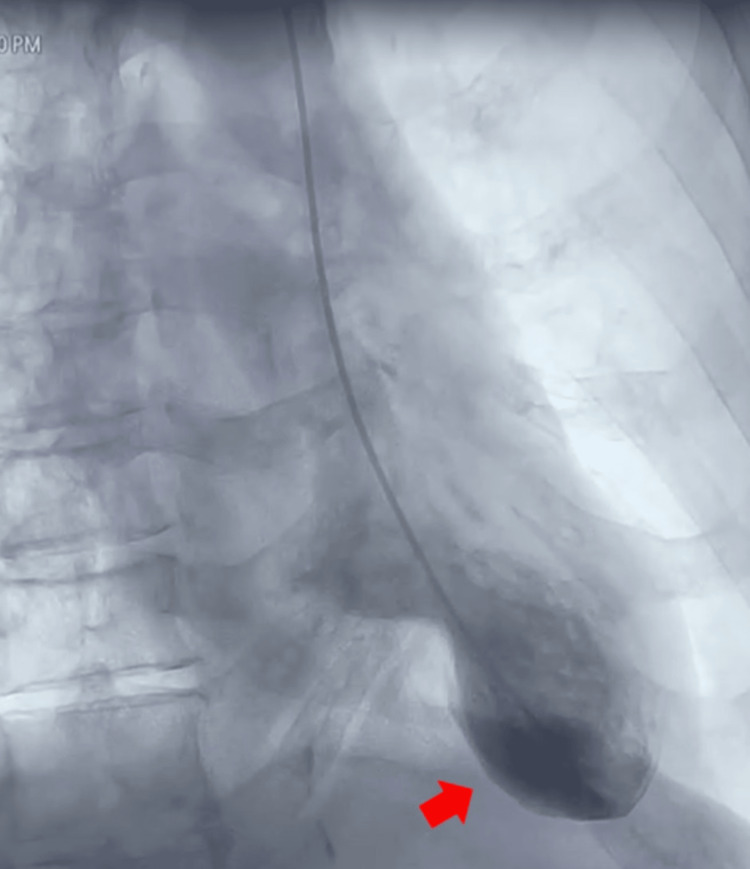
Left ventriculogram in a 77-year-old woman with chest pain, ischemic repolarization changes, elevated high-sensitivity troponin, and no significant coronary stenosis: hyperkinetic basal segments and akinetic apical segments produce the apical ballooning pattern of Takotsubo syndrome (arrow). From Figueroa Zaldivar JM, Rodríguez Sánchez MA, Gonzalez Zazueta VE, et al. Takotsubo syndrome mimicking acute myocardial infarction: a case report. Cureus. 2026;18:e105641, Figure 3, via PubMed Central. Licensed under CC BY 4.0.
Clinical features. In the International Takotsubo Registry of 1,750 patients, 89.8% were women and the mean age was 66.8 years. Physical triggers (36.0%) were more common than emotional triggers (27.7%), and 28.5% had no evident trigger. Neurologic or psychiatric disorders were present in 55.8%, compared with 25.7% of age- and sex-matched patients with acute coronary syndrome, and mean ejection fraction was 40.7%. Severe in-hospital complications, including shock and death, occurred as often as in acute coronary syndrome (Templin 2015), affecting about one-fifth of patients (Ghadri 2018b). Physical triggers, acute neurologic or psychiatric disease, troponin more than 10 times the upper reference limit, and an admission ejection fraction below 45% predict in-hospital complications.
Diagnosis. The presentation is indistinguishable from acute coronary syndrome, and patients with ST elevation undergo urgent coronary angiography with left ventriculography. The International Takotsubo Diagnostic Criteria accept coexisting coronary disease that does not explain the wall-motion pattern. The InterTAK Diagnostic Score, applied to patients without ST elevation, weighs female sex, emotional and physical triggers, absence of ST depression, psychiatric and neurologic disorders, and QTc prolongation; a score above 70 corresponds to a probability of about 90%. Cardiac MRI shows edema in the dysfunctional segments without the ischemic or myocarditic late enhancement patterns. Deep, diffuse T-wave inversion with marked QT prolongation evolves over days. Pheochromocytoma, intracranial hemorrhage, and myocarditis are excluded when the context suggests them.
Acute management. No randomized trial guides therapy (Ghadri 2018b). Left ventricular outflow tract obstruction from basal hyperkinesis with systolic anterior motion of the mitral valve occurs in about 20% of patients and is sought by echocardiography in hypotensive patients, because catecholamine inotropes and vasodilators, including nitroglycerin, worsen it. It is treated with fluids and, when ventricular function and heart rate allow, a beta-blocker (Ghadri 2018b). Shock without obstruction is managed with limited catecholamine exposure and early mechanical support when refractory. Apical thrombus is treated with anticoagulation. Life-threatening ventricular arrhythmias occur in 3.0% to 8.6% of patients, most often on hospital days 2 to 4 and usually with a QTc above 500 ms, so QT-prolonging drugs are avoided and telemetry continues through the subacute phase (Ghadri 2018b).
Outcomes and recurrence. Ventricular function usually recovers within days to weeks, but in the registry major adverse cardiac and cerebrovascular events occurred at 9.9% per patient-year and death at 5.6% per patient-year during long-term follow-up (Templin 2015). Recurrence occurs at about 1.8% per patient-year, in about 5% of survivors, and can involve a different ballooning pattern (Ghadri 2018a; Ghadri 2018b). Beta-blockers after discharge have neither prevented recurrence nor improved survival. ACE inhibitors or angiotensin receptor blockers were associated with better 1-year survival in the registry (Templin 2015). Observational data on their effect on recurrence conflict (Ghadri 2018b). Aspirin and statins are prescribed when coronary atherosclerosis coexists, and psychiatric comorbidity is treated (Ghadri 2018b).
| Feature | Spontaneous coronary artery dissection | Takotsubo syndrome | Coronary vasospasm | Atherothrombotic MI with plaque erosion |
|---|---|---|---|---|
| Typical patient | Woman aged 40 to 60 years; fibromuscular dysplasia; peripartum; emotional or physical stress | Postmenopausal woman; emotional or physical trigger; psychiatric or neurologic disease | Smoker; stimulant or triptan use; other vasospastic disorders | Woman younger than 50 years who smokes |
| Angiogram | Long smooth narrowing (type 2), wall staining (type 1), or focal lesion confirmed by intravascular imaging (type 3) | No culprit; ballooning beyond one coronary territory | Normal or reversible narrowing; spasm on acetylcholine | Mild residual stenosis with thrombus; erosion on optical coherence tomography |
| Cardiac MRI | Ischemic late enhancement in the territory | Edema without ischemic or myocarditic enhancement | Ischemic enhancement if infarction occurred | Ischemic late enhancement |
| Acute treatment | Conservative when stable; PCI or CABG for ongoing ischemia, instability, or left main dissection; no fibrinolysis | Supportive; treatment of outflow obstruction, shock, thrombus, and QT prolongation | Nitrates and calcium channel blockers; trigger removal | Antithrombotic therapy and invasive management as for acute coronary syndrome |
| Long-term therapy | Beta-blocker, blood pressure control, arterial imaging, rehabilitation; avoidance of estrogen | ACE inhibitor or ARB; treatment of psychiatric disease | Calcium channel blocker, long-acting nitrate, no smoking or stimulants | Dual antiplatelet therapy, high-intensity statin |
Coronary syndromes more frequent in women, compared by mechanism. ACE, angiotensin-converting enzyme; ARB, angiotensin receptor blocker; CABG, coronary artery bypass grafting; PCI, percutaneous coronary intervention.
Treatment and outcomes of acute coronary syndrome in women
Treatment gaps. Women with acute coronary syndrome are older and have more comorbidity, but with the same risk features they derive as much benefit as men from a routine invasive strategy (Rao 2025) and the same proportional benefit from statins (CTT 2015). In practice they receive less of both. After sex-specific troponin thresholds were introduced in High-STEACS, women with myocardial injury underwent coronary revascularization less than half as often as men and received preventive drugs less often (Lee 2019). In young patients with MI, women were less likely than men to receive guideline-based therapies (Arora 2019). Participation in cardiac rehabilitation is lower in women than in men (Ritchey 2020).
Bleeding and vascular complications. Women have higher rates of bleeding with antithrombotic therapy and PCI, from older age, lower body weight, lower creatinine clearance, smaller arteries, and excess dosing of weight- and kidney-adjusted drugs (Mehta 2016). In the CRUSADE registry of non-ST-elevation acute coronary syndrome, 46.4% of women treated with glycoprotein IIb/IIIa inhibitors received an excess dose, compared with 17.2% of men. Excess dosing accounted for up to one-quarter of the excess bleeding in women (Alexander 2006). Radial access, weight-based heparin dosing, dose adjustment of enoxaparin and glycoprotein IIb/IIIa inhibitors by kidney function, and bleeding-risk assessment with the Academic Research Consortium high-bleeding-risk criteria reduce these complications. Fibrinolytic therapy carries a higher risk of intracranial hemorrhage in older women of low body weight, which is one reason weight-based tenecteplase dosing is used. Transfusion is guided by the restrictive or liberal thresholds that apply to acute coronary syndrome in both sexes.
Mortality and recurrence. Short-term mortality after MI is higher in women than in men in most registries. Much of the excess in older women is explained by age and comorbidity, but the excess is larger in women younger than 55 to 60 years, and age and comorbidity account for less of it. These younger women more often present without dominant chest pain, have longer delays, and receive less evidence-based therapy (Mehta 2016). Young women recover more slowly than young men after MI, with more angina, depression, and poorer health status. Women undergoing CABG have higher operative mortality than men, related to older age, smaller target vessels and conduits, and comorbidity, and they less often receive multiple arterial grafts (Mehta 2016). Cardiogenic shock complicating MI is treated by the same protocol in both sexes.
Heart failure in women
Women make up about half of patients with heart failure but a majority of those with heart failure with preserved ejection fraction (HFpEF). Women with HFpEF are older, have smaller ventricles with higher relative wall thickness, more often have pulmonary vascular and right ventricular involvement, and report worse symptoms and quality of life at similar hemodynamic severity. Hypertension, obesity, diabetes, atrial fibrillation, and prior hypertensive disorders of pregnancy are the main drivers. In PARAGON-HF, sacubitril/valsartan did not significantly reduce the composite of total heart failure hospitalizations and cardiovascular death (rate ratio 0.87; 95% CI 0.75 to 1.01), with possible benefit at an ejection fraction of 57% or less (Solomon 2019). In women, the rate ratio was 0.73 (95% CI 0.59 to 0.90), compared with 1.03 in men (P for interaction 0.017). The benefit in women was driven by fewer heart failure hospitalizations (McMurray 2020). Sodium-glucose cotransporter 2 (SGLT2) inhibitors reduce cardiovascular death or hospitalization for heart failure across the range of ejection fraction, with consistent effects in women and men (Vaduganathan 2022).
Heart failure with reduced ejection fraction in women more often has a nonischemic cause: peripartum cardiomyopathy, cardiotoxic cancer therapy, myocarditis, and genetic dilated cardiomyopathy. Women with reduced ejection fraction survive longer than men at the same ejection fraction. Guideline-directed medical therapy has the same indications in both sexes; doses are titrated to tolerance, and women are less often treated at target doses. Mineralocorticoid receptor antagonists, ACE inhibitors, angiotensin receptor blockers, and angiotensin receptor–neprilysin inhibitors are contraindicated in pregnancy, so women of reproductive age taking them need effective contraception. SGLT2 inhibitors cause genital mycotic infection more often in women. Peripartum cardiomyopathy is defined by an ejection fraction below 45% toward the end of pregnancy or in the months after delivery.
Device therapy. In a US Food and Drug Administration pooled analysis of 4,076 patients with mainly New York Heart Association class II heart failure, women with left bundle branch block and a QRS duration of 130 to 149 ms had a 76% reduction in heart failure or death with cardiac resynchronization therapy (CRT) with a defibrillator compared with an implantable cardioverter-defibrillator (ICD) (HR 0.24). Men with the same QRS duration had no significant benefit (HR 0.85); neither sex benefited below 130 ms, and both benefited at 150 ms or more (Zusterzeel 2014). Women have shorter QRS durations for the same degree of dyssynchrony because of smaller hearts, and they are less often referred for CRT. Women are underrepresented in primary-prevention ICD trials and are less often offered ICDs. In a meta-analysis of five primary-prevention trials (7,229 patients, 22% women), women received fewer appropriate ICD therapies than men (HR 0.63), and the mortality benefit of the ICD did not reach significance in women (HR 0.78; 95% CI 0.57 to 1.05) (Santangeli 2010). ICD eligibility criteria are the same for both sexes.
Atrial fibrillation, stroke, and QT prolongation in women
Atrial fibrillation. Atrial fibrillation is less common in women at any age, but because women live longer the absolute number of affected women and men is similar. Women are older at diagnosis and more symptomatic, have worse quality of life, and are less often referred for rhythm control and catheter ablation, with more procedural complications in some series. Female sex adds 1 point to CHA₂DS₂-VASc, but it acts as a risk modifier: it raises stroke risk mainly in women 65 years or older with other risk factors, and a woman whose only point is sex is at low risk. The 2023 ACC/AHA/ACCP/HRS guideline recommends anticoagulation at an estimated annual thromboembolic risk of 2% or more, commonly a CHA₂DS₂-VASc score of 3 or more in women (Joglar 2024). The 2024 European Society of Cardiology (ESC) guideline removed sex from the score, creating CHA₂DS₂-VA, with the same practical result. Lower body weight and creatinine clearance in older women determine direct oral anticoagulant (DOAC) dose reductions.
Stroke. In the Framingham cohort, the lifetime risk of stroke from age 55 years was about 1 in 5 for women and 1 in 6 for men, mainly because women live longer (Seshadri 2006). Women have more strokes and stroke deaths than men in absolute numbers, are older at stroke onset, and more often live alone and enter institutional care afterward. Sex-specific contributors are hypertensive disorders of pregnancy, the postpartum period, estrogen-containing contraception and hormone therapy, migraine with aura, and atrial fibrillation in older women. The 2024 AHA/American Stroke Association primary stroke prevention guideline added sex-specific recommendations for screening and prevention, including attention to these female-specific factors (Bushnell 2024).
QT prolongation and torsades de pointes. Women have a longer QTc than men after puberty and account for about 70% of published cases of torsades de pointes associated with cardiovascular drugs (Makkar 1993). Female sex is listed with bradycardia, hypokalemia, hypomagnesemia, kidney dysfunction, and interacting drugs as a risk factor for drug-induced torsades, and dofetilide, sotalol, and ibutilide are initiated with QT monitoring. Women with type 2 long QT syndrome have higher risk than men, especially after delivery. Paroxysmal supraventricular tachycardia, most often from atrioventricular nodal reentry, is about twice as common in women as in men (Page 2016) and is frequently misattributed to anxiety before an ECG is recorded during symptoms.
Valve disease and peripheral artery disease in women
Aortic stenosis. Women with severe aortic stenosis develop less valve calcium for the same hemodynamic severity, with a larger fibrotic component, and more often have a small, concentric ventricle with a paradoxical low-flow, low-gradient pattern. When gradients and valve area are discordant, a CT aortic valve calcium score of 1,300 Agatston units or more in women and 2,000 or more in men supports severe stenosis under the 2020 ACC/AHA valve guideline (Otto 2021). RHEIA randomized 443 women with severe aortic stenosis (mean age 73 years, mean Society of Thoracic Surgeons [STS] risk 2.1%) to transfemoral transcatheter aortic valve replacement (TAVR) with a balloon-expandable valve or surgery. The composite of death, stroke, or valve-, procedure-, or heart failure–related rehospitalization at 1 year occurred in 8.9% after TAVR and 15.6% after surgery, meeting criteria for noninferiority and superiority. The difference was driven by rehospitalization (5.8% versus 11.4%); death was 0.9% versus 2.0% and stroke 3.3% versus 3.0% (Tchetche 2025). Women have more vascular complications after TAVR because of smaller iliofemoral arteries, and smaller annuli raise the risk of patient-prosthesis mismatch after surgical replacement.
Mitral and other valve disease. Rheumatic mitral stenosis affects women more often than men and frequently presents during pregnancy. Bileaflet mitral valve prolapse with mitral annular disjunction, ventricular ectopy, and papillary muscle fibrosis is a recognized substrate for ventricular arrhythmia and sudden death, and it has been described predominantly in young and middle-aged women.
Peripheral artery disease. Peripheral artery disease is about as common in women as in men and slightly more common in women up to age 75 years in high-income countries. Women present 10 to 20 years later than men, more often without classic claudication, and with more advanced disease, and the ankle-brachial index is less often measured. Women have more access-site complications and less durable results after endovascular revascularization. Abdominal aortic aneurysm is less common in women, but it ruptures at smaller diameters. The 2022 ACC/AHA aortic disease guideline recommends repair at a diameter of 5.0 cm or more in women and 5.5 cm or more in men, or earlier when symptoms are attributable to the aneurysm (Isselbacher 2022).
Sex differences in drug response and adverse effects
Women report adverse drug reactions nearly twice as often as men. In an analysis of 86 drugs, 76 had higher blood concentrations or longer elimination in women, and for drugs with clinically identifiable adverse reactions, sex differences in pharmacokinetics predicted the direction of sex-biased adverse reactions in 88% of cases; the difference was not explained by body weight alone (Zucker 2020). Lower body weight, a higher proportion of body fat, lower glomerular filtration, and differences in hepatic enzyme activity and drug transporters contribute.
Bleeding with antithrombotic drugs is more frequent in women, and weight- and kidney-adjusted dosing is applied. QT-prolonging drugs cause torsades more often in women. Digoxin was associated with higher all-cause mortality in women but not in men in a post hoc analysis of the Digitalis Investigation Group (DIG) trial (Rathore 2002), and serum concentrations are kept low. ACE inhibitor cough is more common in women. Statin-associated muscle symptoms are reported more often by women. Fixed-dose drugs tested in predominantly male populations reach higher exposure in smaller, older women, which is the reason renal and weight criteria for DOAC dose reduction matter most in this group. Drug use in pregnancy and lactation follows separate principles.
Cardiac rehabilitation in women: referral, barriers, and program models
Cardiac rehabilitation (supervised exercise training, risk-factor education, nutritional counseling, psychosocial support, and medication adherence) reduces cardiovascular mortality and readmission after MI, PCI, and CABG, and it improves exercise capacity and quality of life in women as in men. Referral before discharge is recommended for patients with acute coronary syndrome (Class 1), with home-based rehabilitation reasonable for patients unable or unwilling to attend a center (Class 2a) (Rao 2025). The 2023 chronic coronary disease guideline recommends rehabilitation for all eligible patients, including after MI, PCI, or CABG (Level A), in stable angina (Level B-R), and after SCAD (Level C-LD) (Virani 2023).
The participation gap. Among 366,103 Medicare fee-for-service beneficiaries eligible for rehabilitation in 2016, only 24.4% participated, and participation was 18.9% in women and 28.6% in men (adjusted prevalence ratio 0.91). Participation fell with increasing age and was lowest after MI without a procedure (7.1%) and highest after CABG alone (55.3%). Of those who participated, only 26.9% completed 36 or more sessions (Ritchey 2020). Women are less often referred, less often enroll when referred, and less often complete the program.
Barriers. A systematic review of 24 studies of barriers and 31 studies of interventions in women identified lower education, multiple comorbid conditions, a native language other than English, lack of social support, and a high burden of family responsibilities as patient-level barriers (Supervía 2017). Older age at the time of the event, transportation, cost and copayments, work obligations, depression and anxiety, and musculoskeletal limitations add to these. At the clinician level, women are referred less often and with weaker endorsement.
| Barrier | Strategy | Evidence |
|---|---|---|
| No referral or weak endorsement | Automatic referral from the electronic record at discharge, with a clinician recommendation | Supported in women by the systematic review; recommended for all patients with acute coronary syndrome (Supervía 2017; Rao 2025) |
| Referral without enrollment | Assisted enrollment: liaison contact before discharge, early first appointment | Improves participation in women (Supervía 2017) |
| Transport, distance, work, and caregiving | Home-based or virtual (hybrid) rehabilitation with remote coaching | Similar 3- to 12-month outcomes to center-based programs in low- to moderate-risk patients; reasonable when center attendance is not possible (Thomas 2019) |
| Cost and motivation | Reduced copayments; incentive-based programs | Small studies show improved attendance and completion (Supervía 2017) |
| Program content suited to men | Women-focused sessions, group exercise options, psychosocial and stress-management components | Offered by some programs; comparative outcome data are limited |
| Depression, anxiety, and posttraumatic stress | Screening and treatment within the program | Psychological distress is frequent after MI, SCAD, and Takotsubo syndrome in women |
Barriers to cardiac rehabilitation in women and strategies to overcome them.
Program models. Home-based cardiac rehabilitation relies on remote coaching with indirect exercise supervision outside the center. The American Association of Cardiovascular and Pulmonary Rehabilitation (AACVPR)/AHA/ACC statement concluded that home-based and center-based programs achieve similar 3- to 12-month outcomes, that home-based programs may be a reasonable option for selected clinically stable low- to moderate-risk patients who cannot attend a center, and that more evidence is needed in older adults, women, and underrepresented groups (Thomas 2019). Hybrid models combine an initial supervised phase with home-based continuation. After SCAD, dedicated programs adapt exercise prescriptions to avoid heavy isometric loads and extreme exertion and add psychological support. After peripartum cardiomyopathy, rehabilitation is adapted to the postpartum period. Exercise testing before rehabilitation sets the exercise prescription.
Cardiovascular care across pregnancy and the postpartum years
Pregnancy is a cardiovascular stress test. Plasma volume, cardiac output, and heart rate rise and systemic vascular resistance falls, unmasking structural, ischemic, and arrhythmic disease, and cardiovascular conditions are a leading cause of pregnancy-related death in the United States. Cardio-obstetric care is organized by risk class in a Pregnancy Heart Team:
- Risk assessment with the modified World Health Organization classification and CARPREG II, preconception counseling, delivery planning, and drug principles: heart disease in pregnancy and risk assessment.
- Classification, treatment, and long-term consequences of preeclampsia and gestational hypertension: hypertensive disorders of pregnancy.
- Heart failure with reduced ejection fraction in late pregnancy or after delivery: peripartum cardiomyopathy.
- Pregnancy-associated MI and SCAD, arrhythmias, and venous thromboembolism: acute coronary syndrome, arrhythmia, and venous thromboembolism in pregnancy.
- Mechanical and bioprosthetic valves, valve stenosis, and anticoagulation: valve disease and prosthetic valves in pregnancy.
- Congenital heart disease, aortopathy, and pulmonary hypertension: congenital, aortic, and pulmonary vascular disease in pregnancy.
- Postpartum care, contraception, and long-term follow-up after adverse pregnancy outcomes: postpartum cardiovascular care and contraception.
The long-term consequence is female-specific cardiovascular risk: a woman who had a hypertensive disorder of pregnancy, gestational diabetes, or preterm delivery carries that risk for decades after the obstetric record is closed.
Sources of error in the cardiovascular care of women
- Classifying chest pain in a woman as atypical and stopping the evaluation, when the guideline classification is cardiac, possibly cardiac, or noncardiac and accompanying symptoms are more frequent in women.
- Reading ST elevation in V2 and V3 against male thresholds, which misses occlusion at 1.5 to 2.0 mm in women.
- Applying a single non-sex-specific troponin threshold, or identifying more women with injury by sex-specific thresholds without then treating them by mechanism.
- Labeling nonobstructive coronary arteries at angiography as a normal result, without cardiac MRI, intravascular imaging, or coronary function testing to define MINOCA or INOCA.
- Stenting a long, smooth narrowing of the distal left anterior descending artery in a stable woman without recognizing type 2 SCAD, or giving fibrinolysis for SCAD.
- Continuing heparin or adding glycoprotein IIb/IIIa inhibitors after the angiographic diagnosis of SCAD without another indication.
- Omitting head-to-pelvis arterial imaging for fibromuscular dysplasia after SCAD.
- Giving a catecholamine inotrope to a hypotensive patient with Takotsubo syndrome before excluding left ventricular outflow tract obstruction by echocardiography.
- Omitting the pregnancy history (preeclampsia, gestational hypertension, gestational diabetes, preterm delivery), age at menopause, and polycystic ovary syndrome from risk assessment.
- Prescribing menopausal hormone therapy for cardiovascular prevention, or continuing systemic hormone therapy in a woman with established coronary disease.
- Prescribing aspirin for primary prevention in women older than 70 years or at increased bleeding risk.
- Interpreting a calcium score of zero in a young woman who smokes as excluding coronary plaque.
- Starting anticoagulation in atrial fibrillation on the basis of female sex as the only CHA₂DS₂-VASc point.
- Withholding CRT from a woman with left bundle branch block and a QRS duration of 130 to 149 ms on the basis of thresholds derived largely from men.
- Using male-derived reference values for left ventricular size, mass, and aortic valve calcium in women.
- Prescribing renin-angiotensin system inhibitors, mineralocorticoid receptor antagonists, or statins to a woman who may become pregnant, without contraception counseling.
- Discharging a woman after MI, PCI, CABG, or SCAD without an automatic referral to cardiac rehabilitation.
- Concluding that a treatment works only in women when it is significant in the female subgroup but the test for interaction is not.
References
- Centers for Disease Control and Prevention. Women and heart disease. Heart Disease. https://www.cdc.gov/heart-disease/about/women-and-heart-disease.html. Accessed November 17, 2026.
- Virani SS, Newby LK, Arnold SV, et al. 2023 AHA/ACC/ACCP/ASPC/NLA/PCNA guideline for the management of patients with chronic coronary disease: a report of the American Heart Association/American College of Cardiology Joint Committee on Clinical Practice Guidelines. Circulation. 2023;148:e9–e119. doi:10.1161/CIR.0000000000001168. Corrections: Circulation. 2023;148:e148 and 2023;148:e186.
- Mehta LS, Beckie TM, DeVon HA, et al. Acute myocardial infarction in women: a scientific statement from the American Heart Association. Circulation. 2016;133:916–947. doi:10.1161/CIR.0000000000000351
- Vogel B, Acevedo M, Appelman Y, et al. The Lancet women and cardiovascular disease Commission: reducing the global burden by 2030. Lancet. 2021;397:2385–2438. doi:10.1016/S0140-6736(21)00684-X
- Arora S, Stouffer GA, Kucharska-Newton AM, et al. Twenty year trends and sex differences in young adults hospitalized with acute myocardial infarction. Circulation. 2019;139:1047–1056. doi:10.1161/CIRCULATIONAHA.118.037137
- Cushman M, Shay CM, Howard VJ, et al. Ten-year differences in women's awareness related to coronary heart disease: results of the 2019 American Heart Association national survey: a special report from the American Heart Association. Circulation. 2021;143:e239–e248. doi:10.1161/CIR.0000000000000907
- Lichtman JH, Leifheit EC, Safdar B, et al. Sex differences in the presentation and perception of symptoms among young patients with myocardial infarction: evidence from the VIRGO study (Variation in Recovery: Role of Gender on Outcomes of Young AMI Patients). Circulation. 2018;137:781–790. doi:10.1161/CIRCULATIONAHA.117.031650
- Lee KK, Ferry AV, Anand A, et al. Sex-specific thresholds of high-sensitivity troponin in patients with suspected acute coronary syndrome. J Am Coll Cardiol. 2019;74:2032–2043. doi:10.1016/j.jacc.2019.07.082
- Ritchey MD, Maresh S, McNeely J, et al. Tracking cardiac rehabilitation participation and completion among Medicare beneficiaries to inform the efforts of a national initiative. Circ Cardiovasc Qual Outcomes. 2020;13:e005902. doi:10.1161/CIRCOUTCOMES.119.005902
- Arnett DK, Blumenthal RS, Albert MA, et al. 2019 ACC/AHA guideline on the primary prevention of cardiovascular disease: a report of the American College of Cardiology/American Heart Association Task Force on Clinical Practice Guidelines. Circulation. 2019;140:e596–e646. doi:10.1161/CIR.0000000000000678
- Khan SS, Matsushita K, Sang Y, et al. Development and validation of the American Heart Association's PREVENT equations. Circulation. 2024;149:430–449. doi:10.1161/CIRCULATIONAHA.123.067626
- Ghadri JR, Wittstein IS, Prasad A, et al. International expert consensus document on takotsubo syndrome (part I): clinical characteristics, diagnostic criteria, and pathophysiology. Eur Heart J. 2018;39:2032–2046. doi:10.1093/eurheartj/ehy076
- El Khoudary SR, Aggarwal B, Beckie TM, et al. Menopause transition and cardiovascular disease risk: implications for timing of early prevention: a scientific statement from the American Heart Association. Circulation. 2020;142:e506–e532. doi:10.1161/CIR.0000000000000912
- Burke AP, Farb A, Malcom GT, Liang Y, Smialek J, Virmani R. Effect of risk factors on the mechanism of acute thrombosis and sudden coronary death in women. Circulation. 1998;97:2110–2116. doi:10.1161/01.CIR.97.21.2110
- Shaw LJ, Min JK, Nasir K, et al. Sex differences in calcified plaque and long-term cardiovascular mortality: observations from the CAC Consortium. Eur Heart J. 2018;39:3727–3735. doi:10.1093/eurheartj/ehy534
- Jin X, Chandramouli C, Allocco B, Gong E, Lam CSP, Yan LL. Women's participation in cardiovascular clinical trials from 2010 to 2017. Circulation. 2020;141:540–548. doi:10.1161/CIRCULATIONAHA.119.043594
- Cholesterol Treatment Trialists' (CTT) Collaboration; Fulcher J, O'Connell R, Voysey M, et al. Efficacy and safety of LDL-lowering therapy among men and women: meta-analysis of individual data from 174,000 participants in 27 randomised trials. Lancet. 2015;385:1397–1405. doi:10.1016/S0140-6736(14)61368-4
- Zusterzeel R, Selzman KA, Sanders WE, et al. Cardiac resynchronization therapy in women: US Food and Drug Administration meta-analysis of patient-level data. JAMA Intern Med. 2014;174:1340–1348. doi:10.1001/jamainternmed.2014.2717
- Tchetche D, Pibarot P, Bax JJ, et al. Transcatheter vs. surgical aortic valve replacement in women: the RHEIA trial. Eur Heart J. 2025;46:2079–2088. doi:10.1093/eurheartj/ehaf133
- Peters SAE, Huxley RR, Woodward M. Diabetes as risk factor for incident coronary heart disease in women compared with men: a systematic review and meta-analysis of 64 cohorts including 858,507 individuals and 28,203 coronary events. Diabetologia. 2014;57:1542–1551. doi:10.1007/s00125-014-3260-6
- Huxley RR, Woodward M. Cigarette smoking as a risk factor for coronary heart disease in women compared with men: a systematic review and meta-analysis of prospective cohort studies. Lancet. 2011;378:1297–1305. doi:10.1016/S0140-6736(11)60781-2
- Ji H, Kim A, Ebinger JE, et al. Sex differences in blood pressure trajectories over the life course. JAMA Cardiol. 2020;5:19–26. doi:10.1001/jamacardio.2019.5306
- Jones DW, Ferdinand KC, Taler SJ, et al. 2025 AHA/ACC/AANP/AAPA/ABC/ACCP/ACPM/AGS/AMA/ASPC/NMA/PCNA/SGIM guideline for the prevention, detection, evaluation and management of high blood pressure in adults: a report of the American College of Cardiology/American Heart Association Joint Committee on Clinical Practice Guidelines. Circulation. 2025;152:e114–e218. doi:10.1161/CIR.0000000000001356. Corrections: Circulation. 2025;152:e403 (doi:10.1161/CIR.0000000000001396), 2026;153:e1121 (doi:10.1161/CIR.0000000000001436), and 2026;153:e1359 (doi:10.1161/CIR.0000000000001448).
- Blumenthal RS, Morris PB, Gaudino M, et al. 2026 ACC/AHA/AACVPR/ABC/ACPM/ADA/AGS/APhA/ASPC/NLA/PCNA guideline on the management of dyslipidemia: a report of the American College of Cardiology/American Heart Association Joint Committee on Clinical Practice Guidelines. J Am Coll Cardiol. 2026;87:2624–2757. doi:10.1016/j.jacc.2025.11.016. Also published in Circulation. 2026;153:e1154–e1276, with corrections in Circulation. 2026;153:e1447 (doi:10.1161/CIR.0000000000001457) and 2026;154:e393 (doi:10.1161/CIR.0000000000001475)
- Vaccarino V, Shah AJ, Rooks C, et al. Sex differences in mental stress-induced myocardial ischemia in young survivors of an acute myocardial infarction. Psychosom Med. 2014;76:171–180. doi:10.1097/PSY.0000000000000045
- Okoth K, Chandan JS, Marshall T, et al. Association between the reproductive health of young women and cardiovascular disease in later life: umbrella review. BMJ. 2020;371:m3502. doi:10.1136/bmj.m3502
- Parikh NI, Gonzalez JM, Anderson CAM, et al. Adverse pregnancy outcomes and cardiovascular disease risk: unique opportunities for cardiovascular disease prevention in women: a scientific statement from the American Heart Association. Circulation. 2021;143:e902–e916. doi:10.1161/CIR.0000000000000961
- Tschiderer L, Seekircher L, Kunutsor SK, et al. Breastfeeding is associated with a reduced maternal cardiovascular risk: systematic review and meta-analysis involving data from 8 studies and 1 192 700 parous women. J Am Heart Assoc. 2022;11:e022746. doi:10.1161/JAHA.121.022746
- Mu F, Rich-Edwards J, Rimm EB, Spiegelman D, Missmer SA. Endometriosis and risk of coronary heart disease. Circ Cardiovasc Qual Outcomes. 2016;9:257–264. doi:10.1161/CIRCOUTCOMES.115.002224
- Teede HJ, Tay CT, Laven JJE, et al. Recommendations from the 2023 International Evidence-based Guideline for the Assessment and Management of Polycystic Ovary Syndrome. J Clin Endocrinol Metab. 2023;108:2447–2469. doi:10.1210/clinem/dgad463
- Wekker V, van Dammen L, Koning A, et al. Long-term cardiometabolic disease risk in women with PCOS: a systematic review and meta-analysis. Hum Reprod Update. 2020;26:942–960. doi:10.1093/humupd/dmaa029
- US Preventive Services Task Force; Mangione CM, Barry MJ, et al. Hormone therapy for the primary prevention of chronic conditions in postmenopausal persons: US Preventive Services Task Force recommendation statement. JAMA. 2022;328:1740–1746. doi:10.1001/jama.2022.18625
- Zhu D, Chung HF, Dobson AJ, et al. Age at natural menopause and risk of incident cardiovascular disease: a pooled analysis of individual patient data. Lancet Public Health. 2019;4:e553–e564. doi:10.1016/S2468-2667(19)30155-0
- The 2022 Hormone Therapy Position Statement of The North American Menopause Society Advisory Panel. The 2022 hormone therapy position statement of The North American Menopause Society. Menopause. 2022;29:767–794. doi:10.1097/GME.0000000000002028
- Parker WH, Feskanich D, Broder MS, et al. Long-term mortality associated with oophorectomy compared with ovarian conservation in the Nurses' Health Study. Obstet Gynecol. 2013;121:709–716. doi:10.1097/AOG.0b013e3182864350
- Thurston RC, Aslanidou Vlachos HE, Derby CA, et al. Menopausal vasomotor symptoms and risk of incident cardiovascular disease events in SWAN. J Am Heart Assoc. 2021;10:e017416. doi:10.1161/JAHA.120.017416
- Manson JE, Chlebowski RT, Stefanick ML, et al. Menopausal hormone therapy and health outcomes during the intervention and extended poststopping phases of the Women's Health Initiative randomized trials. JAMA. 2013;310:1353–1368. doi:10.1001/jama.2013.278040
- Hodis HN, Mack WJ, Henderson VW, et al. Vascular effects of early versus late postmenopausal treatment with estradiol. N Engl J Med. 2016;374:1221–1231. doi:10.1056/NEJMoa1505241
- Kurth T, Winter AC, Eliassen AH, et al. Migraine and risk of cardiovascular disease in women: prospective cohort study. BMJ. 2016;353:i2610. doi:10.1136/bmj.i2610
- Manzi S, Meilahn EN, Rairie JE, et al. Age-specific incidence rates of myocardial infarction and angina in women with systemic lupus erythematosus: comparison with the Framingham Study. Am J Epidemiol. 1997;145:408–415. doi:10.1093/oxfordjournals.aje.a009122
- Streed CG Jr, Beach LB, Caceres BA, et al. Assessing and addressing cardiovascular health in people who are transgender and gender diverse: a scientific statement from the American Heart Association. Circulation. 2021;144:e136–e148. doi:10.1161/CIR.0000000000001003
- Lloyd-Jones DM, Allen NB, Anderson CAM, et al. Life's Essential 8: updating and enhancing the American Heart Association's construct of cardiovascular health: a presidential advisory from the American Heart Association. Circulation. 2022;146:e18–e43. doi:10.1161/CIR.0000000000001078
- Ridker PM, Cook NR, Lee IM, et al. A randomized trial of low-dose aspirin in the primary prevention of cardiovascular disease in women. N Engl J Med. 2005;352:1293–1304. doi:10.1056/NEJMoa050613
- US Preventive Services Task Force; Davidson KW, Barry MJ, et al. Aspirin use to prevent cardiovascular disease: US Preventive Services Task Force recommendation statement. JAMA. 2022;327:1577–1584. doi:10.1001/jama.2022.4983
- Gulati M, Levy PD, Mukherjee D, et al. 2021 AHA/ACC/ASE/CHEST/SAEM/SCCT/SCMR guideline for the evaluation and diagnosis of chest pain: a report of the American College of Cardiology/American Heart Association Joint Committee on Clinical Practice Guidelines. Circulation. 2021;144:e368–e454 (corrections: doi:10.1161/CIR.0000000000001047 and doi:10.1161/CIR.0000000000001198). doi:10.1161/CIR.0000000000001029
- Mills NL, Newby LK, Zaman S, et al. Fifth universal definition of myocardial infarction (2026). J Am Coll Cardiol. 2026;88:1314–1368. doi:10.1016/j.jacc.2026.07.025
- Mieres JH, Gulati M, Bairey Merz N, et al. Role of noninvasive testing in the clinical evaluation of women with suspected ischemic heart disease: a consensus statement from the American Heart Association. Circulation. 2014;130:350–379. doi:10.1161/CIR.0000000000000061
- Shaw LJ, Mieres JH, Hendel RH, et al. Comparative effectiveness of exercise electrocardiography with or without myocardial perfusion single photon emission computed tomography in women with suspected coronary artery disease: results from the What Is the Optimal Method for Ischemia Evaluation in Women (WOMEN) trial. Circulation. 2011;124:1239–1249. doi:10.1161/CIRCULATIONAHA.111.029660
- Bairey Merz CN, Pepine CJ, Walsh MN, Fleg JL. Ischemia and no obstructive coronary artery disease (INOCA): developing evidence-based therapies and research agenda for the next decade. Circulation. 2017;135:1075–1092. doi:10.1161/CIRCULATIONAHA.116.024534
- Ford TJ, Stanley B, Good R, et al. Stratified medical therapy using invasive coronary function testing in angina: the CorMicA trial. J Am Coll Cardiol. 2018;72:2841–2855. doi:10.1016/j.jacc.2018.09.006
- Bairey Merz CN, Handberg EM, Shufelt CL, et al. A randomized, placebo-controlled trial of late Na current inhibition (ranolazine) in coronary microvascular dysfunction (CMD): impact on angina and myocardial perfusion reserve. Eur Heart J. 2016;37:1504–1513. doi:10.1093/eurheartj/ehv647
- Tamis-Holland JE, Jneid H, Reynolds HR, et al. Contemporary diagnosis and management of patients with myocardial infarction in the absence of obstructive coronary artery disease: a scientific statement from the American Heart Association. Circulation. 2019;139:e891–e908. doi:10.1161/CIR.0000000000000670
- Reynolds HR, Maehara A, Kwong RY, et al. Coronary optical coherence tomography and cardiac magnetic resonance imaging to determine underlying causes of myocardial infarction with nonobstructive coronary arteries in women. Circulation. 2021;143:624–640 (correction: Circulation. 2023;147:e624). doi:10.1161/CIRCULATIONAHA.120.052008
- Hayes SN, Kim ESH, Saw J, et al. Spontaneous coronary artery dissection: current state of the science: a scientific statement from the American Heart Association. Circulation. 2018;137:e523–e557. doi:10.1161/CIR.0000000000000564
- Saw J, Humphries K, Aymong E, et al. Spontaneous coronary artery dissection: clinical outcomes and risk of recurrence. J Am Coll Cardiol. 2017;70:1148–1158. doi:10.1016/j.jacc.2017.06.053
- Tam LM, Naderi S, Chi G, et al. Sex differences in spontaneous coronary artery dissection: a report of the iSCAD Registry. J Am Heart Assoc. 2026;15:e042773. doi:10.1161/JAHA.125.042773
- Gornik HL, Persu A, Adlam D, et al. First international consensus on the diagnosis and management of fibromuscular dysplasia. Vasc Med. 2019;24:164–189. doi:10.1177/1358863X18821816
- Templin C, Ghadri JR, Diekmann J, et al. Clinical features and outcomes of takotsubo (stress) cardiomyopathy. N Engl J Med. 2015;373:929–938. doi:10.1056/NEJMoa1406761
- Ghadri JR, Wittstein IS, Prasad A, et al. International expert consensus document on takotsubo syndrome (part II): diagnostic workup, outcome, and management. Eur Heart J. 2018;39:2047–2062. doi:10.1093/eurheartj/ehy077
- Rao SV, O’Donoghue ML, Ruel M, et al. 2025 ACC/AHA/ACEP/NAEMSP/SCAI guideline for the management of patients with acute coronary syndromes: a report of the American College of Cardiology/American Heart Association Joint Committee on Clinical Practice Guidelines. Circulation. 2025;151:e771–e862 (corrections: Circulation. 2025;151:e865; Circulation. 2025;151:e1098; Circulation. 2025;152:e402). doi:10.1161/CIR.0000000000001309
- Joglar JA, Chung MK, Armbruster AL, et al. 2023 ACC/AHA/ACCP/HRS guideline for the diagnosis and management of atrial fibrillation: a report of the American College of Cardiology/American Heart Association Joint Committee on Clinical Practice Guidelines. Circulation. 2024;149:e1–e156. doi:10.1161/CIR.0000000000001193. Corrections: Circulation. 2024;149:e167, 2024;149:e936, and 2024;149:e1413.
- Seshadri S, Beiser A, Kelly-Hayes M, et al. The lifetime risk of stroke: estimates from the Framingham Study. Stroke. 2006;37:345–350. doi:10.1161/01.STR.0000199613.38911.b2
- Bushnell C, Kernan WN, Sharrief AZ, et al. 2024 guideline for the primary prevention of stroke: a guideline from the American Heart Association/American Stroke Association. Stroke. 2024;55:e344–e424 (correction: Stroke. 2025;56:e98). doi:10.1161/STR.0000000000000475
- Zucker I, Prendergast BJ. Sex differences in pharmacokinetics predict adverse drug reactions in women. Biol Sex Differ. 2020;11:32. doi:10.1186/s13293-020-00308-5
- Rathore SS, Wang Y, Krumholz HM. Sex-based differences in the effect of digoxin for the treatment of heart failure. N Engl J Med. 2002;347:1403–1411. doi:10.1056/NEJMoa021266
- Supervía M, Medina-Inojosa JR, Yeung C, et al. Cardiac rehabilitation for women: a systematic review of barriers and solutions. Mayo Clin Proc. 2017;92:565–577. doi:10.1016/j.mayocp.2017.01.002
- Thomas RJ, Beatty AL, Beckie TM, et al. Home-based cardiac rehabilitation: a scientific statement from the American Association of Cardiovascular and Pulmonary Rehabilitation, the American Heart Association, and the American College of Cardiology. J Cardiopulm Rehabil Prev. 2019;39:208–225. doi:10.1097/HCR.0000000000000447
- Harman SM, Black DM, Naftolin F, et al. Arterial imaging outcomes and cardiovascular risk factors in recently menopausal women: a randomized trial. Ann Intern Med. 2014;161:249–260. doi:10.7326/M14-0353
- Cerrato E, Giacobbe F, Quadri G, et al. Antiplatelet therapy in patients with conservatively managed spontaneous coronary artery dissection from the multicentre DISCO registry. Eur Heart J. 2021;42:3161–3171. doi:10.1093/eurheartj/ehab372
- Page RL, Joglar JA, Caldwell MA, et al. 2015 ACC/AHA/HRS guideline for the management of adult patients with supraventricular tachycardia: a report of the American College of Cardiology/American Heart Association Task Force on Clinical Practice Guidelines and the Heart Rhythm Society. Circulation. 2016;133:e506–e574. doi:10.1161/CIR.0000000000000311
- Makkar RR, Fromm BS, Steinman RT, Meissner MD, Lehmann MH. Female gender as a risk factor for torsades de pointes associated with cardiovascular drugs. JAMA. 1993;270:2590–2597. doi:10.1001/jama.1993.03510210076031
- Santangeli P, Pelargonio G, Dello Russo A, et al. Gender differences in clinical outcome and primary prevention defibrillator benefit in patients with severe left ventricular dysfunction: a systematic review and meta-analysis. Heart Rhythm. 2010;7:876–882. doi:10.1016/j.hrthm.2010.03.042
- Alexander KP, Chen AY, Newby LK, et al. Sex differences in major bleeding with glycoprotein IIb/IIIa inhibitors: results from the CRUSADE (Can Rapid risk stratification of Unstable angina patients Suppress ADverse outcomes with Early implementation of the ACC/AHA guidelines) initiative. Circulation. 2006;114:1380–1387. doi:10.1161/CIRCULATIONAHA.106.620815
- Nguyen AT, Curtis KM, Tepper NK, et al. U.S. medical eligibility criteria for contraceptive use, 2024. MMWR Recomm Rep. 2024;73(No. RR-4):1–126. doi:10.15585/mmwr.rr7304a1
- Otto CM, Nishimura RA, Bonow RO, et al. 2020 ACC/AHA guideline for the management of patients with valvular heart disease: a report of the American College of Cardiology/American Heart Association Joint Committee on Clinical Practice Guidelines. Circulation. 2021;143:e72–e227. Corrections: Circulation. 2021;143:e229; 2023;148:e8; 2023;148:e185; 2024;150:e267. doi:10.1161/CIR.0000000000000923
- Solomon SD, McMurray JJV, Anand IS, et al. Angiotensin–neprilysin inhibition in heart failure with preserved ejection fraction (PARAGON-HF). N Engl J Med. 2019;381:1609–1620. doi:10.1056/NEJMoa1908655
- McMurray JJV, Jackson AM, Lam CSP, et al. Effects of sacubitril-valsartan versus valsartan in women compared with men with heart failure and preserved ejection fraction: insights from PARAGON-HF. Circulation. 2020;141:338–351. doi:10.1161/CIRCULATIONAHA.119.044491
- Vaduganathan M, Docherty KF, Claggett BL, et al. SGLT-2 inhibitors in patients with heart failure: a comprehensive meta-analysis of five randomised controlled trials. Lancet. 2022;400:757–767. doi:10.1016/S0140-6736(22)01429-5
- Isselbacher EM, Preventza O, Hamilton Black J, et al. 2022 ACC/AHA guideline for the diagnosis and management of aortic disease: a report of the American Heart Association/American College of Cardiology Joint Committee on Clinical Practice Guidelines. Circulation. 2022;146:e334–e482. doi:10.1161/CIR.0000000000001106