Library › Devices and mechanical support › Implantable heart failure devices
CardioMEMS and implantable heart failure devices
Implantable devices for chronic heart failure beyond the implantable cardioverter-defibrillator and cardiac resynchronization therapy: pulmonary artery pressure sensors and the programs that run them, device-based diagnostics, cardiac contractility modulation, baroreflex activation, and investigational neuromodulation and left atrial devices.
An implanted pulmonary artery pressure sensor lets the heart failure team adjust diuretics, vasodilators, and neurohormonal therapy from daily home pressures, before congestion becomes clinically evident. Pooled randomized trials show about 30% fewer heart failure hospitalizations without a mortality benefit. The 2022 American Heart Association/American College of Cardiology/Heart Failure Society of America (AHA/ACC/HFSA) guideline gives the strategy a Class 2b recommendation in New York Heart Association (NYHA) class III patients with a recent hospitalization or elevated natriuretic peptides. Cardiac contractility modulation and baroreflex activation therapy are approved by the US Food and Drug Administration (FDA) to improve symptoms, walking distance, and quality of life in selected patients with reduced ejection fraction who do not qualify for cardiac resynchronization. Neither has shown a reduction in death or hospitalization.
Device-based therapies for chronic heart failure beyond the ICD and CRT
Implantable devices for chronic heart failure fall into two groups. Monitoring devices measure a physiologic signal and change nothing by themselves; benefit depends entirely on a clinical team that reads the data and adjusts treatment. Therapeutic devices deliver energy to the heart or to the autonomic nervous system and act regardless of how the data are used. The implantable cardioverter-defibrillator (ICD) and cardiac resynchronization therapy (CRT) are therapeutic devices with mortality evidence; they are covered in the indications section of the ICD hub, the ICD section of the heart failure with reduced ejection fraction (HFrEF) hub, and the CRT indications section. This page covers the devices that sit beyond them: implantable hemodynamic monitors, the multiparameter diagnostics built into ICDs and CRT devices, cardiac contractility modulation (CCM), baroreflex activation therapy (BAT), and the neuromodulation and left atrial devices that remain investigational.
| Device | What it does | US regulatory status | Population studied | Strongest outcome evidence |
|---|---|---|---|---|
| CardioMEMS HF System | Wireless pulmonary artery pressure sensor read daily at home | PMA approval May 2014 (NYHA III with HF hospitalization in prior year); expanded February 2022 to NYHA II–III with hospitalization and/or elevated natriuretic peptides | Any LVEF | Fewer HF hospitalizations in CHAMPION and MONITOR-HF; GUIDE-HF primary end point neutral; no mortality reduction in pooled trials |
| Cordella PA Sensor System | Wireless pulmonary artery pressure sensor read seated with a handheld reader, with vital-sign telemonitoring | PMA approval June 2024 (NYHA III on diuretics and GDMT, stable 30 days) | Any LVEF | Single-arm PROACTIVE-HF: event rate below a prespecified performance goal |
| HeartLogic, OptiVol, TriageHF | Algorithms in ICDs and CRT-Ds combining heart sounds, impedance, respiration, activity, and heart rate | Features of approved ICD and CRT-D systems | Patients with an indication for the host device | Prediction of decompensation; no randomized hospitalization benefit from impedance alerts alone |
| Optimizer (CCM) | Nonexcitatory biphasic signals to the right ventricular septum during the absolute refractory period | PMA approval March 2019; NYHA III, LVEF 25%–45%, without CRT | Reduced and mildly reduced LVEF; preserved LVEF under study | Peak oxygen uptake, 6-minute walk, and quality of life in FIX-HF-5C; no powered outcome trial |
| Barostim (BAT) | Electrical stimulation of carotid sinus baroreceptors | PMA approval August 2019, indication updated December 2023; NYHA III (or II with recent III) despite medications and devices, LVEF ≤35%, NT-proBNP <1,600 pg/mL | Reduced LVEF | Quality of life, walking distance, and NT-proBNP in BeAT-HF; long-term morbidity and mortality end point neutral |
| Vagus nerve stimulation | Cervical vagal stimulation | Not approved for heart failure | Reduced LVEF | INOVATE-HF and ANTHEM-HFrEF neutral for clinical events |
| Left atrial pressure sensors (V-LAP) | Transseptal sensor transmitting left atrial pressure | Investigational | Any LVEF | Feasibility only |
Regulatory dates from the FDA premarket approval database (PMA P100045, P100045/S056, P230040, P180036, P180050). CRT-D, cardiac resynchronization therapy defibrillator; GDMT, guideline-directed medical therapy; HF, heart failure; LVEF, left ventricular ejection fraction; NT-proBNP, N-terminal pro-B-type natriuretic peptide; NYHA, New York Heart Association; PMA, premarket approval.
Hemodynamic congestion precedes symptoms: the rationale for pressure monitoring
Most heart failure hospitalizations are admissions for congestion. Rising cardiac filling pressure is the proximate cause, and it begins well before weight gain, edema, or dyspnea appear. Sodium and water retention, venous redistribution from the splanchnic reservoir, worsening valvular regurgitation, atrial fibrillation, ischemia, and hypertension all raise left atrial pressure. Pulmonary venous and pulmonary arterial pressures rise with it. Interstitial lung water, orthopnea, and exertional dyspnea follow, and the patient seeks care only when compensation fails.
Continuous intracardiac recordings defined this sequence. In 274 patients with an implanted right ventricular pressure monitor, estimated pulmonary artery diastolic pressure rose before acute decompensation in patients with reduced and with preserved ejection fraction (from 21 to 24 mm Hg and from 17 to 22 mm Hg, respectively), whereas pressures did not change in patients without events. Elevated diastolic pressure was the common pathway regardless of ejection fraction. Pressures usually begin to rise days to 2 weeks before decompensation, which defines the window in which an outpatient change in diuretic or vasodilator therapy can prevent an admission.
The traditional surrogates are late and insensitive. Daily weight rises only after fluid has accumulated and is confounded by changes in body mass; redistribution of volume into the central circulation raises filling pressure with little weight change at all. Symptoms and the physical examination detect congestion once it is established. Structured telephone support and telemonitoring of weight and symptoms have reduced hospitalization inconsistently. Direct pressure measurement replaces these surrogates with the variable that drives decompensation.
Pulmonary artery diastolic pressure as a surrogate for left atrial pressure
A pulmonary artery sensor measures pulmonary artery pressure; left atrial pressure is inferred from it. Pulmonary artery diastolic pressure (PADP) approximates mean pulmonary capillary wedge pressure (PCWP) because, at end-diastole, flow through the pulmonary circulation is low and the pressure drop across it is small. The relationship holds only when pulmonary vascular resistance is normal. The difference between the two is the diastolic pulmonary gradient (DPG = PADP − PCWP), normally only a few mm Hg.
As pulmonary vascular resistance rises, PADP increasingly exceeds PCWP, and a sensor reading interpreted as left-sided congestion may reflect fixed precapillary disease. In patients with pulmonary vascular disease, PADP used as a wedge surrogate misclassifies the hemodynamic state, and diuresis directed at a pressure that will not fall produces hypovolemia, hypotension, and worsening kidney function without decongestion. For this reason, the implant right heart catheterization measures PCWP, cardiac output, pulmonary vascular resistance, and the DPG. The Heart Failure Association (HFA) of the European Society of Cardiology (ESC) consensus statement states that a DPG of 5 mm Hg or more may indicate a precapillary component. The PADP target is then set higher to avoid overdiuresis. Tachycardia shortens diastole and raises PADP relative to PCWP; severe mitral regurgitation produces large v waves that raise mean PCWP above PADP. Wedge validation, the DPG, and pulmonary vascular resistance are covered in the wedge pressure section and the vascular resistance section of the right heart catheterization hub.
Pulmonary artery systolic and mean pressures are also transmitted. Mean pressure is less sensitive to the timing artifacts that affect diastolic pressure and is the managed variable for the Cordella sensor, which is read in the seated position.
Earlier implantable hemodynamic monitors: Chronicle and COMPASS-HF
The Chronicle system used a transvenous right ventricular lead with a pressure transducer connected to a pectoral device. It recorded right ventricular systolic and diastolic pressures and estimated PADP from the right ventricular pressure at the moment of pulmonary valve opening. COMPASS-HF randomized 274 patients in NYHA class III or IV to management with or without access to Chronicle data. There were no pressure-sensor failures, and system-related complications occurred in 8% of 277 implanted patients. The primary efficacy end point was not met: heart failure-related events (hospitalizations plus emergency or urgent visits requiring intravenous therapy) were 21% lower in the Chronicle group, a nonsignificant difference (p=0.33). A retrospective analysis showed a 36% lower risk of a first heart failure hospitalization. The device was not approved. COMPASS-HF suggested that pressure data alone do not reduce events without a treatment protocol that specifies pressure targets and responses, a lesson incorporated into CHAMPION.
CardioMEMS sensor design and electronics
The CardioMEMS sensor is a passive, battery-free microelectromechanical system. A three-dimensional coil and a pressure-sensitive capacitor are sealed between two wafers of fused silica and encased in medical-grade silicone. The assembly measures 15 × 3.4 × 2 mm. Together the coil and capacitor form a resonant inductor-capacitor circuit. Pulmonary artery pressure deflects the capacitor membrane, which changes capacitance and therefore the resonant frequency of the circuit. An external antenna energizes the sensor with a radiofrequency field, detects the resonant frequency, and converts it to pressure. Because the sensor has no battery, no lead, and no active electronics, it does not wear out or need replacement.
Two nitinol wire loops extend from the ends of the sensor body. The loops are wider than the sensor body and hold it in a pulmonary artery branch larger than the sensor, so that blood flows around it. Two platinum-iridium marker bands at both ends make the sensor visible on fluoroscopy and on later chest radiographs. The sensor is attached to its delivery catheter by tether wires that are withdrawn to release it once position is confirmed.
The system has four components. The sensor and delivery system are single-use. The hospital electronics system displays the waveform and pressures during implantation and is used for calibration against the catheter. The patient electronics system is a home unit with an antenna built into a pillow; the patient lies on it, the unit acquires the signal with audio and visual prompts, and the reading is transmitted to a secure web database. The web application presents systolic, diastolic, and mean pulmonary artery pressures, heart rate, and the pressure waveform, with trends and user-defined thresholds that generate notifications. The patient sees neither waveform nor numbers.
Bench testing required an accuracy of ±2 mm Hg at baseline. In the original FDA submission, sensor readings compared with simultaneous catheter measurements had a mean difference of 1.0 mm Hg with limits of agreement of about −8 to +10 mm Hg. The sensor is magnetic resonance (MR) Conditional at 1.5 and 3 tesla under labeled conditions, and it is compatible with pacemakers, ICDs, CRT devices, left ventricular assist devices (LVADs), external defibrillation, and ultrasound.
FDA indications and the labeled contraindication for CardioMEMS
The FDA approved the CardioMEMS HF System on May 28, 2014, for wirelessly measuring and monitoring pulmonary artery pressure and heart rate in NYHA class III patients hospitalized for heart failure in the previous year, with the goal of reducing heart failure hospitalization. On February 18, 2022, on the basis of GUIDE-HF, the indication was expanded to NYHA class II or III patients who have been hospitalized for heart failure in the previous year, have elevated natriuretic peptides, or both. The 2022 label states the goal as controlling pulmonary artery pressures and reducing heart failure hospitalizations. Neither label restricts use by ejection fraction.
The single labeled contraindication is inability to take dual antiplatelet therapy or an anticoagulant for 1 month after implantation. The remaining selection criteria come from the trial protocols, the labeling warnings, and the HFA consensus statement, and they define where the evidence applies.
Patient selection, exclusions, and natriuretic peptide thresholds
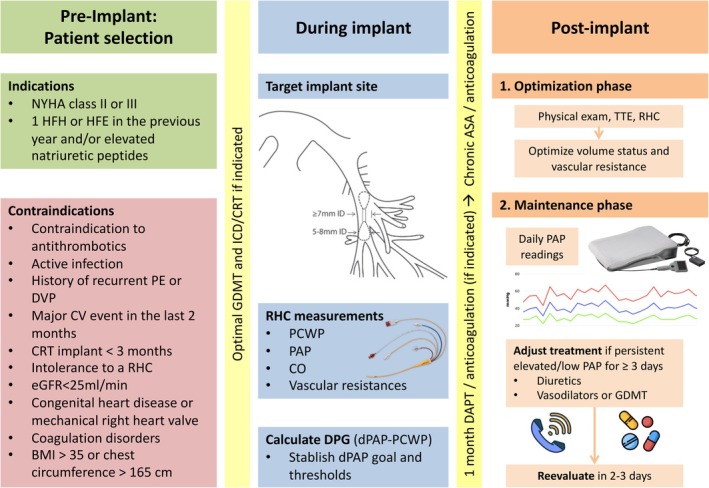
The ideal candidate has chronic heart failure, persistent NYHA class II or III symptoms despite optimized GDMT, recurrent congestion as the main problem, and the ability and willingness to take daily readings. Remote data are a reasonable choice when volume status is hard to judge clinically (obesity, chronic lung disease, chronic kidney disease) or the patient lives far from the clinic. No trial has tested whether these groups benefit more. The natriuretic peptide criterion (B-type natriuretic peptide [BNP] or N-terminal pro-BNP [NT-proBNP]) was defined in GUIDE-HF by ejection fraction and adjusted for body mass index (BMI), because obesity lowers natriuretic peptide concentrations.
| Element | Criterion | Source |
|---|---|---|
| Symptoms | NYHA class II or III (class III in CHAMPION and MONITOR-HF; class II–IV in GUIDE-HF) | FDA label 2022; trials |
| Recent event | Heart failure hospitalization within 12 months, or elevated natriuretic peptide within 30 days | FDA label 2022; GUIDE-HF |
| Natriuretic peptide, LVEF ≤40% | NT-proBNP ≥1,000 pg/mL or BNP ≥250 pg/mL | GUIDE-HF |
| Natriuretic peptide, LVEF >40% | NT-proBNP ≥700 pg/mL or BNP ≥175 pg/mL | GUIDE-HF |
| BMI adjustment | Thresholds lowered 4% per BMI unit above 25 kg/m² | GUIDE-HF |
| Medical therapy | Stable, optimally titrated GDMT for at least 30 days, with any intolerance documented | GUIDE-HF |
| Body habitus | If BMI >35 kg/m², chest circumference at the axilla <65 inches (165 cm); in CHAMPION, distance from back to pulmonary artery <10 cm when BMI >35 and chest circumference >52 inches | Trials; HFA consensus |
| Antithrombotic therapy | Able to take dual antiplatelet therapy or an anticoagulant for 1 month | FDA label (contraindication) |
| Kidney function | Excluded: eGFR <25 mL/min/1.73 m² unresponsive to diuretics, or chronic dialysis | All three randomized trials |
| Venous thromboembolism | Excluded: current or recurrent (≥2) pulmonary emboli or deep vein thromboses | Trials |
| Recent events and devices | Excluded: major cardiovascular event within 90 days (2 months in CHAMPION); CRT implanted within 90 days | Trials |
| Cardiac anatomy | Excluded: mechanical right heart valve; unrepaired congenital heart disease that prevents implantation; unrepaired severe valve disease | Trials |
| Advanced disease | Excluded: stage D refractory heart failure on inotropes, mechanical support or transplant expected within 12 months, life expectancy <12 months | GUIDE-HF |
| Other | Active infection; pregnancy or planned pregnancy; known coagulation disorder; allergy to aspirin or clopidogrel (CHAMPION); unexpectedly severe pulmonary hypertension at the implant catheterization (for example, transpulmonary gradient >15 mm Hg) | Trials |
Exclusion criteria are trial criteria, carried into the HFA consensus statement as contraindications; only the antithrombotic criterion is a labeled contraindication. eGFR, estimated glomerular filtration rate.
Natriuretic peptide thresholds are applied to a measurement within 30 days in a stable outpatient. A patient with BMI 35 kg/m² and LVEF 30% qualifies with an NT-proBNP of 600 pg/mL or more (1,000 × [1 − 0.04 × 10]). Values obtained during an admission do not satisfy the outpatient criterion. Patients with end-stage kidney disease were excluded because natriuretic peptides are uninterpretable and volume is managed by dialysis.
Eligibility checker for implantable heart failure devices
The checker applies the FDA indications for the CardioMEMS and Cordella pulmonary artery sensors, the Optimizer CCM system, and the Barostim BAT system to a single patient, and calculates the BMI-adjusted natriuretic peptide threshold used for CardioMEMS. It does not apply the trial exclusions in the selection table.
Implantable heart failure device eligibility
FDA labelingThreshold = base value × (1 − 0.04 × [BMI − 25]) when BMI exceeds 25 kg/m²; base values are NT-proBNP 1,000 pg/mL or BNP 250 pg/mL when LVEF is 40% or less, and NT-proBNP 700 pg/mL or BNP 175 pg/mL when LVEF exceeds 40%. CardioMEMS: NYHA class II or III with a heart failure hospitalization within 12 months or a natriuretic peptide at or above threshold. Cordella: NYHA class III on diuretics and GDMT, stable for 30 days. CCM: NYHA class III despite GDMT, LVEF 25% to 45%, without CRT. BAT: NYHA class III or class II with recent class III despite GDMT, LVEF 35% or less, and NT-proBNP below 1,600 pg/mL; BeAT-HF excluded patients receiving CRT or with a Class I CRT indication. Label eligibility is not by itself an indication; Medicare coverage requires additional criteria.
Implantation of the pulmonary artery sensor
The sensor is implanted during right heart catheterization in an outpatient or short-stay setting, with the patient clinically stable and not during an admission for acute decompensation. Access is through the femoral vein in most cases; internal jugular access is an alternative. A balloon-tipped catheter records right atrial, right ventricular, pulmonary artery, and wedge pressures, and cardiac output is measured. These values establish the baseline from which pressure targets are set and identify a precapillary component.
The target is a descending (lower lobe) branch of the left or right pulmonary artery. Pulmonary angiography through the catheter defines the branch. In CHAMPION the implant branch was required to measure 7 to 15 mm in diameter, and the HFA implementation figure shows a target segment of at least 7 mm inner diameter tapering distally. A lower lobe branch running posteriorly and inferiorly keeps the sensor within reach of the home antenna, which reads through the back. An exchange wire (0.018-inch compatible) is advanced into the distal branch, and the delivery catheter carrying the sensor is introduced through a 12F sheath with a usable length of 120 cm. Under fluoroscopy the sensor is positioned, the tether wires are withdrawn, and the nitinol loops anchor it against the vessel wall.
After release, a catheter is returned to the main pulmonary artery, and simultaneous catheter and sensor readings are acquired with the hospital electronics system. The sensor mean pressure is calibrated to the catheter value, and the baseline waveform is stored. The patient is taught to take a reading before discharge, and the home unit is configured.
Wire perforation of a distal pulmonary artery branch is the most serious procedural hazard. It presents as hemoptysis, hypoxemia, or hemothorax, sometimes after a delay. The risk is lowest when the wire tip is controlled in a branch of adequate size and the sensor is not deployed in a small or tortuous segment.
Antithrombotic therapy after implantation
The sensor is a foreign body in a low-pressure, low-flow vessel until it is endothelialized. The HFA consensus pathway specifies 1 month of dual antiplatelet therapy (aspirin and clopidogrel) or anticoagulation after implantation, followed by long-term aspirin or anticoagulation. Patients already taking an oral anticoagulant for atrial fibrillation or venous thromboembolism continue it. Adding antiplatelet therapy to an anticoagulant is not required by the label and raises bleeding risk.
Periprocedural management of warfarin and the direct oral anticoagulants follows the bleeding risk of a venous catheterization with large-bore access and is covered in the periprocedural section of the oral anticoagulant hub.
Daily readings, data review, and the remote monitoring workflow
The patient lies supine on the pillow at about the same time daily, usually in the morning, and the unit acquires a short recording that is transmitted automatically. Readings are reviewed by the heart failure team several days a week; the HFA consensus recommends checks on 5 of 7 days and a notification tool that lists only patients whose pressures are out of range or whose readings are missing. Adherence is high but not complete. In the CardioMEMS Post-Approval Study, patients transmitted on a mean of 76% of days during the first year. In a European registry, daily transmission adherence was 78% and weekly review by the team about 90%.
The first weeks after implantation establish the patient's baseline. The team identifies the pressure that corresponds to clinical euvolemia and stability, confirms that the implant catheterization values match the home readings, and sets individual upper and lower thresholds. Thereafter, a review answers three questions: Is the trend rising, stable, or falling? Is the value inside the patient's target range? Has a medication change produced the expected response? A rising trend leads to a telephone contact; a review of symptoms, diet, adherence, and new medications; a treatment change; and a repeat assessment of pressure in 2 to 3 days.
Benefit depends on the clinicians as much as on the patient. In the 2-year analysis of PROACTIVE-HF, patients transmitted a median of 6.3 days per week and clinicians responded within a median of 1.7 days. Slower clinician response was associated with more heart failure hospitalizations, although the association was attenuated after adjustment for baseline differences.
Pressure targets and the diuretic and vasodilator response protocol
CHAMPION defined optimal pressures as a PADP of 8 to 20 mm Hg, a mean pulmonary artery pressure of 10 to 25 mm Hg, and a systolic pressure of 15 to 35 mm Hg. The protocol specified medication changes when pressures fell outside these ranges. The HFA consensus statement keeps PADP as the main management variable, with an ideal range of 8 to 20 mm Hg and a usual upper target of 16 to 20 mm Hg. Many patients, particularly those with pulmonary hypertension, never reach the normal range. Their target is the lowest PADP compatible with stable kidney function, blood pressure, and well-being, set relative to the implant PCWP and the DPG.
| Pressure pattern | Interpretation | Response |
|---|---|---|
| PADP within target, stable trend | Hemodynamic stability | Continuation of current therapy; uptitration of neurohormonal GDMT during stable periods |
| PADP rise of 3–5 mm Hg over 2–3 days, or ≥5 mm Hg in a single day | Early hemodynamic congestion | Patient contact; identification of the precipitant; loop diuretic intensification (for example, a doubled dose for 3 days); reassessment in 2–3 days |
| Elevated pressure without weight gain or volume excess | Pressure from redistribution, hypertension, or vasoconstriction | Titration of vasodilators, including nitrates, and neurohormonal therapy; SGLT2 inhibitor if not already taken |
| Elevated pressure with volume excess | Sodium and water retention | Loop diuretic escalation, then sequential nephron blockade (thiazide-type diuretic, acetazolamide) |
| Persistent elevation despite treatment | Progression or an unrecognized cause | Evaluation for atrial fibrillation, ischemia, valve disease, sleep apnea, anemia, nonadherence, and excess sodium intake; referral for valve intervention, rhythm control, or advanced therapies |
| PADP persistently below target (below about 8 mm Hg) | Overdiuresis, especially with symptoms, hypotension, or rising creatinine | Reduction or withholding of the diuretic; reassessment |
Thresholds from the CHAMPION protocol and the 2025 HFA clinical consensus statement. PADP, pulmonary artery diastolic pressure; SGLT2, sodium-glucose cotransporter 2.
Diuretic adjustment is the most frequent intervention. In CHAMPION, the pressure-guided group received more medication changes and larger dose increases of diuretics, vasodilators, and neurohormonal antagonists, with intensification of diuretics and vasodilators targeted to patients with higher pressures. Kidney function was preserved despite more diuretic. Nitrate use rose most: 41.9% of the treatment group were taking a nitrate at 6 months compared with 23.2% of controls. Loop diuretic dose equivalence, the ceiling doses, and sequential nephron blockade are covered in the outpatient diuretic section and the sequential nephron blockade section of the diuretics hub.
Optimizing GDMT with pulmonary artery pressure data
Pressure data support neurohormonal therapy in two ways. Stable, in-range pressures give the clinician confidence to raise doses of beta-blockers, angiotensin receptor-neprilysin inhibitors, and mineralocorticoid receptor antagonists, which can transiently lower blood pressure or raise creatinine. Hypotension or a rising creatinine with a PADP below target signals overdiuresis and does not indicate intolerance of the neurohormonal drug. Conversely, a rising pressure after a dose change separates hemodynamic intolerance from symptoms unrelated to filling pressure.
In the prespecified CHAMPION subgroup of 456 patients with LVEF of 40% or less, heart failure hospitalization was 28% lower with pressure-guided management (hazard ratio [HR] 0.72; 95% confidence interval [CI] 0.59 to 0.88). Mortality showed a nonsignificant trend toward being lower (HR 0.68; 95% CI 0.45 to 1.02). In a post hoc analysis of 337 patients receiving both a beta-blocker and an angiotensin-converting enzyme inhibitor or angiotensin receptor blocker, heart failure hospitalization was 43% lower (HR 0.57) and mortality 57% lower (HR 0.43). These are nonrandomized subgroup comparisons and do not establish a mortality benefit. They are consistent with pressure guidance as a complement to neurohormonal therapy. The four foundational drug classes, their titration, and the management of hypotension and hyperkalemia during titration are covered in the GDMT titration section of the HFrEF hub.
Interpreting discordant readings, waveforms, and low pressures
A single high reading is confirmed before treatment changes. Exertion immediately before the reading, anxiety, talking during acquisition, a meal, an unusual position, and a rapid heart rate raise the value. A consistent upward trend over 24 to 72 hours with a normal waveform is acted on; an isolated outlier is repeated.
The waveform is reviewed with the numbers. A normal pulmonary artery waveform has a sharp systolic upstroke, a dicrotic notch, and a diastolic runoff. A damped or blunted waveform, or one that differs from the stored baseline, raises the possibility of sensor movement, thrombus, or artifact and makes the absolute values unreliable. Atrial fibrillation and frequent ectopy produce beat-to-beat variation in pulse pressure; the reported values are averages, and the trend remains usable.
Failure to acquire a reading usually reflects technique, pillow position, or body habitus, since radiofrequency coupling weakens with distance; supervised repositioning or a clinic reading resolves most cases. Loss of transmission with successful acquisition reflects connectivity. Persistent discordance between the sensor and the clinical picture is resolved by right heart catheterization with simultaneous sensor reading, which also recalibrates the sensor.
Discordance is often physiologic. Low pulmonary pressures with persistent dyspnea point to a noncardiac cause, chronotropic incompetence, or low output. Elevated PADP with a normal wedge reflects pulmonary vascular disease. Severe tricuspid regurgitation and right ventricular failure produce systemic congestion with pressures that do not fall with diuresis. A persistently low PADP with fatigue, orthostasis, and a rising creatinine indicates overdiuresis, and the diuretic is reduced.
The CHAMPION trial
CHAMPION (CardioMEMS Heart Sensor Allows Monitoring of Pressure to Improve Outcomes in NYHA Class III Heart Failure Patients) enrolled 550 patients at 64 US centers. All had NYHA class III heart failure, regardless of ejection fraction, and a heart failure hospitalization within the previous 12 months. All patients received a sensor. Patients were then randomized, single-blind, to management with daily pressures added to standard care (270) or to standard care with pressures uploaded but unavailable to investigators (280).
At 6 months, there were 83 heart failure hospitalizations in the treatment group and 120 in the control group (rate 0.31 versus 0.44 per patient; HR 0.70; 95% CI 0.60 to 0.84; p<0.0001), a 30% relative reduction. Over a mean of 15 months, hospitalizations were also lower (153 versus 253; HR 0.64; 95% CI 0.55 to 0.75). Mean pulmonary artery pressure fell more, and quality of life was better, in the treatment group. Freedom from device- or system-related complications was 98.6%, against a performance criterion of 80%, and freedom from pressure-sensor failure was 100%.
Over the complete randomized period, averaging 18 months, heart failure hospitalization was 33% lower in the treatment group (HR 0.67; 95% CI 0.55 to 0.80). When investigators gained access to the former control group's pressures for an average of 13 additional months, that group's hospitalization rate fell by 48% compared with its own randomized period (HR 0.52; 95% CI 0.40 to 0.69). Device- or system-related complications and procedure-related adverse events both occurred in about 1% of patients.
CHAMPION was single-blind. Patients were masked, but investigators knew which patients' pressures were visible to them, and the treatment group received more clinical contact in response to pressure data. GUIDE-HF and MONITOR-HF tested the strategy in broader populations and in a different health care system.
GUIDE-HF and the COVID-19 period
GUIDE-HF (hemodynamic-GUIDEd management of Heart Failure) implanted sensors in 1,000 patients at 118 centers in the United States and Canada and randomized them, single-blind, to pressure-guided management (497) or usual care (503). Patients had NYHA class II to IV symptoms and either a heart failure hospitalization within 12 months or an elevated natriuretic peptide, with any ejection fraction. The primary end point was a composite of all-cause mortality and total heart failure events (hospitalizations and urgent visits) at 12 months.
There were 253 primary events (0.563 per patient-year) in the treatment group and 289 (0.640 per patient-year) in the control group (HR 0.88; 95% CI 0.74 to 1.05; p=0.16). The trial therefore did not meet its primary end point. Follow-up overlapped the COVID-19 pandemic, during which the control group's event rate fell by 21% while the treatment group's rate was unchanged. In a prespecified analysis of events before the pandemic, primary events were reduced (HR 0.81; 95% CI 0.66 to 1.00; p=0.049), driven by fewer heart failure hospitalizations. The cumulative incidence of heart failure events was also lower (HR 0.76; 95% CI 0.61 to 0.95). During the pandemic there was no difference (HR 1.11). Freedom from device- or system-related complications was 99%.
GUIDE-HF is interpreted as a neutral trial with a favorable signal in its prespecified prepandemic analysis. Patients in NYHA class II formed about 30% of the population, and the trial is the basis for the 2022 expansion of the label to class II and to patients qualifying by natriuretic peptides alone.
MONITOR-HF and the European evidence
MONITOR-HF enrolled 348 patients at 25 centers in the Netherlands. All had NYHA class III heart failure and a heart failure hospitalization in the previous year, irrespective of ejection fraction. They were randomized to CardioMEMS-guided care (176) or standard care without a sensor (172). The trial was open-label, was conducted on a background of contemporary GDMT in a different health care system, and used a patient-centered primary end point: the change in the Kansas City Cardiomyopathy Questionnaire (KCCQ) overall summary score at 12 months. Median age was 69 years and median ejection fraction 30%.
The KCCQ score improved by 7.05 points with CardioMEMS and was unchanged with standard care (difference 7.13; 95% CI 1.51 to 12.75; p=0.013). The odds of an improvement of at least 5 points were higher (odds ratio 1.69), and the odds of a deterioration of at least 5 points lower (odds ratio 0.45). Total heart failure hospitalizations or urgent visits were 44% lower during a mean follow-up of 1.8 years, and NT-proBNP and mean pulmonary artery pressure fell in the sensor group. Freedom from device- or system-related complications was 97.7% and freedom from sensor failure 98.8%. Because there was no sham procedure and the control group received no sensor, the quality-of-life result is subject to expectation bias, whereas hospitalization counts are less so.
Randomized and observational evidence for pulmonary artery pressure monitoring
| Study | Design and population | Main result | Safety |
|---|---|---|---|
| COMPASS-HF (2008) | RCT, 274, NYHA III–IV; right ventricular lead monitor (Chronicle) | HF events 21% lower, not significant (p=0.33) | System complications 8% |
| CHAMPION (2011, 2016) | Single-blind RCT, 550, NYHA III with prior HF hospitalization | 6-month HF hospitalization HR 0.70; full randomized period HR 0.67; former controls −48% after open access | DSRC-free 98.6%; sensor failure-free 100% |
| GUIDE-HF (2021) | Single-blind RCT, 1,000, NYHA II–IV with HF hospitalization or elevated natriuretic peptides | Death plus HF events HR 0.88 (NS); prepandemic HR 0.81 | DSRC-free 99% |
| MONITOR-HF (2023) | Open-label RCT, 348, NYHA III with prior HF hospitalization (Netherlands) | KCCQ +7.13 points; HF hospitalizations or urgent visits −44% | DSRC-free 97.7% |
| Meta-analysis (2023) | CHAMPION, GUIDE-HF, MONITOR-HF; 1,898 patients | Total HF hospitalization HR 0.70 (0.58–0.86); composite with urgent visits and death HR 0.75; all-cause death HR 0.92 (0.73–1.16) | — |
| Post-Approval Study (2020) | Single-arm, 1,200 at 104 US centers, NYHA III with prior HF hospitalization; 46.8% preserved LVEF | HF hospitalization 0.54 versus 1.25 per patient-year in the year before (HR 0.43); all-cause hospitalization HR 0.73 | DSRC-free 99.6%; sensor failure-free 99.9% |
| COAST UK cohort (2022) | Single-arm, first 100 UK patients, NYHA III with prior HF hospitalization | HF hospitalization 0.27 versus 1.52 per patient-year (82% lower) | DSRC-free 100%; sensor failure-free 99% at 2 years |
| MEMS-HF (2020) | Single-arm, 239, NYHA III with prior HF hospitalization (Europe) | HF hospitalization 0.60 versus 1.55 per patient-year in the year before (62% lower) | DSRC-free 98.3%; sensor failure-free 99.6% |
| Medicare matched cohort (2019) | 1,087 implanted and 1,087 matched controls | 12-month HF hospitalization HR 0.76; days lost to HF hospitalization or death HR 0.73 | — |
| PROACTIVE-HF (2024) | Single-arm, 456, NYHA III, Cordella sensor, seated mean pressure | 6-month HF hospitalization or death 0.15 per patient versus performance goal 0.43 | DSRC-free 99.2%; sensor failure-free 99.8% |
Before-after comparisons are vulnerable to regression to the mean, because patients are selected after a hospitalization. DSRC, device- or system-related complication; HF, heart failure; NS, not significant; RCT, randomized controlled trial.
The pooled analysis of the three CardioMEMS randomized trials is the most precise estimate of effect: a 30% reduction in total heart failure hospitalizations, no heterogeneity by ejection fraction phenotype, and no detectable effect on mortality. The observational studies show that the effect seen in trials is reproduced in practice, but their before-after designs overstate it. The main gap in the evidence is that no sham-controlled trial has met a primary end point of clinical events in its whole population.
Pressure-guided management in preserved and mildly reduced ejection fraction
Pressure monitoring is one of the few strategies with randomized evidence in heart failure with preserved ejection fraction (HFpEF). In CHAMPION, 119 patients had an LVEF of 40% or more (mean 50.6%). Their heart failure hospitalization rate at 6 months was 46% lower with pressure-guided care (incidence rate ratio 0.54; 95% CI 0.38 to 0.70), and 50% lower over a mean of 17.6 months (incidence rate ratio 0.50). More diuretic and vasodilator changes were made in response to pressures, as in the reduced ejection fraction group. In the meta-analysis of randomized trials, there was no heterogeneity of the hospitalization effect by ejection fraction, and nearly half of the Post-Approval Study cohort had preserved ejection fraction.
The physiology of HFpEF favors pressure guidance. A stiff ventricle has a steep end-diastolic pressure-volume relation, so small volume gains produce large rises in filling pressure, and episodes of congestion are frequent. The same steepness makes overdiuresis more likely: a modest volume deficit lowers stroke volume, blood pressure, and kidney perfusion. Targets in HFpEF are set from the implant hemodynamics and tolerance. A precapillary component from combined pre- and postcapillary pulmonary hypertension is common. Diagnosis, phenotypes, and drug therapy in HFpEF, including interatrial shunts, are covered in the device section of the HFpEF hub.
Special populations: pulmonary hypertension, LVAD, CRT, kidney disease, and obesity
Pulmonary hypertension due to left heart disease. When candidates have pulmonary hypertension, it is usually postcapillary (group 2). In the European registry, benefit was consistent regardless of the presence or subtype of pulmonary hypertension. In combined pre- and postcapillary disease, the PADP target is set relative to the implant PCWP and DPG, because PADP will not fall to normal. Pulmonary arterial hypertension (group 1) is not a labeled indication. Pulmonary hypertension due to left heart disease is classified and managed in the group 2 section of the pulmonary hypertension hub.
Left ventricular assist devices. The sensor is compatible with an LVAD and can be placed before or after implantation. Before an LVAD, rising pressures despite optimized therapy identify patients whose disease is progressing and inform referral timing. After an LVAD, PADP guides pump speed and volume management and identifies right ventricular failure. The HFA consensus statement reports consistent benefit in LVAD recipients in subgroup analyses, and a CHAMPION subanalysis suggested that pressure data help time LVAD implantation.
ICD and CRT recipients. The sensor does not interfere with pacing or defibrillation. Trials excluded patients within 90 days of CRT implantation, because resynchronization alone changes hemodynamics and symptoms during that period. Device rhythm data complement pressure data: a pressure rise coinciding with new atrial fibrillation directs treatment to rhythm or rate control.
Kidney disease. Patients with an eGFR below 25 mL/min/1.73 m² unresponsive to diuretics, or on dialysis, were excluded from all randomized trials. In moderate chronic kidney disease, pressure guidance allows diuretic intensification with preserved kidney function, as in CHAMPION.
Obesity. Radiofrequency coupling weakens with the distance between the antenna and the sensor. Patients with BMI above 35 kg/m² were included when chest circumference at the axilla was below 65 inches (165 cm), and in CHAMPION when the back-to-pulmonary-artery distance on lateral angiography was below 10 cm. Natriuretic peptide thresholds are lowered for BMI above 25 kg/m².
Pregnancy and congenital heart disease. Pregnancy, unrepaired congenital heart disease that prevents implantation, and a mechanical right heart valve were exclusions; experience in adults with repaired congenital heart disease is limited to case series.
Safety and complications of pulmonary artery sensors
Safety in the randomized trials and registries has been consistent: freedom from device- or system-related complications of 97.7% to 100% and freedom from sensor failure of 98.8% to 100%. In CHAMPION, the eight device- or system-related complications in 575 patients were hemoptysis, failure of the sensor to deploy, a transient ischemic attack, atypical chest pain, sepsis leading to death, atrial arrhythmia leading to death, an upper extremity arterial embolism, and in situ pulmonary artery thrombus. In GUIDE-HF, the eight complications in 1,022 patients were catheter site hematoma or hemorrhage, device dislocation or malfunction, arterial injury, and vascular pseudoaneurysm; none caused death or explantation.
The labeled list of potential adverse events includes hemoptysis, pulmonary artery injury, cardiac perforation, access site hematoma, infection, thrombosis, embolism, arrhythmia, and death. Pulmonary artery injury from wire perforation presents with hemoptysis during or after the procedure, and management includes reversal of anticoagulation, balloon occlusion or embolization of the bleeding branch, and support of oxygenation.
Late events are uncommon. Infection of the sensor is rare because there is no lead or pocket. A sensor that moves proximally can be retrieved with a snare, ideally early, before endothelialization; once incorporated into the vessel wall, a sensor that functions poorly is usually left in place, because extraction risks pulmonary artery injury.
Cost-effectiveness and Medicare coverage
Cost-effectiveness depends on device and implant cost, the durability of the hospitalization effect, and whether a mortality benefit is assumed. In a Markov model using CHAMPION data, CardioMEMS reduced lifetime hospitalizations (2.18 versus 3.12) and added 0.28 quality-adjusted life years (QALYs). The incremental cost was $71,462 per QALY ($82,301 in reduced and $47,768 in preserved ejection fraction). In a lower-risk population, the device would need to reduce heart failure hospitalizations by 41% to cost less than $100,000 per QALY. The result was most sensitive to the durability of the device effect. In a matched Medicare cohort, implanted patients spent fewer days lost to heart failure hospitalization or death than matched controls. The 2022 AHA/ACC/HFSA guideline rates the economic value of wireless pulmonary artery pressure monitoring as uncertain (Level of Evidence B-NR).
The Centers for Medicare & Medicaid Services (CMS) issued a national coverage determination for implantable pulmonary artery pressure sensors on January 13, 2025. Coverage is limited to an FDA-authorized indication within a CMS-approved study under coverage with evidence development. Patients must have chronic heart failure for at least 3 months and NYHA class II or III within 30 days. A heart failure hospitalization or urgent visit within 12 months or elevated natriuretic peptides within 30 days is also required, as is at least 3 months of GDMT. Patients must also have been evaluated for an ICD or CRT device, with any such device implanted at least 3 months earlier, and must not have had a major cardiovascular event within 3 months. Implantation during an acute heart failure admission is not covered. Studies must have an active comparator and follow heart failure hospitalization and mortality for at least 24 months. CCM has a separate national coverage determination under coverage with evidence development, effective October 2025.
Guideline recommendations for pulmonary artery pressure monitoring
The 2022 AHA/ACC/HFSA heart failure guideline addresses implanted pulmonary artery pressure monitoring in its section on remote monitoring. The recommendation applies to selected adults with NYHA class III heart failure, a heart failure hospitalization within the past year or elevated natriuretic peptides, and maximally tolerated stable doses of GDMT with optimal device therapy. In these patients, the usefulness of wireless pulmonary artery pressure monitoring by an implanted hemodynamic monitor to reduce the risk of subsequent heart failure hospitalization is uncertain (Class 2b, Level of Evidence B-R). The guideline was written with CHAMPION and GUIDE-HF available; MONITOR-HF and the pooled analysis followed it. The 2022 guideline remains the current US heart failure guideline.
European guidance ranks the strategy higher than US guidance. The 2026 ESC heart failure guideline states that remote hemodynamic monitoring of pulmonary artery pressure should be considered in symptomatic patients with NYHA class III heart failure and a heart failure hospitalization in the past 12 months, to reduce the risk of heart failure hospitalization (Class IIa, Level B1). The 2021 ESC guideline had given wireless pulmonary artery pressure monitoring in symptomatic heart failure a Class IIb, Level B recommendation. The 2025 HFA clinical consensus statement, which summarizes all three randomized trials and the registries, regards NYHA class II or III patients with a heart failure event in the previous year or elevated natriuretic peptides as candidates. It also specifies the staff and protocols an implementing center requires.
Cordella and other pulmonary artery sensors
The Cordella Pulmonary Artery Sensor System is a second wireless sensor implanted in the pulmonary artery. The patient takes a reading while seated, holding a handheld reader against the chest, and the system also transmits weight, blood pressure, heart rate, and oxygen saturation through a connected platform. Management is based on the seated mean pulmonary artery pressure. The FDA approved it on June 20, 2024, to measure, record, and transmit pulmonary artery pressure in NYHA class III patients at home who take diuretics and have been stable on GDMT for 30 days. As with CardioMEMS, inability to take dual antiplatelet therapy or an anticoagulant for 1 month after implantation is the labeled contraindication.
PROACTIVE-HF began as a randomized trial and, after GUIDE-HF and with FDA input, was converted to a single-arm open-label study at 75 US and European centers. It enrolled 456 patients in NYHA class III with a recent heart failure hospitalization or elevated natriuretic peptides, irrespective of ejection fraction. The 6-month rate of heart failure hospitalization or death was 0.15 per patient (95% CI 0.12 to 0.20), below the performance goal of 0.43 derived from earlier trials. Freedom from device- or system-related complications was 99.2% and from sensor failure 99.8%. Without a concurrent control group, these results establish safety and feasibility but not comparative effectiveness.
Left atrial pressure sensors and interatrial shunts
Direct left atrial pressure measurement removes the dependence on a normal DPG. The V-LAP system is a leadless sensor placed across the interatrial septum by transseptal puncture that transmits left atrial pressure wirelessly. In VECTOR-HF, a first-in-human single-arm study of 30 patients, implantation succeeded in all patients and freedom from major adverse cardiac and neurologic events at 3 months was 97%. Sensor pressure agreed with simultaneous PCWP (mean difference −0.22 ± 4.92 mm Hg; correlation coefficient 0.79). Left atrial sensors remain investigational, and the transseptal implant and a left-sided foreign body introduce thromboembolic risks absent with pulmonary artery sensors.
Interatrial shunt devices decompress the left atrium by creating a left-to-right shunt. They are therapeutic devices, unlike the monitoring sensors. In REDUCE LAP-HF II (626 patients with LVEF of 40% or more), the shunt did not improve the primary outcome, and patients with latent pulmonary vascular disease were harmed; RELIEVE-HF was also neutral for its primary effectiveness outcome. Interatrial shunting is investigational; the trials are summarized in the HFpEF device section.
Device-based multiparameter diagnostics: HeartLogic, OptiVol, and TriageHF
Patients with an ICD or CRT-D already carry sensors that respond to congestion. Thoracic impedance falls as lung water rises; the third heart sound grows and the first heart sound diminishes with rising filling pressure and falling contractility; respiratory rate and the ratio of respiratory rate to tidal volume rise; night heart rate rises and heart rate variability and activity fall. Algorithms combine these signals into an index with an alert threshold, at no additional procedural risk.
OptiVol (Medtronic) tracks intrathoracic impedance and its cumulative deviation from a reference. In DOT-HF, 335 patients were randomized to impedance monitoring with audible patient alerts and clinician access to the data, or to no access. The primary end point of death or heart failure hospitalization was not reduced (29% with access versus 20% without; HR 1.52; 95% CI 0.97 to 2.37), heart failure hospitalizations were more frequent with alerts (HR 1.79; 95% CI 1.08 to 2.95), and outpatient visits rose from 84 to 250. Impedance alone has low specificity, because infection, pocket changes, and lung disease also lower it. TriageHF, a later Medtronic algorithm, combines impedance with other device diagnostics into a low, medium, or high risk status.
HeartLogic (Boston Scientific) combines heart sounds, respiration, thoracic impedance, heart rate, and activity. In MultiSENSE, developed and tested in 900 CRT-D patients, the algorithm detected 70% of heart failure events (95% CI 55.4% to 82.1%), with a median warning of 34 days before the event (interquartile range 19 to 66 days) and an unexplained alert rate of 1.47 per patient-year. No randomized outcome trial has shown that HeartLogic-guided care reduces hospitalization.
Multiparameter diagnostics are available only to patients who already need an ICD or CRT-D, and they report a risk index without a pressure to titrate against. Pulmonary artery sensors serve patients with or without a device and with any ejection fraction. The two are complementary in CRT-D recipients.
Noninvasive telemonitoring compared with remote device monitoring
Noninvasive telemonitoring transmits weight, blood pressure, heart rate, oxygen saturation, symptoms, and sometimes a single-lead electrocardiogram. TIM-HF2 randomized 1,571 patients with a heart failure hospitalization within 12 months to a structured program with daily transmissions to a 24-hour telemedical center or to usual care. The percentage of days lost to unplanned cardiovascular hospitalization or all-cause death was lower (4.88% versus 6.64%; ratio 0.80; 95% CI 0.65 to 1.00; p=0.046), and all-cause mortality was lower (HR 0.70; 95% CI 0.50 to 0.96), whereas cardiovascular mortality did not differ significantly. The intervention relied on a physician-staffed center available around the clock.
Remote monitoring of ICDs and CRT devices detects arrhythmias, lead problems, and battery depletion and is standard care. Its effect on heart failure outcomes depends on alerts that trigger defined responses: in IN-TIME, daily automatic multiparameter transmissions with defined responses improved a clinical composite score, whereas trials without structured responses have not reduced events. The cardiac implantable electronic device (CIED) trials and the 2023 Heart Rhythm Society (HRS) recommendations on device follow-up are in the follow-up section of the CRT hub.
Staffing a remote heart failure monitoring program
Remote hemodynamic management is a service built around the device. The HFA consensus statement states that a team of heart failure cardiologists and dedicated nurses or technicians is a requirement for implementing pulmonary artery pressure monitoring. Nurses review pressures and contact patients under standing protocols, with a cardiologist available for complex decisions. The program defines who reviews data on which days, how quickly out-of-range readings are acted on, which medication changes nurses may make, how missing readings are followed up, and how changes are documented and communicated to the primary cardiologist and the patient.
The 2023 expert consensus statement on the remote device clinic from the HRS and the European, Asia Pacific, and Latin American heart rhythm societies estimated that about 3.0 full-time equivalent staff are required per 1,000 CIED patients managed with remote monitoring and in-clinic visits. It found that unscheduled transmissions make up 27% to 40% of the workload and recommended that alerts be addressed within 1 business day, with red alerts prioritized. Pulmonary artery pressure programs add daily review of all patients, which is more intensive than event-driven device alerts.
Cardiac contractility modulation: mechanism
CCM delivers high-voltage, biphasic electrical signals to the right ventricular septum during the absolute refractory period. Because the myocardium is refractory, the signal does not trigger a new action potential or change the activation sequence; it is nonexcitatory. Its effect is on calcium handling and gene expression.
The chronic effects resemble reverse remodeling. Endomyocardial biopsies were obtained from 11 patients after 3 months of therapy and after 3 months with the device switched off. In those biopsies, CCM reduced expression of natriuretic peptides and stress kinases and increased expression of alpha-myosin heavy chain, sarcoplasmic reticulum calcium ATPase (SERCA2a), phospholamban, and the ryanodine receptor, reversing the fetal gene program of failing myocardium. Reviews attribute the improvement in contractility to increased phospholamban phosphorylation and enhanced sarcoplasmic reticulum calcium uptake.
CCM differs from CRT in its target. CRT corrects electrical dyssynchrony and requires a wide QRS, particularly left bundle branch block. CCM increases contractile strength and was developed for the large population with reduced ejection fraction and a narrow QRS, in whom CRT is ineffective.
The CCM system, implantation, and programming
The Optimizer implantable pulse generator is placed in a right pectoral pocket. Two active-fixation bipolar leads are placed transvenously on the right ventricular septum. The original three-lead system added an atrial lead to time signal delivery; the two-lead system, approved in October 2019, times delivery from ventricular sensing and permits use in atrial fibrillation. The Optimizer Smart Mini, approved in 2021, is a smaller generator.
In the pivotal trials, a signal consisted of two biphasic pulses of 7.5 V, with phases about 5 ms long (about 20 ms in total), timed to the locally sensed ventricular activation so that it falls in the absolute refractory period. Therapy was delivered for 5 hours a day in 1-hour periods spaced through the day. The generator has a rechargeable battery that holds 3 to 4 weeks of charge; patients recharge it weekly through the skin, and a session takes 60 to 90 minutes. Because charging and telemetry work through the skin, the label recommends an implant depth of no more than 4 cm. The Optimizer does not pace for bradycardia or defibrillate, and more than 85% of FIX-HF-5C patients also had an ICD.
Lead dislodgement is the main complication. In FIX-HF-5C, 89.7% of CCM patients were free of device- or procedure-related complications, and five of the seven complications were lead dislodgements. The two-lead system had a lower rate of device-related adverse events in FIX-HF-5C2 (0% versus 8% with three leads).
CCM candidates and FDA labeling
The FDA approved the Optimizer Smart system on March 21, 2019, under the Breakthrough Devices Program. The current indication is to improve 6-minute walk distance, quality of life, and functional status in NYHA class III patients who remain symptomatic despite GDMT, are not receiving CRT, and have an LVEF of 25% to 45%. The two-lead system was approved in October 2019. In September 2020 the contraindication for permanent or long-standing persistent atrial fibrillation or flutter was removed, and in October 2021 the sinus rhythm requirement was removed from the indication.
The typical candidate has NYHA class III symptoms on optimized GDMT, an LVEF of 25% to 45%, and a QRS duration below 130 ms (or another reason CRT is not indicated). A patient with an LVEF of 35% or less and an indication for an ICD receives the ICD; CCM is an addition for symptoms, and the ICD still provides sudden death prevention. A patient who meets CRT criteria receives CRT, which reduces mortality.
Randomized trials of CCM: FIX-HF-4, FIX-HF-5, and FIX-HF-5C
| Trial | Design and population | Primary result | Other findings |
|---|---|---|---|
| FIX-HF-4 (2008) | Double-blind crossover, 164; LVEF <35%, NYHA II–III | Peak VO₂ and MLWHFQ improved with active versus sham periods (p=0.03 for both) | A placebo effect occurred in the first 3 months |
| FIX-HF-5 (2011) | Unblinded RCT, 428; LVEF ≤35%, NYHA III–IV, narrow QRS | Ventilatory anaerobic threshold not improved | Peak VO₂ +0.65 mL/kg/min; MLWHFQ −9.7 points; subgroup with LVEF ≥25% and NYHA III improved |
| FIX-HF-5C (2018) | Unblinded RCT, 160; LVEF 25%–45%, NYHA III–IV, QRS <130 ms | Peak VO₂ +0.84 mL/kg/min (Bayesian 95% credible interval 0.12 to 1.55), with information borrowed from FIX-HF-5 | MLWHFQ, NYHA class, and 6-minute walk improved; CV death or HF hospitalization 10.8% with control versus 2.9% with CCM (p=0.048) |
| FIX-HF-5C2 (2020) | Single-arm, 60; two-lead system; 15% permanent AF | Peak VO₂ 1.72 mL/kg/min better than FIX-HF-5C controls | No device-related adverse events |
| Patient-level meta-analysis (2020) | 4 RCTs (801); single-arm FIX-HF-5C2 (60) for peak VO₂ only | Peak VO₂ +0.93 mL/kg/min with single-arm FIX-HF-5C2 included (+0.65 from randomized trials alone); 6-minute walk +18 m; MLWHFQ −7.85 points | — |
AF, atrial fibrillation; CV, cardiovascular; MLWHFQ, Minnesota Living with Heart Failure Questionnaire; RCT, randomized controlled trial; VO₂, oxygen uptake.
FIX-HF-5 randomized 428 patients with NYHA class III or IV symptoms, LVEF of 35% or less, and a narrow QRS to CCM plus medical therapy or medical therapy alone. Its primary efficacy end point, ventilatory anaerobic threshold, was not met. Peak oxygen uptake improved by 0.65 mL/kg/min and the Minnesota Living with Heart Failure Questionnaire (MLWHFQ) score by 9.7 points, and safety met its noninferiority margin. A retrospective analysis identified a subgroup (LVEF 25% or more and NYHA class III, about half of the trial) with larger improvements, which defined the population for the confirmatory trial.
FIX-HF-5C randomized 160 patients with LVEF of 25% to 45%, NYHA class III or IV symptoms, and QRS duration below 130 ms to CCM or continued medical therapy for 24 weeks. There was no sham control. Peak oxygen uptake improved by 0.84 mL/kg/min relative to control. The analysis used Bayesian borrowing of 30% of the FIX-HF-5 subgroup data; FIX-HF-5C alone did not reach its prespecified probability threshold, and much of the difference reflected a decline in the control group. MLWHFQ, NYHA class, and 6-minute walk distance improved. The composite of cardiovascular death and heart failure hospitalization was 10.8% in the control group and 2.9% with CCM (p=0.048), from small numbers of events in a trial not powered for outcomes.
The size of the benefit is modest. The patient-level meta-analysis found improvements of 0.65 to 0.93 mL/kg/min in peak oxygen uptake (the higher value includes the single-arm FIX-HF-5C2 cohort), 18 m in 6-minute walk distance, and 8 points in MLWHFQ. None of the trials had a sham control except the crossover FIX-HF-4, and symptom end points are vulnerable to expectation. The benefit on hospitalization and mortality has not been tested in a powered randomized trial.
CCM registries, the two-lead system, and atrial fibrillation
In the European CCM-REG registry of 140 patients with LVEF of 25% to 45%, cardiovascular and heart failure hospitalizations fell from 1.2 per patient-year in the year before implantation to 0.35 per patient-year over the 2 years after it. Three-year survival was 82.8%, compared with 76.7% predicted by the Seattle Heart Failure Model; the difference was significant only in patients with LVEF of 35% to 45% (88.0% versus 74.7%). In a larger registry of 503 patients at 51 European centers, heart failure hospitalizations fell from 0.74 to 0.25 per patient-year. At 24 months, NYHA class had improved by 0.6, MLWHFQ by 10 points, and LVEF by 5.6%. Survival at 1 and 3 years exceeded that predicted by the Meta-Analysis Global Group in Chronic Heart Failure (MAGGIC) score. Before-after comparisons and comparisons with predicted survival are hypothesis-generating.
The three-lead system required an atrial lead to time the signal, so atrial fibrillation prevented therapy. The two-lead system times delivery from right ventricular sensing. In FIX-HF-5C2, 60 patients (15% with permanent atrial fibrillation) received a similar number of signals per day as with three leads and had a larger peak oxygen uptake improvement relative to FIX-HF-5C controls. In the 503-patient registry, patients with atrial fibrillation had hospitalization reductions similar to those in sinus rhythm.
CCM in mildly reduced and preserved ejection fraction: CCM-HFpEF and AIM HIGHer
Patients with LVEF of 35% to 45% had the largest functional improvements in the earlier trials, which led to study at higher ejection fractions. In the single-arm CCM-HFpEF pilot, 47 patients with LVEF of 50% or more (mean 59%; 46.8% with atrial fibrillation) had a KCCQ overall summary score improvement of 18.0 points at 24 weeks, and 93.6% were free of device- or procedure-related complications. Without a control group, the size of the improvement is uninterpretable.
AIM HIGHer is a randomized, sham-controlled trial of CCM with the Optimizer Smart Mini in about 1,500 patients with LVEF of 40% to 70%. Its first part tests 6-minute walk distance and KCCQ at 6 months and device complications at 12 months, and its second part a hierarchical composite of mortality, morbidity, and KCCQ. Enrollment status and any results are posted on ClinicalTrials.gov (NCT05064709). CCM is not approved for HFpEF.
Baroreflex activation therapy: mechanism
Heart failure with reduced ejection fraction is a state of sympathetic excess and parasympathetic withdrawal. Arterial baroreceptor sensitivity is blunted, so the normal inhibition of central sympathetic outflow is lost, and sympathetic activity rises with disease severity. BAT stimulates the carotid sinus baroreceptors electrically. The afferent signal travels in the carotid sinus nerve to the brainstem, which interprets it as elevated blood pressure and responds with reduced sympathetic outflow to the heart, kidneys, and vasculature and increased vagal tone.
Reduced sympathetic drive lowers renin release and afterload, a likely explanation for the fall in NT-proBNP in the trials. Unlike beta-blockade, BAT acts centrally on outflow to many organs and leaves receptor responses intact.
The Barostim system, implantation, and contraindications
The Barostim system has a chest wall pulse generator and a single carotid sinus lead with a 2-mm electrode placed on the outside of the carotid sinus through a neck incision over the bifurcation. The label allows implantation on the left or right side. There are no intravascular components.
Programming sets amplitude, pulse width, and frequency, with therapy titrated over weeks to avoid symptomatic bradycardia or hypotension. The label specifies settings that avoid a heart rate below 50 beats/min, systolic pressure below 90 mm Hg, or diastolic pressure below 50 mm Hg. Battery longevity depends on the stimulation settings; labeled projections range from about 28 to 79 months. The system has had MR Conditional labeling since 2022 under specified scan conditions, and diathermy is contraindicated.
Labeled contraindications are bilateral carotid bifurcations above the level of the mandible, baroreflex failure or autonomic neuropathy, uncontrolled symptomatic bradyarrhythmia, carotid atherosclerosis causing more than 50% stenosis, ulcerated carotid plaque, and allergy to silicone or titanium. BeAT-HF also excluded patients with prior carotid surgery, stenting, or radiation. Carotid ultrasound is therefore part of the evaluation.
BAT candidates and the BeAT-HF trial
The FDA approved the Barostim neo system on August 16, 2019, under the Breakthrough Devices Program, to improve symptoms of heart failure (quality of life, 6-minute walk distance, and functional status). The original indication covered patients who remain symptomatic despite GDMT, are in NYHA class III or class II with a recent history of class III, have an LVEF of 35% or less and an NT-proBNP below 1,600 pg/mL, and are not indicated for CRT. In December 2023 the FDA approved an updated indication statement that added the long-term BeAT-HF data; it describes patients who remain symptomatic despite guideline-directed medications and devices and no longer states the CRT exclusion. BeAT-HF excluded patients receiving CRT or with a Class I CRT indication, so evidence in CRT recipients is lacking. The NT-proBNP ceiling selects patients with less advanced disease, in whom the trial benefit was concentrated.
HOPE4HF randomized 146 patients in NYHA class III with LVEF of 35% or less to BAT plus GDMT or GDMT alone for 6 months. Freedom from major adverse neurologic and cardiovascular events was 97.2%. Six-minute walk distance improved by 59.6 m versus 1.5 m, MLWHFQ by 17.4 points versus a 2.1-point worsening, and NYHA class and NT-proBNP improved; the reduction in heart failure hospital days did not reach significance (p=0.08).
BeAT-HF used an expedited FDA design in which approval was based on 6-month symptom and functional end points, with the morbidity and mortality end point to follow. Of 408 randomized patients, the intended-use population of 245 (NT-proBNP below 1,600 pg/mL) received BAT plus GDMT (120) or GDMT alone (125). At 6 months, MLWHFQ improved by 14.1 points (95% CI 9 to 19), 6-minute walk distance by 60 m (95% CI 40 to 80), and NT-proBNP fell by 25% (95% CI 9% to 38%) relative to control; 97% were free of major adverse neurologic and cardiovascular events.
The long-term results were neutral for outcomes. In 323 patients followed for a median of 3.6 years, the primary composite of cardiovascular mortality and heart failure morbidity did not differ (rate ratio 0.94; 95% CI 0.57 to 1.57; p=0.82), although improvements in quality of life, walking distance, and NYHA class persisted. Freedom from death, LVAD, or transplant was not significantly different (HR 0.66; 95% CI 0.43 to 1.01). BAT therefore improves symptoms and functional capacity without demonstrated effect on events, in an unblinded trial without a sham procedure.
Vagus nerve stimulation trials
Vagus nerve stimulation increases efferent parasympathetic activity, the complement of BAT's central sympathetic inhibition. Clinical trials have not reproduced the benefit seen in experimental studies. INOVATE-HF randomized 707 patients in NYHA class III with LVEF of 40% or less to cervical vagal stimulation or medical therapy. Over a mean of 16 months, death or worsening heart failure occurred in 30.3% with stimulation and 25.8% with medical therapy (HR 1.14; 95% CI 0.86 to 1.53). Annual mortality did not differ. Quality of life, NYHA class, and walking distance improved, but left ventricular volumes did not. ANTHEM-HFrEF was a pivotal trial in NYHA class II or III patients with LVEF of 35% or less and NT-proBNP of 800 pg/mL or more. Its sponsor stopped it after 532 patients were randomized, for reasons unrelated to efficacy or futility, and stimulation did not reduce cardiovascular death or heart failure hospitalization (HR 0.84; 95% CI 0.62 to 1.12). Vagus nerve stimulation is not approved for heart failure.
The divergence between symptom end points and event end points across BAT, vagal stimulation, and CCM illustrates a recurring pattern: unblinded improvements in quality of life and walking distance have not translated into fewer deaths or hospitalizations when tested.
Choosing among CCM, BAT, CRT, and the ICD in HFrEF
| Feature | CRT | CCM | BAT | ICD |
|---|---|---|---|---|
| Target | Electrical dyssynchrony | Contractile strength (calcium handling) | Autonomic balance | Ventricular arrhythmia |
| LVEF | ≤35% (Class 1 indications) | 25%–45% | ≤35% | ≤35% for primary prevention |
| QRS | Wide, especially LBBB ≥150 ms | Not receiving CRT (trials: <130 ms) | Not receiving CRT in BeAT-HF (CRT exclusion dropped from the 2023 label) | Any |
| Symptoms | NYHA II–ambulatory IV | NYHA III | NYHA III or II with recent III | NYHA II–III |
| Other criteria | Sinus rhythm or near-100% pacing in AF | Ability to recharge the generator weekly | NT-proBNP <1,600 pg/mL; suitable carotid anatomy | Expected survival >1 year |
| Mortality reduction | Yes | Not shown | Not shown | Yes |
| HF hospitalization reduction | Yes | Not shown in a powered trial | Not shown | No |
| Symptom and functional benefit | Yes | Modest (peak VO₂ 0.65 to 0.93 mL/kg/min) | Yes (6-minute walk about 60 m) | No |
| Basis of approval | Mortality and morbidity trials | Exercise capacity, quality of life, functional status | Quality of life, 6-minute walk, functional status | Mortality trials |
AF, atrial fibrillation; LBBB, left bundle branch block; VO₂, oxygen uptake.
The usual sequence follows the evidence. GDMT is optimized first, because LVEF often improves and device criteria change. CRT is offered when criteria are met, and an ICD when sudden death risk warrants it. CCM or BAT is then an option for persistent NYHA class III symptoms in patients without a CRT indication, with the expectation of better symptoms and exercise capacity; a survival benefit is unproven. A pulmonary artery sensor is a separate decision based on recurrent congestion and can accompany any of these devices. Persistent class III or IV symptoms despite all of these steps are an indication for advanced heart failure evaluation, described in the advanced heart failure section of the HFrEF hub.
Device interactions, MRI, and end-of-life considerations
CCM and BAT generators coexist with ICDs and pacemakers, and a new device is tested with the existing ones at implantation. CCM signals must not be sensed by the ICD as ventricular activity, a form of ICD oversensing, and a magnet placed over the Optimizer stops therapy. The CardioMEMS sensor is MR Conditional at 1.5 and 3 tesla; CCM systems and the Barostim system have MR Conditional labeling for specific configurations. Before magnetic resonance imaging (MRI), the conditions for all implanted components are verified; scanning with a pacemaker or ICD is covered in the pacemaker MRI section and the ICD MRI section.
When goals of care shift to comfort, a pulmonary artery sensor continues to guide diuretic therapy to relieve congestion and can reduce admissions; readings can be stopped at any time without a procedure. CCM and BAT generators can be programmed off. Deactivation of a defibrillator is a separate decision discussed with the patient and family, described in the deactivation section of the ICD hub.
Sources of error in device-based heart failure management
- Implantation of a pulmonary artery sensor without a staffed review protocol: COMPASS-HF suggested that pressure data alone do not reduce events, and benefit in later trials came from defined targets and frequent medication changes.
- Diuresis to a normal PADP in a patient with pulmonary vascular disease: when the DPG is 5 mm Hg or more, PADP overestimates left atrial pressure, and the target is set from the implant wedge pressure.
- Treatment of a single high reading: exertion, talking, position, and tachycardia raise values; a consistent trend with a normal waveform is acted on.
- Interpretation of the GUIDE-HF prepandemic analysis as a positive trial: the primary end point was not met, and the pooled evidence shows fewer hospitalizations without a mortality reduction.
- Use of the unadjusted natriuretic peptide threshold in an obese patient: the criterion is lowered 4% per BMI unit above 25 kg/m².
- Implantation during an acute decompensation or within 90 days of CRT: baseline pressures are unrepresentative, Medicare coverage excludes inpatient implantation, and the trials excluded recent CRT.
- Selection of a patient who cannot take dual antiplatelet therapy or an anticoagulant for 1 month: this is the labeled contraindication.
- Substitution of CCM or BAT for CRT in a patient who meets CRT criteria: CRT reduces mortality and hospitalization, whereas CCM and BAT are approved for symptoms and function.
- Expectation of fewer events from CCM or BAT: the symptom and walking distance benefits come from unblinded trials, the BeAT-HF outcome end point was neutral, and CCM has no powered outcome trial.
- Implantation of BAT without carotid imaging: stenosis above 50%, ulcerated plaque, and bilateral high bifurcations are labeled contraindications.
- Reliance on impedance alerts alone: in DOT-HF, impedance alerts increased heart failure hospitalizations and outpatient visits without reducing events.
References
- Heidenreich PA, Bozkurt B, Aguilar D, et al. 2022 AHA/ACC/HFSA guideline for the management of heart failure: a report of the American College of Cardiology/American Heart Association Joint Committee on Clinical Practice Guidelines. Circulation. 2022;145:e895–e1032. doi:10.1161/CIR.0000000000001063
- McDonagh TA, Metra M, Adamo M, et al. 2021 ESC guidelines for the diagnosis and treatment of acute and chronic heart failure. Eur Heart J. 2021;42:3599–3726. doi:10.1093/eurheartj/ehab368
- Bayes-Genis A, Pagnesi M, Codina P, et al. Remote pulmonary artery pressure-guided management of patients with heart failure: a clinical consensus statement of the Heart Failure Association (HFA) of the ESC. Eur J Heart Fail. 2025;27:1644–1657. doi:10.1002/ejhf.3619
- Zile MR, Bennett TD, St John Sutton M, et al. Transition from chronic compensated to acute decompensated heart failure: pathophysiological insights obtained from continuous monitoring of intracardiac pressures. Circulation. 2008;118:1433–1441. doi:10.1161/CIRCULATIONAHA.108.783910
- Bourge RC, Abraham WT, Adamson PB, et al. Randomized controlled trial of an implantable continuous hemodynamic monitor in patients with advanced heart failure: the COMPASS-HF study. J Am Coll Cardiol. 2008;51:1073–1079. doi:10.1016/j.jacc.2007.10.061
- US Food and Drug Administration. Summary of safety and effectiveness data: CardioMEMS HF System (PMA P100045). 2014. https://www.accessdata.fda.gov/cdrh_docs/pdf10/P100045B.pdf
- US Food and Drug Administration. Summary of safety and effectiveness data: CardioMEMS HF System, expanded indication (PMA P100045/S056). 2022. https://www.accessdata.fda.gov/cdrh_docs/pdf10/P100045S056B.pdf
- Abraham WT, Adamson PB, Bourge RC, et al. Wireless pulmonary artery haemodynamic monitoring in chronic heart failure: a randomised controlled trial. Lancet. 2011;377:658–666. doi:10.1016/S0140-6736(11)60101-3
- Abraham WT, Stevenson LW, Bourge RC, et al. Sustained efficacy of pulmonary artery pressure to guide adjustment of chronic heart failure therapy: complete follow-up results from the CHAMPION randomised trial. Lancet. 2016;387:453–461. doi:10.1016/S0140-6736(15)00723-0
- Adamson PB, Abraham WT, Bourge RC, et al. Wireless pulmonary artery pressure monitoring guides management to reduce decompensation in heart failure with preserved ejection fraction. Circ Heart Fail. 2014;7:935–944. doi:10.1161/CIRCHEARTFAILURE.113.001229
- Givertz MM, Stevenson LW, Costanzo MR, et al. Pulmonary artery pressure-guided management of patients with heart failure and reduced ejection fraction. J Am Coll Cardiol. 2017;70:1875–1886. doi:10.1016/j.jacc.2017.08.010
- Costanzo MR, Stevenson LW, Adamson PB, et al. Interventions linked to decreased heart failure hospitalizations during ambulatory pulmonary artery pressure monitoring. JACC Heart Fail. 2016;4:333–344. doi:10.1016/j.jchf.2015.11.011
- Lindenfeld J, Zile MR, Desai AS, et al. Haemodynamic-guided management of heart failure (GUIDE-HF): a randomised controlled trial. Lancet. 2021;398:991–1001. doi:10.1016/S0140-6736(21)01754-2
- Brugts JJ, Radhoe SP, Clephas PRD, et al. Remote haemodynamic monitoring of pulmonary artery pressures in patients with chronic heart failure (MONITOR-HF): a randomised clinical trial. Lancet. 2023;401:2113–2123. doi:10.1016/S0140-6736(23)00923-6
- Clephas PRD, Radhoe SP, Boersma E, et al. Efficacy of pulmonary artery pressure monitoring in patients with chronic heart failure: a meta-analysis of three randomized controlled trials. Eur Heart J. 2023;44:3658–3668. doi:10.1093/eurheartj/ehad346
- Shavelle DM, Desai AS, Abraham WT, et al. Lower rates of heart failure and all-cause hospitalizations during pulmonary artery pressure-guided therapy for ambulatory heart failure: one-year outcomes from the CardioMEMS Post-Approval Study. Circ Heart Fail. 2020;13:e006863. doi:10.1161/CIRCHEARTFAILURE.119.006863
- Cowie MR, Flett A, Cowburn P, et al. Real-world evidence in a national health service: results of the UK CardioMEMS HF System Post-Market Study. ESC Heart Fail. 2022;9:48–56. doi:10.1002/ehf2.13748
- Abraham J, Bharmi R, Jonsson O, et al. Association of ambulatory hemodynamic monitoring of heart failure with clinical outcomes in a concurrent matched cohort analysis. JAMA Cardiol. 2019;4:556–563. doi:10.1001/jamacardio.2019.1384
- Sandhu AT, Goldhaber-Fiebert JD, Owens DK, et al. Cost-effectiveness of implantable pulmonary artery pressure monitoring in chronic heart failure. JACC Heart Fail. 2016;4:368–375. doi:10.1016/j.jchf.2015.12.015
- Centers for Medicare & Medicaid Services. National coverage determination 20.36: implantable pulmonary artery pressure sensors for heart failure management. Decision January 13, 2025. https://www.cms.gov/medicare-coverage-database/view/ncd.aspx?ncdid=378
- Centers for Medicare & Medicaid Services. National coverage determination 20.39: cardiac contractility modulation for heart failure. 2025. https://www.cms.gov/medicare-coverage-database/view/ncd.aspx?ncdid=383
- US Food and Drug Administration. Premarket approval: Cordella Pulmonary Artery Sensor System (PMA P230040). June 20, 2024. https://www.accessdata.fda.gov/scripts/cdrh/cfdocs/cfpma/pma.cfm?id=P230040
- Guichard JL, Bonno EL, Nassif ME, et al. Seated pulmonary artery pressure monitoring in patients with heart failure: results of the PROACTIVE-HF trial. JACC Heart Fail. 2024;12:1879–1893. doi:10.1016/j.jchf.2024.05.017
- Hickey G, Cowger JA, Nassif ME, et al. Long-term adherence and outcomes in ambulatory heart failure patients using the Cordella pulmonary artery sensor system. J Card Fail. Published online November 9, 2026. doi:10.1016/j.cardfail.2026.10.008
- D'Amario D, Meerkin D, Restivo A, et al. Safety, usability, and performance of a wireless left atrial pressure monitoring system in patients with heart failure: the VECTOR-HF trial. Eur J Heart Fail. 2023;25:902–911. doi:10.1002/ejhf.2869
- van Veldhuisen DJ, Braunschweig F, Conraads V, et al. Intrathoracic impedance monitoring, audible patient alerts, and outcome in patients with heart failure. Circulation. 2011;124:1719–1726. doi:10.1161/CIRCULATIONAHA.111.043042
- Boehmer JP, Hariharan R, Devecchi FG, et al. A multisensor algorithm predicts heart failure events in patients with implanted devices: results from the MultiSENSE study. JACC Heart Fail. 2017;5:216–225. doi:10.1016/j.jchf.2016.12.011
- Koehler F, Koehler K, Deckwart O, et al. Efficacy of telemedical interventional management in patients with heart failure (TIM-HF2): a randomised, controlled, parallel-group, unmasked trial. Lancet. 2018;392:1047–1057. doi:10.1016/S0140-6736(18)31880-4
- Ferrick AM, Raj SR, Deneke T, et al. 2023 HRS/EHRA/APHRS/LAHRS expert consensus statement on practical management of the remote device clinic. Heart Rhythm. 2023;20:e92–e144. doi:10.1016/j.hrthm.2023.03.1525
- US Food and Drug Administration. Summary of safety and effectiveness data: OPTIMIZER Smart System (PMA P180036). 2019. https://www.accessdata.fda.gov/cdrh_docs/pdf18/P180036B.pdf
- Butter C, Rastogi S, Minden HH, et al. Cardiac contractility modulation electrical signals improve myocardial gene expression in patients with heart failure. J Am Coll Cardiol. 2008;51:1784–1789. doi:10.1016/j.jacc.2008.01.036
- Borggrefe MM, Lawo T, Butter C, et al. Randomized, double blind study of non-excitatory, cardiac contractility modulation electrical impulses for symptomatic heart failure. Eur Heart J. 2008;29:1019–1028. doi:10.1093/eurheartj/ehn020
- Kadish A, Nademanee K, Volosin K, et al. A randomized controlled trial evaluating the safety and efficacy of cardiac contractility modulation in advanced heart failure. Am Heart J. 2011;161:329–337.e2. doi:10.1016/j.ahj.2010.10.025
- Abraham WT, Kuck KH, Goldsmith RL, et al. A randomized controlled trial to evaluate the safety and efficacy of cardiac contractility modulation. JACC Heart Fail. 2018;6:874–883. doi:10.1016/j.jchf.2018.04.010
- Wiegn P, Chan R, Jost C, et al. Safety, performance, and efficacy of cardiac contractility modulation delivered by the 2-lead Optimizer Smart system: the FIX-HF-5C2 study. Circ Heart Fail. 2020;13:e006512. doi:10.1161/CIRCHEARTFAILURE.119.006512
- Anker SD, Borggrefe M, Neuser H, et al. Cardiac contractility modulation improves long-term survival and hospitalizations in heart failure with reduced ejection fraction. Eur J Heart Fail. 2019;21:1103–1113. doi:10.1002/ejhf.1374
- Kuschyk J, Falk P, Demming T, et al. Long-term clinical experience with cardiac contractility modulation therapy delivered by the Optimizer Smart system. Eur J Heart Fail. 2021;23:1160–1169. doi:10.1002/ejhf.2202
- Linde C, Grabowski M, Ponikowski P, et al. Cardiac contractility modulation therapy improves health status in patients with heart failure with preserved ejection fraction: a pilot study (CCM-HFpEF). Eur J Heart Fail. 2022;24:2275–2284. doi:10.1002/ejhf.2619
- Giallauria F, Cuomo G, Parlato A, et al. A comprehensive individual patient data meta-analysis of the effects of cardiac contractility modulation on functional capacity and heart failure-related quality of life. ESC Heart Fail. 2020;7:2922–2932. doi:10.1002/ehf2.12902
- US Food and Drug Administration. Summary of safety and effectiveness data: BAROSTIM NEO System (PMA P180050). 2019. https://www.accessdata.fda.gov/cdrh_docs/pdf18/P180050B.pdf
- Abraham WT, Zile MR, Weaver FA, et al. Baroreflex activation therapy for the treatment of heart failure with a reduced ejection fraction. JACC Heart Fail. 2015;3:487–496. doi:10.1016/j.jchf.2015.02.006
- Zile MR, Lindenfeld J, Weaver FA, et al. Baroreflex activation therapy in patients with heart failure with reduced ejection fraction. J Am Coll Cardiol. 2020;76:1–13. doi:10.1016/j.jacc.2020.05.015
- Zile MR, Lindenfeld J, Weaver FA, et al. Baroreflex activation therapy in patients with heart failure and a reduced ejection fraction: long-term outcomes. Eur J Heart Fail. 2024;26:1051–1061. doi:10.1002/ejhf.3232
- Gold MR, Van Veldhuisen DJ, Hauptman PJ, et al. Vagus nerve stimulation for the treatment of heart failure: the INOVATE-HF trial. J Am Coll Cardiol. 2016;68:149–158. doi:10.1016/j.jacc.2016.03.525
- Konstam MA, Udelson JE, Mann DL, et al. Vagal nerve stimulation in patients with heart failure and reduced ejection fraction: the ANTHEM-HFrEF trial. J Am Coll Cardiol. 2026;87:3490–3502. doi:10.1016/j.jacc.2026.03.040
- Køber L, Adamo M, Ruwald AC, et al. 2026 ESC guidelines for the management of heart failure. Eur Heart J. 2026;47:5346–5457. doi:10.1093/eurheartj/ehag100
- Angermann CE, Assmus B, Anker SD, et al. Pulmonary artery pressure-guided therapy in ambulatory patients with symptomatic heart failure: the CardioMEMS European Monitoring Study for Heart Failure (MEMS-HF). Eur J Heart Fail. 2020;22:1891–1901. doi:10.1002/ejhf.1943
- Hindricks G, Taborsky M, Glikson M, et al. Implant-based multiparameter telemonitoring of patients with heart failure (IN-TIME): a randomised controlled trial. Lancet. 2014;384:583–590. doi:10.1016/S0140-6736(14)61176-4